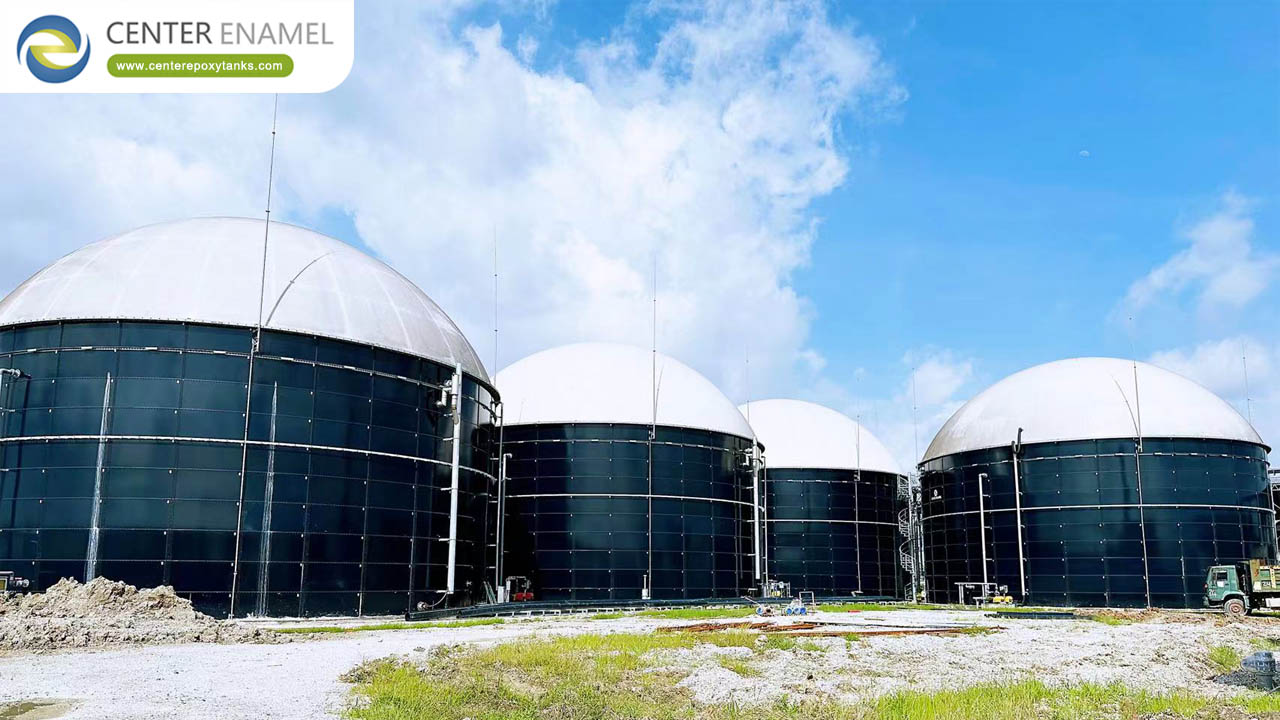
What is a Biomass Storage Silo? Design, Safety, and Bioenergy Applications
A biomass storage silo is an engineered bulk containment structure designed to store, preserve, and automatically discharge solid biofuels—such as wood pellets, wood chips, sawdust, bark, agricultural residues (bagasse, straw, husk), and energy crops (miscanthus). Critical to renewable energy plants, district heating networks, pulp and paper mills, and industrial co-generation facilities, these vertical cylindrical vessels shield organic fuels from moisture while providing a steady, metered supply to combustion boilers or gasifiers.
Unlike standard grain or cement silos, storing bulk biomass presents complex chemical, biological, and mechanical challenges. Organic fuels are highly combustible, prone to spontaneous self-heating, and feature irregular, interlocking particle shapes that resist natural gravity discharge. Consequently, a biomass storage silo functions as an active, climate-controlled process vessel equipped with heavy-duty mechanical discharge systems and advanced environmental monitoring.
Critical Engineering Challenges in Bulk Biomass Storage
Bulk organic materials require specialized engineering safeguards to maintain fuel quality and prevent catastrophic facility fires:
1. Spontaneous Combustion & Self-Heating
Biomass stored in bulk retains internal moisture and micro-organisms. Biological respiration and slow chemical oxidation generate heat within the bulk pile. If internal temperatures rise past 50C to 60C, thermal decomposition accelerates, leading to spontaneous ignition, smoldering fires, and dangerous toxic off-gassing (CO and CH4).
2. Severe Material Interlocking & Bridging
Unlike spherical grains or free-flowing pellets, fibrous biomass materials (such as raw wood chips, bark, or shredded straw) have high inter-particle friction and low bulk density (0.15 to 0.35 t/m3). When gravity-fed through a standard hopper cone, they interlock to form solid structural arches ("bridging") or vertical "ratholes," completely blocking discharge outlets.
3. Combustible Dust Explosions (Class St 1 / St 2)
Biomass processing and transfer generate fine organic dust. Suspended wood or agricultural dust inside an enclosed vessel creates an explosive environment. An electrical arc, mechanical friction, or smoldering ember can ignite a destructive primary explosion.
4. Off-Gassing & Oxygen Depletion
Organic biomass continuously absorbs oxygen and releases carbon monoxide (CO), carbon dioxide (CO2), and volatile organic compounds (VOCs) into the silo headspace, creating lethal confined space environments for plant personnel.
How a Biomass Storage Silo Operates
A complete biomass silo system integrates automated loading, environmental safety monitoring, and positive mechanical extraction:
Conveyance & Infeed: Bulk fuel is elevated to the silo roof via bucket elevators, chain conveyors, or pneumatic transfer lines, passing through magnetic separators to remove tramp metal ignition risks.
Continuous Gas & Thermal Monitoring: Multisensor probes continuously monitor the silo headspace and internal core for rising carbon monoxide (CO) levels and temperature spikes—providing early warning of self-heating weeks before open flames appear.
Active Mechanical Extraction: To overcome bridging, flat-bottom biomass silos utilize hydraulic sliding frames, rotating sweep screws, or live-bottom screw augers. Hydraulic arms slide across the flat concrete base, actively pulling interlocking chips into a central discharge trench.
Metered Boiler Feed: Extracted biomass passes through an isolated rotary valve or dosing screw conveyor, feeding fuel directly to boiler burner systems at controlled mass-flow rates.
Technical Specifications & Fuel Storage Comparison Matrix
Selecting the proper silo design depends heavily on the specific biomass material's bulk density, moisture content, and particle geometry:
Fuel Type | Bulk Density Range | Moisture Content | Flowability Index | Recommended Discharge System | Key Safety Requirement |
Wood Pellets | High (0.65 to 0.75 t/m3) | Low (< 10%) | Free-Flowing | Steep conical hopper or vibration cone | Dust explosion relief vents & static grounding |
Green Wood Chips | Medium (0.30 to 0.45 t/m3) | High (35% to 55%) | Poor (Cohesive) | Hydraulic sliding frame or sweep rotor | Thermal monitoring & forced ventilation |
Bark & Shredded Wood | Low (0.20 to 0.35 t/m3) | High (40% to 60%) | Very Poor (Interlocking) | Heavy-duty hydraulic ladder unloader | Heavy wear liners & torque-protected augers |
Agricultural Straw / Bagasse | Very Low (0.08 to 0.18 t/m3) | Variable (10% to 25%) | Extremely Poor | Multi-screw live bottom bin activator | Nitrogen purging & flameless explosion vents |
Primary Benefits of Dedicated Biomass Silos
Upgrading to an automated, purpose-built biomass storage silo provides major operational, safety, and financial benefits:
Key Takeaway: Automated biomass silos guarantee an uninterrupted fuel supply to power boilers during extreme winter conditions while eliminating open-pile fuel degradation, rain moisture absorption, and wind-blown material loss.
Guaranteed Fuel Preservation: Enclosed weather-tight storage protects dry wood pellets and chips from rain and snow, maintaining maximum calorific heating value (MJ/kg).
ATEX & NFPA Plant Safety: Integrated explosion relief panels, temperature monitoring, and nitrogen purging systems safeguard plant personnel and capital equipment.
Unattended Automated Operation: Heavy-duty hydraulic extractors provide continuous, non-clogging fuel delivery, drastically reducing manual loader labor.
Frequently Asked Questions (FAQ)
Q: How do you prevent spontaneous combustion in a biomass silo?
A: Spontaneous combustion is prevented by storing fuel at low moisture levels (< 15%), using first-in, first-out (FIFO) inventory rotation, and installing continuous Carbon Monoxide (CO) and temperature monitoring systems. If self-heating is detected, automated nitrogen gas injection purges oxygen from the vessel.
Q: What is a hydraulic sliding frame in a biomass silo?
A: A hydraulic sliding frame is a heavy steel wedge-shaped grid mounted on the flat floor of a biomass silo. Driven by hydraulic rams, it moves back and forth across the floor, shearing through interlocked wood chips or bark and pushing the fuel into a central discharge conveyor.
Q: Why do wood pellets require different silo designs than raw wood chips?
A: Wood pellets are uniform, dry, dense cylinder shapes that flow like grain, allowing gravity hopper discharge. Raw wood chips have high moisture, variable particle shapes, and low bulk density, requiring flat-bottom silos with active mechanical agitators to prevent material bridging.
Q: Are biomass storage silos ATEX compliant?
A: Yes. Industrial biomass storage silos handling wood dust or dry pellets must comply with ATEX directive 2014/34/EU (or NFPA 68/69 in North America). Key safeguards include anti-static grounding, explosion relief panels, spark detection/suppression, and explosion-isolation valves.


