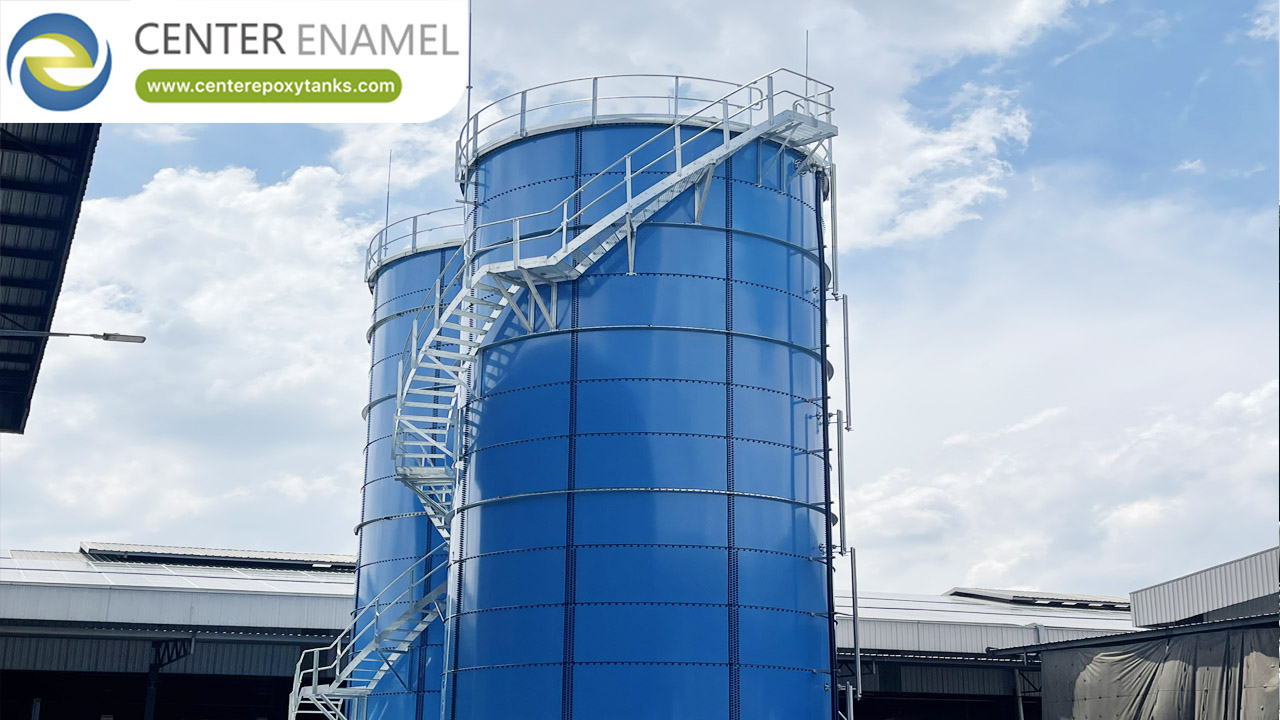
What is a Sewage Sludge Silo? Design, Function, and Municipal Applications
A sewage sludge silo is a specialized, airtight bulk storage vessel engineered to receive, store, and discharge semi-solid dewatered sludge cake, stabilized biosolids, or dried sludge pellets generated during municipal wastewater treatment. Located at wastewater treatment plants (WWTPs), sludge drying facilities, and thermal incineration plants, these heavy-duty silos serve as a critical buffer between continuous dewatering equipment (centrifuges, belt filter presses, or membrane filter presses) and downstream disposal or recycling systems.
Unlike conventional dry powder silos that rely on gravity flow through narrow discharge cones, a sewage sludge silo must handle highly viscous, non-Newtonian material containing 15% to 35% Dry Solids (% DS). Because dewatered sludge is sticky, extremely cohesive, corrosive, and malodorous, sludge silos function as sealed process vessels equipped with positive mechanical extraction systems and active odor filtration.
Critical Engineering Challenges in Sewage Sludge Handling
Storing semi-solid wastewater sludge cake introduces unique mechanical and chemical hurdles that demand custom silo engineering:
1. Severe Material Sticky Adhesion & Bridging
Dewatered sludge cake behaves as a non-Newtonian, thixotropic plastic material. Under its own weight inside a storage vessel, sludge cake easily compacts and adheres to wall surfaces, forming dense structural arches ("bridging") over discharge openings that completely stop gravity flow.
2. Biogenic Hydrogen Sulfide (H2S) Corrosion
Anaerobic bacterial action inside the sludge generates hydrogen sulfide gas (H2S). When combined with internal moisture, it oxidizes into sulfuric acid (H2SO4), which rapidly corrodes standard carbon steel walls. Silos require inert glass-fused-to-steel coatings, 316L stainless steel contact zones, or specialized epoxy liners.
3. Stringent Odor & Gas Containment
Raw and digested sewage sludge releases volatile organic compounds (VOCs), mercaptans, and ammonia (NH3). Silos must operate under continuous negative pressure, venting gas through bio-filters, chemical wet scrubbers, or regenerative thermal oxidizers (RTOs) to comply with municipal air quality standards.
How a Sewage Sludge Silo System Operates
A modern automated sewage sludge storage and unloading system coordinates high-pressure pumping, active mechanical extraction, and odor management:
Infeed Pumping: Dewatered sludge cake (18% to 30% DS) is delivered from centrifuges or presses and pumped into the top of the silo using high-pressure hydraulic piston pumps or heavy-duty progressive cavity pumps.
Sealed Headspace Containment: The airtight roof structure prevents fugitive odor leaks. An exhaust blower maintains slight negative internal pressure, routing headspace vapors to the plant's odor treatment system.
Positive Hydraulic Extraction: To overcome bridging, flat-bottom or rectangular sludge silos feature a hydraulic sliding frame (or ladder unloader) mounted on the silo floor. Driven by external hydraulic cylinders, the frame sweeps back and forth across the floor, shearing the sticky sludge cake and pushing it into a central discharge trough.
Truck Loading or Incinerator Feed: Double-shafted discharge screw conveyors or cake pumps receive the material from the trough, transferring it directly into covered dump trucks for land application or into thermal dryers and fluidized-bed incinerators.
Technical Specifications & Sludge Handling Matrix
Silo structural specifications and discharge mechanics vary depending on the moisture content and processing state of the sewage sludge:
Sludge Category | Dry Solids (% DS) Range | Material Consistency | Recommended Silo Type | Discharge & Unloading System |
Dewatered Sludge Cake | 15% to 30% DS | Highly sticky, cohesive paste | Flat-bottom cylindrical or rectangular silo | Heavy-duty hydraulic sliding frame with discharge screw |
Thermally Dried Pellets | 85% to 95% DS | Free-flowing, granular pellets | Conical hopper silo with ATEX explosion vents | Gravity cone with rotary airlock valve & anti-degradation chute |
Stabilized Lime-Conditioned Sludge | 25% to 40% DS | Semi-crumbly, abrasive solid | Glass-Fused-to-Steel or stainless steel silo | Rotating sweep arm or live-bottom multi-screw extractor |
Liquid Digested Sludge | 3% to 8% DS | High-viscosity liquid slurry | Liquid storage tank / digestate vessel | Side-entry mechanical mixer with bottom suction pump |
Primary Benefits of Dedicated Sewage Sludge Silos
Installing an engineered sewage sludge storage silo brings vital operational efficiencies to wastewater treatment plants:
Key Takeaway: Enclosed sewage sludge silos provide continuous, odor-free holding capacity, decoupling dewatering press operations from transport truck schedules and drastically cutting hauling costs through optimized bulk loading.
100% Odor & Vector Control: Fully sealed containment stops offensive odors from reaching surrounding communities while excluding insects and birds.
Rapid Automated Truck Loading: High-capacity discharge screws can load a 20-ton transport truck with sludge cake in under 10 minutes without manual intervention.
Decoupled Plant Logistics: Allows dewatering presses to run continuously 24/7, even during weekends or holidays when transport trucks are unavailable.
Frequently Asked Questions (FAQ)
Q: What is a sliding frame in a sewage sludge silo?
A: A sliding frame is a hydraulically driven steel frame shaped like a wedge grid or ellipse that moves back and forth along the flat floor of a sludge silo. It continuously cuts through cohesive sludge cake, breaking up material bridges and forcing the sludge into an extraction screw conveyor.
Q: Why can't you use a standard grain or cement silo for sewage sludge cake?
A: Dewatered sewage sludge cake (20% DS) has extremely high internal friction and wall adhesion. In a standard conical hopper silo, sludge cake will pack tightly and bridge over the outlet, making gravity discharge completely impossible. Furthermore, standard metal bins cannot withstand biogenic acid corrosion or contain gases.
Q: How do you prevent corrosion inside a sewage sludge silo?
A: Corrosion is prevented by using materials immune to hydrogen sulfide and biogenic sulfuric acid—such as Glass-Fused-to-Steel (GFS) panels, 316L stainless steel, or specialized high-build epoxy linings applied over reinforced concrete or carbon steel.
Q: Are explosion protection systems needed for sewage sludge silos?
A: For dewatered sludge cake (15-30% DS), dust explosion risks are negligible due to high moisture. However, for thermally dried sludge pellets (> 85% DS), fine organic dust is highly explosive, requiring ATEX-certified explosion relief panels, spark detection, and temperature monitoring.


