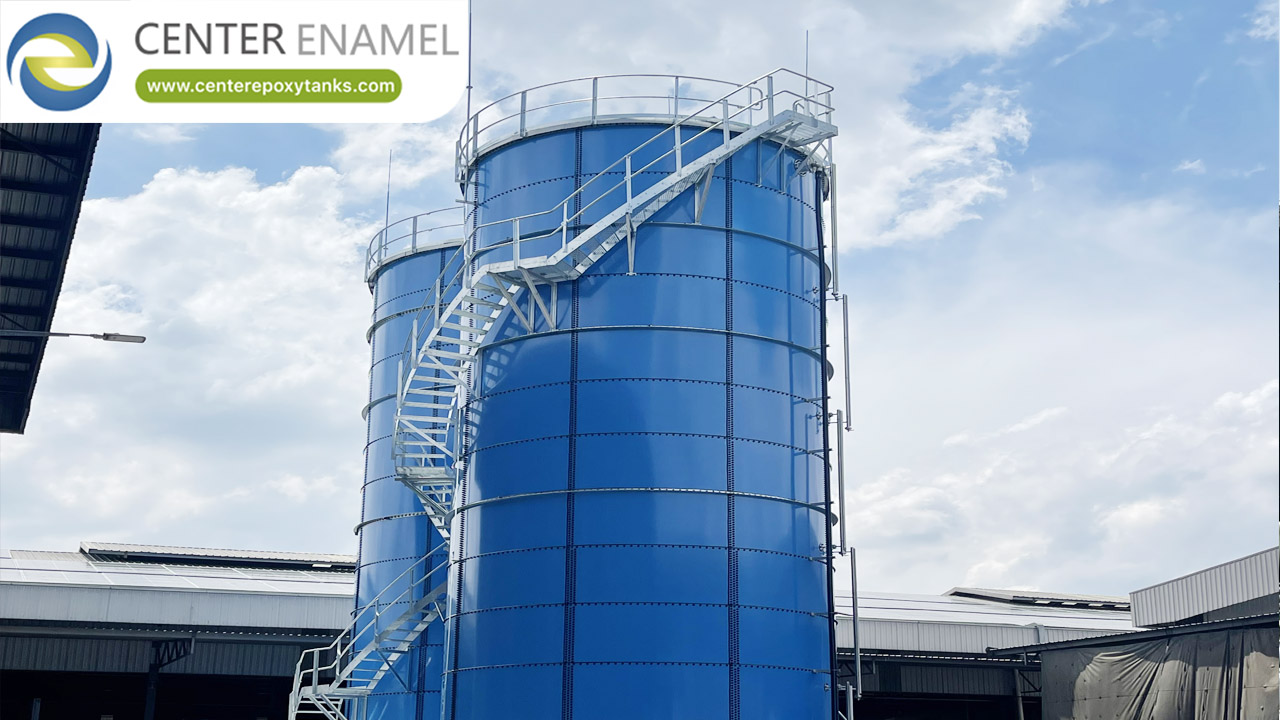
What is a Molasses Silo? Design, Heating, and High-Viscosity Bulk Storage
A molasses silo (also known as a bulk molasses storage tank) is an engineered heavy-duty liquid storage vessel specifically designed to receive, heat, store, and discharge high-density, highly viscous organic liquids like sugar cane molasses, sugar beet molasses, and citrus molasses. Widely deployed across livestock feed processing mills, sugar refineries, distilleries, and bio-ethanol plants, molasses silos provide large-capacity liquid storage ranging from 50 to over 5,000 metric tons.
Unlike standard water or chemical storage tanks, a molasses silo must be engineered for extreme physical and thermal demands. Raw molasses is a non-Newtonian liquid with a high specific gravity (1.35 to 1.45 g/cm3)—weighing up to 45% more per volume than water. Furthermore, its viscosity rapidly increases as temperatures drop, making temperature control and structural reinforced shell design essential for operation.
Engineering Challenges in Bulk Molasses Storage
Storing molasses in large volumes requires solving four distinct physical and chemical challenges:
1. High Viscosity & Temperature Sensitivity
At ambient temperatures below 20C (68F), molasses viscosity can exceed 5,000 to 10,000 cP, turning the liquid into a thick, unpumpable syrup. To maintain a pumpable state (1,000 to 2,000 cP), molasses silos utilize low-pressure internal hot-water coils, electric heating jackets, or external insulation.
2. High Specific Gravity & Hoop Stress
Because molasses weighs roughly 1.4 kg/L (11.7 lbs/gal), the liquid exerts immense outward hydrostatic force ("hoop stress") on the lower wall rings of the silo. Shell plates must be calculated with thick steel gauges or high-tensile glass-fused-to-steel panels to prevent structural buckling.
3. Thermal Degradation & Self-Heating (Maillard Reaction)
If molasses is overheated above 40 to 45C (104 to 113F), non-enzymatic browning (the Maillard reaction) accelerates rapidly. This exothermic reaction destroys valuable sugars, releases carbon dioxide (CO2), and, in extreme unvented cases, causes dangerous thermal runaway and internal pressure buildup.
4. Fermentation & Moisture Condensation
Moisture ingress or condensation on internal upper walls creates localized dilute sugar layers where wild yeasts and bacteria thrive. This causes active fermentation, producing gas, foaming, and organic acids that corrode standard mild steel roofs.
Key Components of an Automated Molasses Silo System
A complete industrial molasses storage system consists of synchronized heating, mixing, and pumping equipment:
Reinforced Vessel Shell: Built from 304/316L Stainless Steel, Glass-Fused-to-Steel (GFS), or epoxy-lined carbon steel, anchored to a heavy concrete foundation ring.
Low-Temperature Heating System: Hot water heating grids or low-wattage electric panels submerged near the floor discharge cone maintain uniform fluid temperatures between 25C and 35C (77F and 95F) without scorching the sugar content.
Recirculation & Agitation Loops: High-torque mechanical agitators or top-to-bottom pump-recirculation lines prevent sugar settling, thermal stratification, and localized fermentation.
Positive Displacement Discharge Pumps: Heavy-duty rotary lobe pumps or positive displacement gear pumps mounted at the base move the viscous liquid through heat-traced pipeline manifolds to feed mixers or tanker trucks.
High-Capacity Top Vents & Conservation Valves: Vents equipped with insect screens and emergency pressure/vacuum relief valves safely vent gas generated during filling or accidental fermentation.
Technical Comparison of Storage Vessel Materials
Selecting the proper shell material depends on storage volume, geographic climate, hygiene requirements, and capital expenditure budget:
Vessel Material Grade | Specific Gravity Rating | Thermal Insulation Options | Corrosion Resistance | Typical Lifespan | Primary Application |
Glass-Fused-to-Steel (GFS) | Up to 1.50 g/cm3 | External polyurethane jacket + aluminum cladding | Superior (pH 2–11 inert glass lining) | 30+ Years | Large bulk storage (100 to 5,000+ m3) |
304 / 316L Stainless Steel | Up to 1.50 g/cm3 | Integrated double-wall insulation jacket | Excellent (food-grade certified) | 30+ Years | Food & beverage, pharmaceutical grade |
Epoxy-Coated Carbon Steel | Up to 1.40 g/cm3 | Spray polyurethane foam or mineral wool | Moderate (requires periodic lining touch-ups) | 15–20 Years | Agricultural feed mills (cost-sensitive) |
HDPE / Polyethylene Tanks | Up to 1.35 g/cm3 | Uninsulated (molded poly shell) | High chemical resistance | 10–15 Years | Small farm tanks (< 30 m3) |
Core Advantages of Dedicated Bulk Molasses Silos
Key Takeaway: Engineered molasses silos lower raw material costs by enabling bulk purchasing, prevent costly product loss from sugar crystallization or fermentation, and streamline automated liquid metering in feed manufacturing.
Bulk Freight & Purchasing Savings: Buying molasses in full railcars or bulk tanker fleets cuts liquid ingredient costs by 15% to 30% compared to intermediate bulk containers (IBC totes) or drums.
Automated Liquid Dosing: Integrated load cells and flowmeters allow exact automated liquid injection into animal feed mixers, ethanol fermentation cookers, or fertilizer batching lines.
Year-Round Flowability: Integrated thermal insulation and automated heating ensure reliable pumping performance even in freezing winter conditions.
Frequently Asked Questions (FAQ)
Q: Why do molasses storage silos require internal heating?
A: Molasses is highly temperature-dependent. At cold ambient temperatures, its viscosity increases dramatically, making it impossible for pumps to draw liquid from the silo. Controlled low-temperature heating (25 to 35C) reduces viscosity to a fluid, easily pumpable state.
Q: What type of pump is best for unloading a molasses silo?
A: Positive displacement pumps—specifically rotary gear pumps, lobe pumps, or progressive cavity pumps—are best suited for molasses. Standard centrifugal pumps fail because high viscosity creates severe cavitation and head loss.
Q: How do you prevent molasses from fermenting inside a storage silo?
A: Keep the stored molasses concentrated (> 75 to 80 Brix). Water ingress dilution must be prevented by sealing roof hatches, insulating the headspace to eliminate condensation drips, and periodically recirculating the batch to maintain consistent Brix levels throughout the vessel.
Q: Can you store molasses in a standard steel water tank?
A: No. Standard water tanks are designed for a fluid density of 1.0 g/cm3. Because molasses has a density near 1.4 g/cm3, filling a standard water tank with molasses will exceed structural load limits and risk catastrophic shell collapse or rupture.


