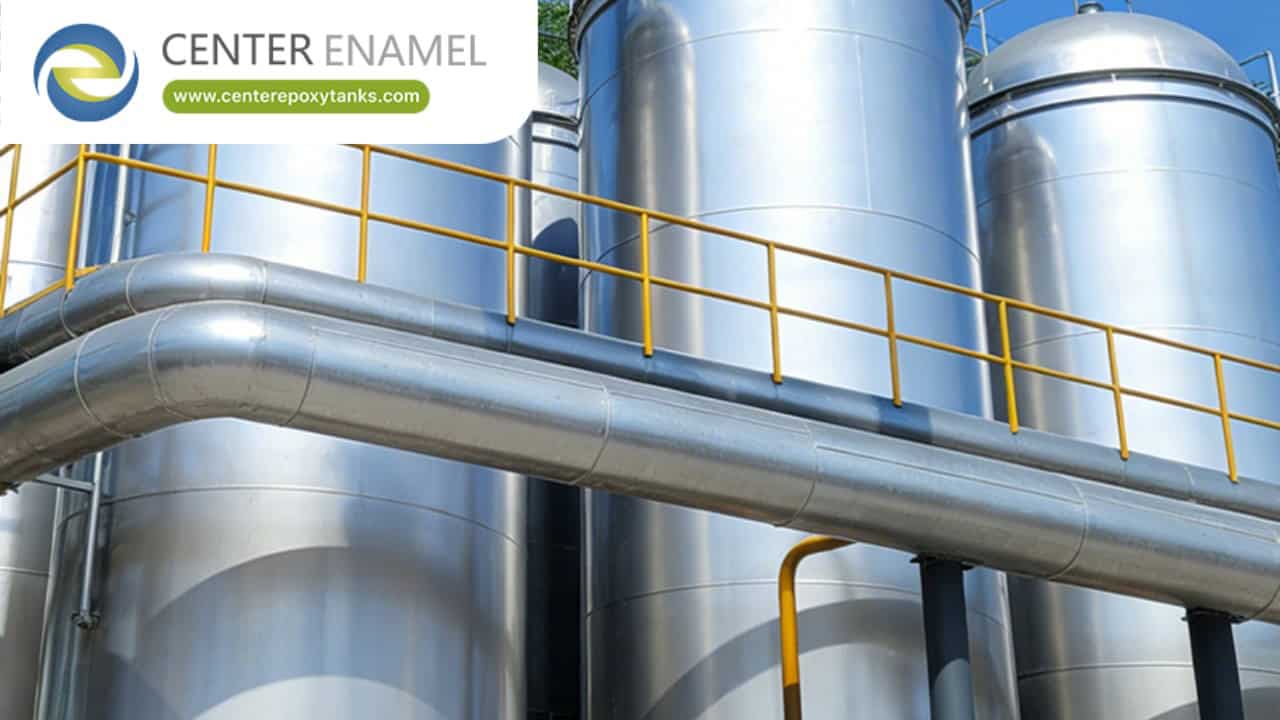
What is a Cylindrical Silo? Design, Physics, and Industrial Applications
A cylindrical silo is an upright, tower-like storage structure with a circular horizontal cross-section engineered to store, preserve, and discharge bulk dry materials—such as grain, cement, coal, sawdust, fly ash, and plastic pellets.
Unlike rectangular or square bins, the cylindrical shape distributes outward material pressure evenly around the vessel perimeter, allowing thin-walled materials (such as corrugated galvanized steel or reinforced concrete) to hold massive capacities without buckling.
The Physics of Cylindrical Silos: Why Round Geometry Wins
The primary challenge in bulk solids engineering is managing hydrostatic and wall friction forces generated by stored materials. Cylindrical geometry is the global standard in silo design due to three fundamental principles:
1. Uniform Hoop Stress Distribution
When dry bulk materials (like wheat or cement) settle inside a vessel, they exert outward lateral pressure against the container walls. In a circular vessel, this lateral force converts almost entirely into tensile stress acting along the circumference, known as hoop stress
Because the stress is distributed evenly 360 degrees around the perimeter, cylindrical walls experience uniform tension without bending moments. Square or rectangular bins, by contrast, experience high bending stress at their flat sides and corners, requiring heavy external stiffeners or significantly thicker walls.
2. Elimination of High-Stress Corners
Corners in rectangular bins create dead zones where materials stagnate, decay, or bridge. Cylindrical structures eliminate sharp internal corners, promoting smoother material movement down toward the discharge hopper.
3. Optimal Material-to-Volume Ratio
From a geometric standpoint, a circle encloses the maximum possible cross-sectional area for a given perimeter length. This means cylindrical silos require less raw building material per unit of storage volume than any polygon-shaped bin.
Types of Cylindrical Silos by Construction Material
Cylindrical silos are manufactured using various materials depending on the bulk material density, moisture content, abrasive properties, and structural scale required.
Silo Material / Construction | Typical Capacity Range | Primary Material Suitability | Key Structural Advantages | Estimated Lifespan |
Corrugated Galvanized Steel | 50 to 15,000+ metric tons | Grains, seeds, animal feed, wood pellets | Lightweight, fast field assembly, cost-effective | 25 – 35 years |
Welded Carbon / Stainless Steel | 10 to 500 metric tons | Chemicals, food powders, plastics, toxic materials | Smooth interior walls, zero leakage, airtight options | 30 – 50 years |
Reinforced Concrete (Slipform / Jumpform) | 1,000 to 100,000+ metric tons | Heavy industrial solids (cement, coal, clinker, aggregate) | High thermal insulation, extreme structural durability, fireproof | 50 – 80+ years |
Composite / Fiberglass (FRP) | 5 to 100 metric tons | Corrosive chemicals, salt, fertilizers, animal feed | Non-corrosive, seamless interior, high weather resistance | 30 – 40 years |
Internal Flow Patterns in Cylindrical Silos
How material moves inside a cylindrical silo depends on the wall friction, slope angle of the discharge cone, and particle characteristics. Engineering designs fall into two main flow regimes:
Mass Flow: All material inside the silo moves downward simultaneously whenever any amount is discharged from the bottom. This prevents "first-in, last-out" stagnation, eliminates dead zones, and provides consistent bulk density. Mass flow requires steep discharge cones and low wall friction.
Funnel Flow (Core Flow): Material discharges through a central core vertical channel directly above the bottom outlet, while stationary material sits along the outer walls. While cheaper to construct due to shallower cone angles, funnel flow can lead to "rat-holing" (a vertical hole through the center) or product degradation if material sits along the walls for extended periods.
Frequently Asked Questions (FAQ)
Q: What is the main difference between a silo, a hopper, and a bin?
A: While all three store bulk materials, a silo typically refers to a tall, high-capacity vertical structure where the height-to-diameter ratio is greater than 1.5. A bin is generally a shorter container with lower capacity, while a hopper specifically refers to the tapered bottom discharge section or a small temporary holding vessel.
Q: How do engineers prevent silo collapse or discharge blockages?
A: Blockages like bridging (interlocking particles forming a arch over the discharge) or rat-holing are prevented by designing the bottom discharge cone to meet the material's specific internal friction angle. Aeration pads, mechanical vibrators, air cannons, and sweep augers are also installed to maintain continuous flow. Structural designs follow standards like EN 1991-4 or ACI 313.
Q: How do you calculate the storage capacity of a cylindrical silo?
A: Total volume is calculated by combining the cylinder body volumewith the cone bottom volume. Multiplying total volume by the bulk density of the stored material gives the total mass capacity.
Q: Are cylindrical steel silos suitable for corrosive materials?
A: Standard galvanized steel works well for dry agricultural products, but highly corrosive materials (like fertilizers, salts, or wet chemicals) require 304/316L stainless steel, special epoxy coatings, or fiberglass reinforced plastic (FRP) construction to prevent wall degradation.


