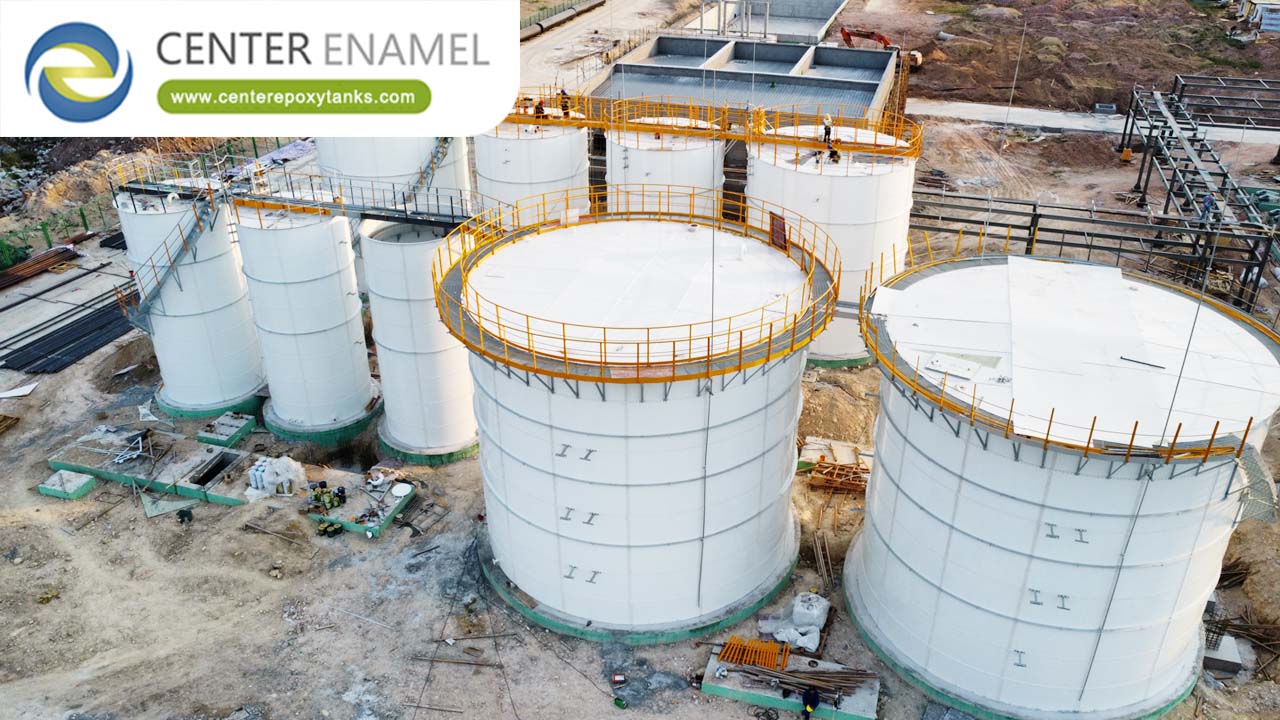
What Is a Sludge Treatment Chemical Tank? Design, Chemical Applications, and Engineering Standards
In municipal wastewater treatment plants and heavy industrial facilities, managing and disposing of residual solid-liquid waste—known as sludge—represents one of the most operationally demanding and cost-intensive phases of treatment. Before sludge can be efficiently thickened, dewatered via belt presses or centrifuges, and hauled away, it typically requires aggressive chemical conditioning to break down water-binding colloids, adjust pH, or stabilize organic content.
A sludge treatment chemical tank is a heavy-duty industrial containment vessel specifically engineered from corrosion-resistant polymers, specialized carbon steel, or composite materials designed to store, mix, and feed the specialized conditioning chemicals required to process wastewater sludge safely and efficiently.
1. Core Chemical Applications in Sludge Treatment
Sludge treatment trains rely on a variety of active chemical agents to optimize dewatering and reduce overall biosolid mass:
Polymers (Flocculants): High-molecular-weight anionic, cationic, or non-ionic polymer solutions are dosed directly into sludge lines prior to mechanical dewatering. They aggregate fine particles into robust flocs, dramatically releasing bound water.
Coagulants (Alum, Ferric Chloride, PAC): Inorganic coagulants are occasionally introduced during pre-thickening or conditioning stages to precipitate phosphorus and aggregate suspended colloidal solids.
Lime and Neutralization Reagents: Lime (Ca(OH)2) or caustic solutions are heavily utilized for alkaline stabilization, pathogen reduction, and pH adjustment of digested sludge.
2. Critical Engineering Requirements and Materials of Construction
Because sludge treatment chemicals range from mildly acidic coagulants to slippery, high-viscosity polymers and abrasive lime slurries, standard water tanks are wholly inadequate. Storage systems require engineered solutions:
A. Cross-Linked Polyethylene (XLPE)
Widely recognized as the industry standard for polymer, coagulant, and acid storage up to medium capacities. Rotationally molded XLPE tanks manufactured to ASTM D1998 standards offer seamless construction and high resistance to stress cracking. Because many sludge-conditioning chemicals are dense, these tanks require heavy-wall structural ratings (typically 1.65 to 1.9 specific gravity).
B. Fiberglass-Reinforced Plastic (FRP) and Lined Steels
For massive municipal bulk storage exceeding 10,000 gallons or abrasive lime slurry applications, FRP tanks with specialized vinyl ester corrosion barriers or heavy-duty elastomer-lined steel vessels provide superior structural rigidity and longevity.
Data Table: Sludge Treatment Chemical Tank Matrix
Chemical Agent Type | Sludge Treatment Function | Approved Tank Materials | Specific Gravity (SG) Rating | Governing Standards |
Polymers (Flocculants) | Sludge dewatering and solid-liquid separation | XLPE, HDPE, Stainless Steel (skids) | 1.0 to 1.2 SG | ASTM D1998 |
Coagulants (Ferric / Alum) | Solid-liquid aggregation and phosphorus removal | Heavy-wall XLPE, FRP, Rubber-lined steel | 1.35 to 1.5 SG | ASTM D1998 / AWWA |
Lime / Alkaline Slurries | Sludge stabilization and pathogen reduction | Carbon Steel with conical bottom, XLPE | 1.2 to 1.4 SG (Abrasive duty) | ASTM D1998 / API 650 |
3. Essential Operational and Safety Infrastructure
A compliant sludge treatment chemical storage installation incorporates several mandatory engineering accessories:
Agitation and Mixing Integration: Lime slurries and certain chemical powders require continuous, low-shear mechanical mixing or recirculation loops to prevent solids from settling out and clogging feed pumps.
Secondary Containment Bunds: Concrete dikes coated with chemical-resistant epoxy or double-wall tank systems must be engineered to capture at least 110% of the volume of the largest primary tank, preventing accidental chemical spills across facility floors.
Frequently Asked Questions (FAQ)
Q: What is a sludge treatment chemical tank?
A: A sludge treatment chemical tank is a specialized industrial containment vessel built from corrosion-resistant polymers or reinforced composites to store the polymers, coagulants, and stabilization agents used in processing wastewater sludge.
Q: Why are polymers commonly stored and dosed during sludge treatment?
A: Polymers act as flocculants that bind microscopic solid particles together into larger flocs, releasing bound water and significantly enhancing the efficiency of mechanical dewatering equipment like belt filter presses and centrifuges.
Q: Why can't standard water storage tanks be used for sludge treatment chemicals?
A: Sludge treatment reagents are chemically reactive, highly viscous, or abrasive, and many possess high specific gravities that will warp or corrode standard unlined water tanks, requiring certified chemical-grade polymers like XLPE or FRP.
Q: What manufacturing standard governs polyethylene sludge chemical storage tanks?
A: Rotationally molded polyethylene chemical storage tanks are typically engineered, fabricated, and tested in accordance with ASTM D1998 standards to guarantee proper wall thickness and resin performance under heavy chemical loads.


