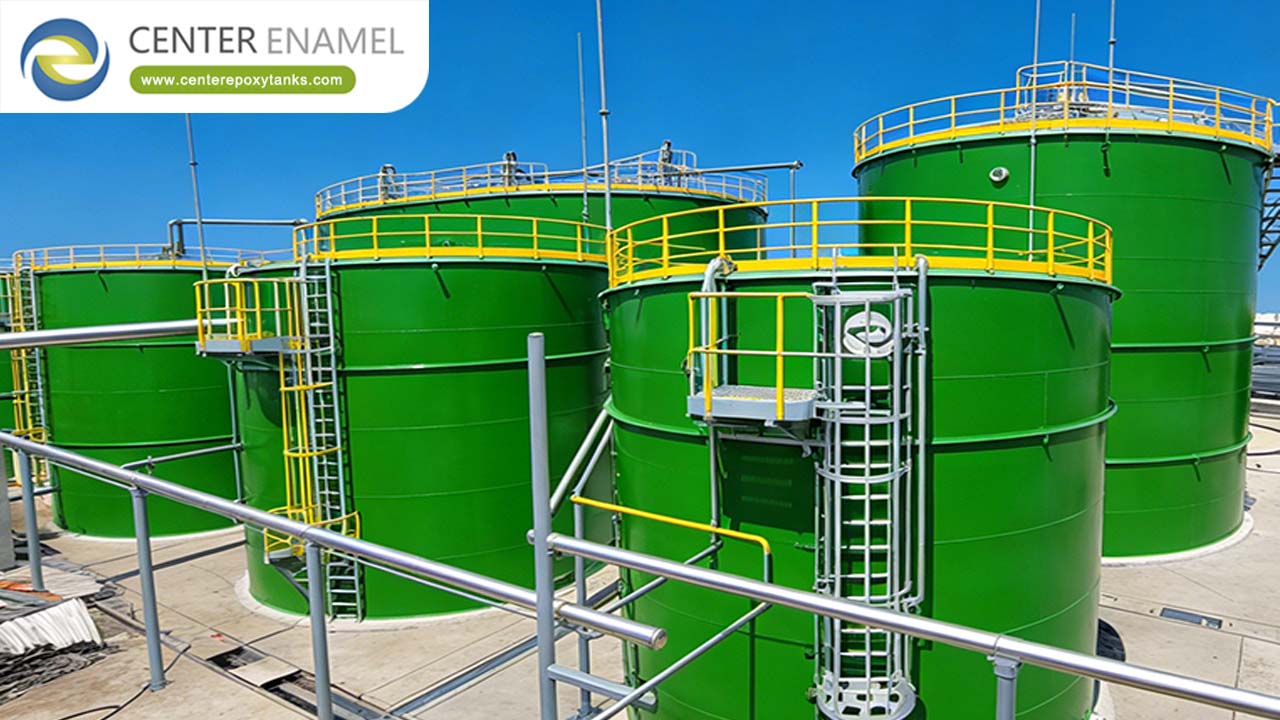
Storage Tanks for Municipal Wastewater Treatment Plants: Materials, Applications, and Engineering Design
Municipal wastewater treatment plants (WWTPs) form the backbone of urban public health and environmental protection. Managing millions of gallons of domestic sewage, industrial runoff, and storm drainage requires a robust network of specialized containment systems. Unlike standard industrial holding vessels, municipal wastewater storage tanks must continuously withstand biological activity, corrosive gases (such as hydrogen sulfide), variable flow pressures, and abrasive sludge loads.
A municipal wastewater storage tank is a large-scale structural vessel engineered to hold, balance, aerate, or digest sewage across primary, secondary, and tertiary treatment stages.
1. Key Roles of Storage Tanks Across Treatment Stages
Wastewater treatment processes are divided into distinct stages, each requiring specialized tank infrastructure:
Equalization (Buffer) Tanks: Municipal influent flows fluctuate dramatically throughout the day based on human activity and weather events. Equalization tanks temporarily store peak flows to provide a steady, uniform hydraulic loading rate to downstream biological treatment units.
Biological Aeration Tanks: Core components of secondary treatment where microorganisms break down dissolved organic matter. These tanks require integrated aeration grid systems to supply continuous oxygen.
Clarification and Sedimentation Tanks: Used to settle out suspended solids following primary treatment or biological processing.
Anaerobic Digestion and Sludge Storage Tanks: Heavy-duty vessels designed to store and treat residual organic sludge, frequently capturing biogas (methane) for energy recovery.
2. Industry-Standard Materials of Construction
Selecting the correct tank material determines the capital lifecycle, maintenance frequency, and structural integrity of a municipal facility:
Glass-Fused-to-Steel (GFS): Widely favored for modern municipal plants due to the fusion of high-strength steel with inert glass enamel. GFS tanks offer exceptional corrosion resistance, smooth anti-microbial interior surfaces, rapid modular bolt-together construction, and low long-term maintenance costs.
Reinforced Concrete: Traditional and massive, cast-in-place concrete structures are heavily utilized for large primary basins, aeration tanks, and underground clearwells, offering massive structural mass but higher vulnerability to acid attack from hydrogen sulfide.
Stainless Steel (Grade 304/316L): Utilized for specialized chemical dosing, smaller process tanks, and high-purity or corrosive wastewater streams where maximum chemical inertness is required.
Data Table: Municipal Wastewater Storage Tank Comparison Matrix
Tank Material Type | Primary WWTP Applications | Estimated Service Life | Corrosion Resistance | Construction & Installation |
Glass-Fused-to-Steel (GFS) | Equalization, aeration, sludge storage, anaerobic digestion | 30 to 40+ Years | Excellent (High chemical and acid tolerance) | Rapid bolted modular assembly on-site |
Reinforced Concrete | Primary clarifiers, large aeration basins, underground wet wells | 50+ Years | Moderate (Vulnerable to biogenic sulfide corrosion) | Cast-in-place (Labor and time-intensive) |
Stainless Steel (316L) | Chemical dosing, filtrate holding, small process skids | 30+ Years | Superior (Withstands broad pH ranges and chlorides) | Prefabricated or welded sectional panels |
Epoxy-Coated Bolted Steel | Buffer tanks, municipal water and wastewater holding | 20 to 30 Years | Good (Depends on periodic coating maintenance) | Fast modular bolt-together setup |
3. Critical Engineering and Regulatory Considerations
Designing storage tanks for municipal environments requires strict adherence to engineering best practices:
Biogenic Sulfide Corrosion Protection: Wastewater generates hydrogen sulfide (H}_2S}), which oxidizes into sulfuric acid above the waterline. Tank interiors must feature specialized linings, glass-fused coatings, or HDPE liners to prevent concrete or metal destruction.
Seismic and Wind Load Engineering: Because municipal tanks hold immense volumes (often millions of gallons), they are engineered to withstand site-specific seismic zone requirements and severe wind loading profiles in accordance with international standards.
Frequently Asked Questions (FAQ)
Q: What are the primary types of storage tanks used in municipal wastewater treatment plants?
A: Municipal WWTPs utilize equalization (buffer) tanks, aeration tanks, secondary clarifier vessels, anaerobic digesters, and sludge storage tanks to manage sewage flow and treatment stages.
Q: Why are Glass-Fused-to-Steel (GFS) tanks popular in municipal wastewater projects?
A: GFS tanks combine the structural strength of steel with the chemical inertness and corrosion resistance of glass, offering rapid bolt-together installation, minimal maintenance, and a long service life.
Q: How do municipal wastewater tanks handle hydrogen sulfide corrosion?
A: To combat sulfuric acid corrosion generated by hydrogen sulfide gases, tanks utilize glass-fused coatings, specialized epoxy linings, or corrosion-resistant stainless steel components.
Q: What is the purpose of an equalization storage tank in a WWTP?
A: An equalization tank temporarily holds incoming municipal wastewater surges to balance hydraulic and organic loading rates, ensuring stable, efficient operation for downstream treatment processes.


