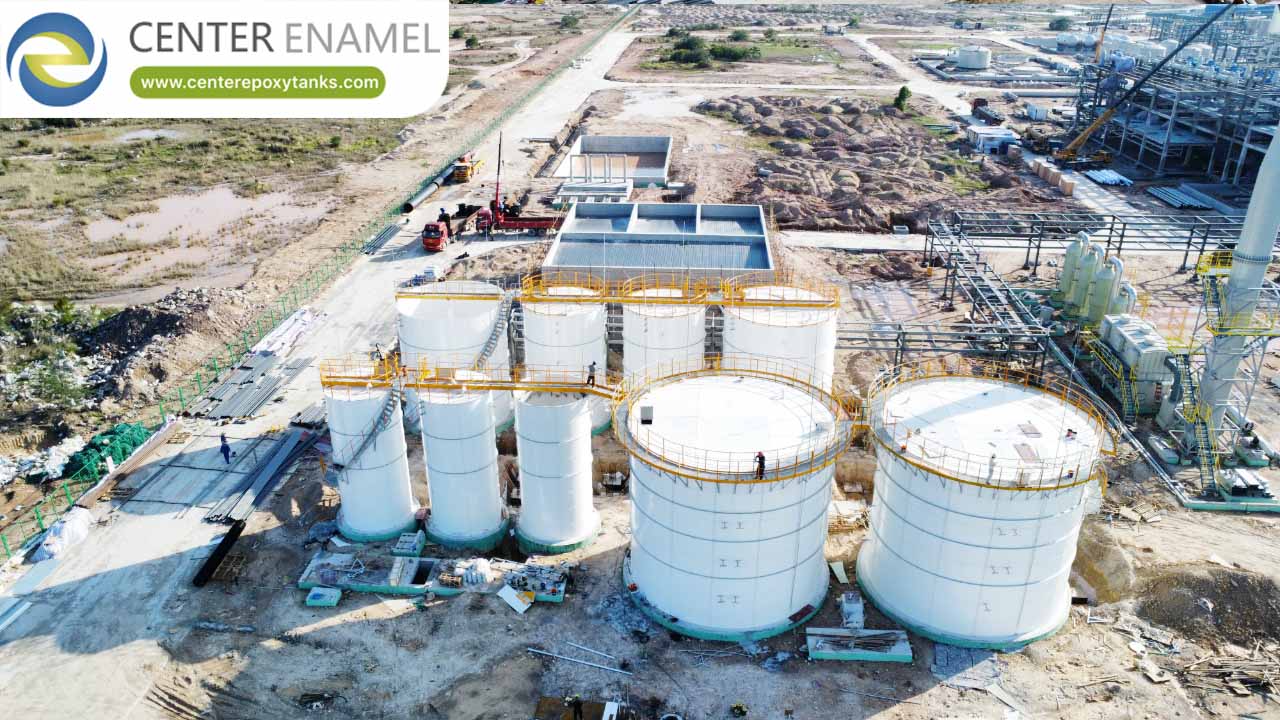
What Is a Disinfection Chemical Tank? Design, Material Selection, and Municipal Water Applications
In municipal drinking water purification, wastewater treatment plants, food processing facilities, and industrial cooling towers, eliminating harmful pathogens, bacteria, and viruses is the final and most critical line of defense for public health. Because the primary sanitizing reagents utilized in water treatment are exceptionally reactive, oxidizing, or corrosive, storing them safely requires specialized chemical containment engineering.
A disinfection chemical tank is a heavy-duty, chemically inert industrial containment vessel specifically engineered from corrosion-resistant polymers or composite materials designed to store sanitizing chemicals safely, prevent chemical decomposition, and withstand aggressive fluid environments over long operational lifecycles.
1. Core Functions of Disinfection Chemical Storage
Disinfection chemical tanks bridge the gap between bulk chemical delivery and automated feed systems. Their design must accommodate the unique chemical properties of standard water treatment disinfectants:
Sodium Hypochlorite (Bleach): A powerful oxidizing agent (typically 10% to 15% concentration) used for continuous chlorination. It degrades under UV light and off-gases oxygen, requiring specialized stabilization and venting.
Hydrogen Peroxide: A clean oxidant used for specialized disinfection and taste-and-odor control. It requires vented, passive-release caps to prevent pressure buildup caused by natural decomposition.
Chlorine Dioxide / Potassium Permanganate: Specialized secondary disinfectants and pre-oxidants that demand rigorous material compatibility to prevent premature wall degradation.
2. Critical Engineering Requirements and Materials of Construction
Because disinfection chemicals aggressively attack standard metals and unverified polymers, storage systems rely on specialized non-metallic materials:
A. Cross-Linked Polyethylene (XLPE)
Widely recognized as the industry standard for disinfection chemical storage up to medium capacities. Rotationally molded XLPE tanks manufactured to ASTM D1998 standards offer seamless construction, high impact strength, and excellent resistance to chemical stress cracking. Because sanitizers like sodium hypochlorite are denser than water, these tanks must carry a heavy-wall structural rating (typically 1.65 to 1.9 specific gravity).
B. Fiberglass-Reinforced Plastic (FRP)
For large-scale municipal bulk storage exceeding 10,000 gallons, FRP tanks utilizing specialized vinyl ester resins with a resin-rich interior corrosion barrier provide superior structural rigidity and longevity.
Data Table: Disinfection Chemical Tank Matrix
Disinfection Chemical Type | Primary Chemical Function | Approved Tank Materials | Specific Gravity (SG) Rating | Governing Standards |
Sodium Hypochlorite ($text{NaOCl}$) | Primary chlorination and disinfection | XLPE, HDPE, FRP | Minimum 1.65 to 1.9 SG | ASTM D1998 / AWWA |
Hydrogen Peroxide (H2O2) | Advanced oxidation and sanitization | Specialized passivated pass-through XLPE / HDPE | 1.3 to 1.4 SG | ASTM D1998 |
Chlorine Dioxide (ClO2) | Disinfection and bio-film control | FRP, XLPE, PVDF-lined systems | Engineered design specs | ASTM D1998 / AWWA guidelines |
3. Essential Safety and Environmental Infrastructure
A compliant disinfection chemical storage installation incorporates several mandatory safety features to protect plant personnel and local ecosystems:
UV Protection and Insulation: Outdoor tanks storing sodium hypochlorite must be fabricated with dark carbon-stabilized resin or protective coatings to block ultraviolet sunlight, which accelerates chemical breakdown.
Secondary Containment Bunds: Concrete dikes coated with chemical-resistant epoxy or double-wall tank systems must be engineered to capture at least 110% of the volume of the largest primary tank.
Frequently Asked Questions (FAQ)
Q: What is a disinfection chemical tank?
A: A disinfection chemical tank is a specialized industrial vessel built from chemical-resistant polymers or fiberglass to safely store sanitizing reagents like sodium hypochlorite or hydrogen peroxide used in water treatment.
Q: Why do sodium hypochlorite disinfection tanks require UV protection?
A: Ultraviolet radiation from sunlight accelerates the chemical decomposition of sodium hypochlorite, turning active chlorine into salt and oxygen while degrading standard polymer structures.
Q: Can standard carbon steel tanks be used for storing water disinfection chemicals?
A: No. Disinfection chemicals like bleach and hydrogen peroxide are strong oxidizers that rapidly corrode and pit carbon steel and standard metals, requiring non-metallic polymers like XLPE or FRP.
Q: What manufacturing standard governs polyethylene disinfection chemical tanks?
A: Rotationally molded polyethylene chemical storage tanks are typically engineered, fabricated, and tested in accordance with ASTM D1998 standards to guarantee proper wall thickness and resin performance.


