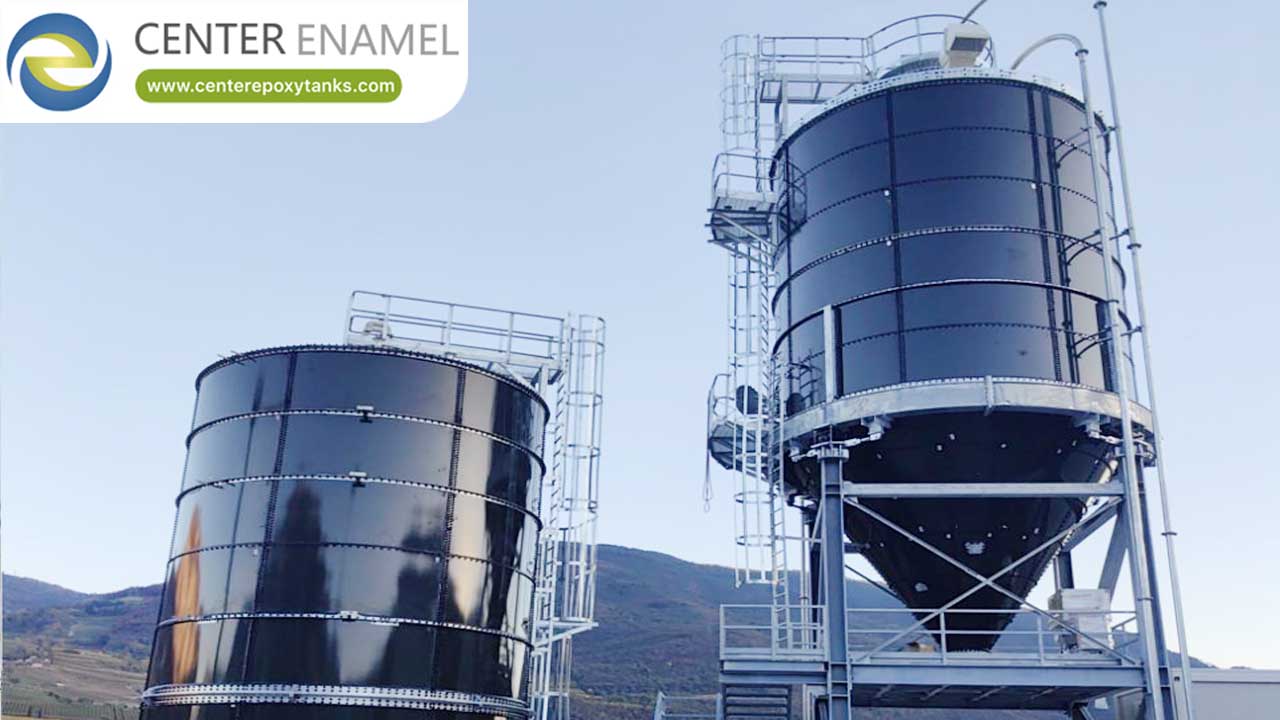
What is a Sand Storage Silo? Design, Function, and Industrial Applications
A sand storage silo is a heavy-duty vertical cylindrical structure engineered specifically to hold bulk quantities of industrial, construction, or proppant sand safely, cleanly, and efficiently. Because sand is a dense, highly abrasive bulk material used extensively in ready-mix concrete production, glass manufacturing, foundry operations, and oil and gas hydraulic fracturing (frac sand), reliable containment is essential for continuous industrial workflows.
Modern steel sand silos provide a weather-resistant, high-capacity storage solution equipped with pneumatic loading mechanisms, abrasion-resistant internal protections, and advanced dust collection networks.
How a Sand Storage Silo Works
Managing heavy, abrasive sand inside a large-scale steel silo involves a synchronized sequence of pneumatic transfer, environmental filtration, and gravity discharge:
Pneumatic or Mechanical Loading: Sand is delivered to the facility via bulk tanker trucks or mechanical conveyors. The tanker utilizes compressed air to blow the sand vertically through an external fill pipe directly into the top of the silo.
Dust Separation and Filtration: As the high-pressure air and sand mixture enters the vessel, air separates from the heavy particles and escapes upward. A roof-mounted pulse-jet bag filter captures airborne silica dust, dropping the fine particles back into the tank to protect workers and maintain environmental compliance.
Abrasion-Resistant Containment: Once inside the welded or bolted steel shell, the sand is isolated from rain, humidity, and site contamination. Because sand is highly abrasive, interior walls often feature specialized wear-resistant coatings or thick steel plates to prevent wall erosion.
Mass-Flow Gravity Discharge: The lower portion of the silo features an engineered conical hopper (typically angled between $55^circ$ and $65^circ$) that promotes smooth mass flow, ensuring sand discharges evenly without wall packing or ratholing into bottom screw conveyors or truck loading chutes.
Technical Specifications & Silo Parameters Matrix
Technical Parameter | Specification / Design Standard | Operational Impact |
Material Construction | Heavy-duty welded or bolted structural steel plates | Withstands massive lateral hoop stresses from dense bulk sand weights. |
Average Bulk Density | Approximately 1.4 to 1.6 t/m3 (dry silica sand) | Used by structural engineers to calculate total volumetric and load capacities. |
Hopper Base Angle | 55° to 65° from horizontal | Promotes smooth mass flow and prevents sand bridging or stagnant dead zones. |
Abrasion Mitigation | High-tensile steel plates or specialized wear linings | Protects internal wall surfaces against continuous frictional wear from moving sand. |
Dust Control System | Roof-mounted automated pulse-jet bag filter | Captures fine silica particles during pneumatic truck loading, ensuring zero-emission compliance. |
Key Benefits of Using Dedicated Sand Silos
Investing in engineered steel sand storage infrastructure provides substantial operational and economic advantages:
Exceptional Durability Against Abrasion: Specialized structural engineering and wear-resistant materials ensure long service lives even under the intense frictional wear of continuous sand handling.
Maximized Space Efficiency: Vertical silo designs store massive tonnages of sand within a minimal ground footprint, freeing up valuable space on crowded industrial or construction sites.
Moisture and Contamination Control: Airtight sealing keeps moisture out, preventing sand from clumping and ensuring consistent physical properties for concrete mixing or glass production.
Frequently Asked Questions (FAQ)
Q: What is the main purpose of a sand storage silo?
A: A sand storage silo is designed to store bulk quantities of industrial, construction, or frac sand securely in a protected, dry environment, ensuring a continuous supply for concrete batch plants, glass manufacturing, or oil and gas operations.
Q: Why do sand silos require special abrasion-resistant design?
A: Sand is a hard, highly abrasive material. When sliding continuously against storage walls during loading and discharging, it causes rapid friction wear. Silos use reinforced high-tensile steel plates or protective linings to withstand this wear.
Q: How is sand loaded into an industrial storage silo?
A: Sand is typically delivered by pneumatic bulk tanker trucks that connect a flexible hose to the silo's fill pipe, using high-pressure compressed air to pump the sand vertically into the top of the vessel.
Q: What is the difference between a bolted steel sand silo and a welded steel sand silo?
A: A welded silo is pre-assembled in a factory and shipped whole, offering instant installation for smaller capacities. A bolted silo is manufactured in modular panels assembled on-site, making it ideal for massive storage capacities and cost-effective international shipping.


