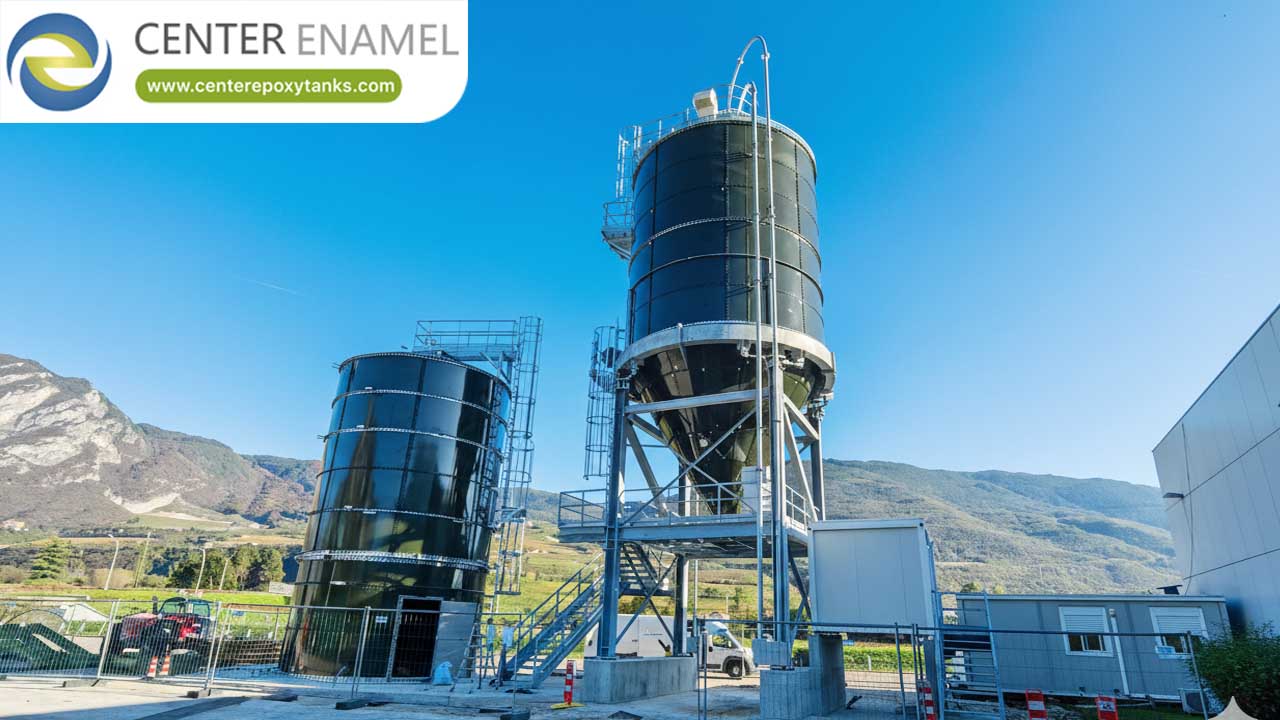
What is a Hopper-Bottom Silo? Design, Working Principles, and Agricultural Applications
A hopper-bottom silo (also known as a conical-bottom silo) is a vertical cylindrical steel storage structure featuring a sloped, funnel-shaped base supported by heavy-duty structural steel legs. Engineered specifically for agricultural commodities, feed mills, and seed processing plants, hopper-bottom silos are designed to store bulk grains—such as corn, wheat, soybeans, and rice—while enabling 100% gravity-assisted discharge without the need for manual sweeping or mechanical augers.
Unlike flat-bottom silos that rest directly on concrete foundation slabs and require sweep augers to clear remaining grain, the sloped hopper base uses natural gravity to channel all stored contents smoothly toward a single central discharge valve.
Structural Design and Engineering Features
The engineering of a hopper-bottom silo balances massive vertical load distribution with structural elevation:
Corrugated Steel Shell Walls: Fabricated from high-tensile galvanized steel sheets with exterior vertical stiffeners to resist wind loads, seismic forces, and internal grain pressure.
Sloped Hopper Base: Designed with precise cone angles (typically 45° or 60°) depending on the flowability of the stored commodity, ensuring complete, jam-free material outflow.
Heavy-Duty Support Structure: A robust framework of structural steel legs and ring beams that securely elevates the entire silo off the ground, allowing trucks or conveyor systems to drive directly underneath for rapid loading.
Conical Roof & Aeration Systems: Weather-resistant conical roofs equipped with vents and filling hatches, paired with integrated roof-or-floor aeration systems to regulate temperature and humidity.
How Hopper-Bottom Silos Work (The Discharge Mechanism)
The operational efficiency of a hopper-bottom silo relies entirely on gravity-flow principles:
Loading: Grains are elevated via bucket elevators or belt conveyors to the top of the silo, where a central filling hatch distributes the material evenly across the interior volume.
Preservation: Aeration fans and thermal monitoring cables maintain optimal temperature and moisture levels, preventing spoilage during short-to-medium-term storage.
Gravity Discharge: When the bottom slide gate or valve is opened, gravity pulls the stored grain downward along the steep sloped walls of the conical hopper. The grain flows smoothly out of the central port directly into transport trucks, batch mixers, or bagging lines without requiring mechanical sweep augers.
Comparative Analysis: Hopper-Bottom vs. Flat-Bottom Silos
Feature / Parameter | Hopper-Bottom Silos | Flat-Bottom Silos |
Base Design | Sloped conical steel hopper supported by heavy steel legs | Level floor resting directly on a concrete foundation slab |
Discharge Method | 100% gravity-assisted flow (no sweep required) | Gravity flow combined with mechanical sweep augers |
Storage Capacity | Moderate (Hundreds to ~2,000 tons) | Massive (Thousands to tens of thousands of tons) |
Turnover Frequency | High turnover, daily processing, and batch loading | Long-term strategic reserves (6 to 18+ months) |
Primary Application | Feed mills, seed plants, commercial farms | Commercial grain elevators, port terminals, large mills |
Key Benefits of Hopper-Bottom Silos
Agricultural producers and commercial processing plants choose hopper-bottom silos for several distinct operational advantages:
Rapid, Labor-Free Unloading: Complete gravity discharge eliminates the time, labor, and mechanical wear associated with operating sweep augers or manual cleanout tools.
Ideal for High-Turnover Operations: Perfect for facilities that require frequent emptying and refilling, such as commercial animal feed mills and seed processing plants.
Simplified Foundation Requirements: While they require engineered concrete footings for each support leg, they avoid the extensive flat concrete slab excavation required for large flat-bottom systems.
Frequently Asked Questions (FAQ)
Q: What is the main advantage of a hopper-bottom silo over a flat-bottom silo?
A: The primary advantage is 100% gravity discharge. Because of the sloped conical base, grain flows out naturally without requiring mechanical sweep augers, enabling much faster and easier unloading.
Q: What hopper angle should I choose (45° or 60°)?
A: A 45° hopper angle is typically used for free-flowing grains like wheat and corn. A steeper 60° hopper angle is engineered for more cohesive or sticky materials, such as soybean meal, animal feed, or wet grains, to ensure they do not bridge or clog during discharge.
Q: Can hopper-bottom silos be used for long-term grain storage?
A: Yes, provided they are equipped with proper aeration and temperature-monitoring systems. However, because of their moderate capacity limits compared to flat-bottom silos, they are more commonly utilized for medium-term storage, daily processing, and high-turnover operations.
Q: Do hopper-bottom silos require a concrete foundation?
A: Yes. Although they do not use a massive flat concrete floor slab, each structural support leg must be securely anchored to reinforced concrete piers or a concrete ringwall designed to bear the total loaded weight of the silo.


