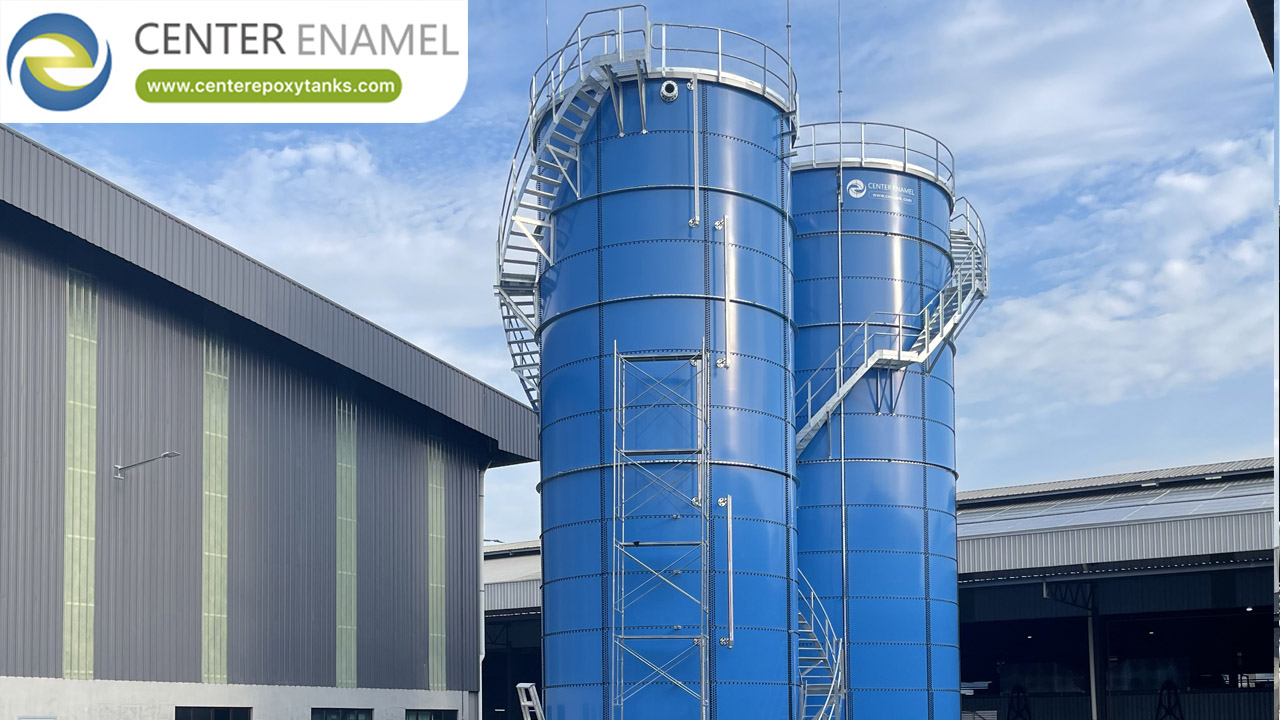
What is a Flat Bottom Grain Storage Silo? Design, Working Principles, and Commercial Applications
A flat bottom grain storage silo is a massive, vertical cylindrical steel structure anchored directly onto a heavy-duty concrete foundation, engineered specifically for the long-term, large-scale storage of bulk agricultural commodities like wheat, corn, soybeans, and rice.
Unlike hopper bottom silos—which rely on a sloped conical roof and base for rapid gravity discharge—flat bottom silos feature a level floor resting flat against a concrete foundation slab. Because of this design, flat bottom silos provide the highest volumetric storage capacity per footprint in the agricultural industry, making them the preferred choice for commercial grain elevators, milling plants, and seaport export terminals.
Structural Design and Engineering Features
The architecture of a flat bottom grain silo is optimized to withstand immense outward lateral pressure and vertical hydrostatic loads from thousands of tons of stored grain:
Corrugated Steel Shells: Fabricated from high-tensile structural steel sheets with specialized external stiffeners that reinforce the silo against high wind speeds and seismic activity.
Concrete Foundation Slab: Anchored securely to a reinforced concrete ringwall or flat slab designed to distribute the massive total weight of the grain evenly across the subgrade.
Aeration and Temperature Monitoring: Integrated network of perforated floor channels or surface ducts connected to high-volume aeration fans, paired with digital thermal cables that continuously track core grain temperatures.
Roof and Access Systems: Heavy-duty conical roofs equipped with structural vents, inspection hatches, and central filling spouts connected to overhead conveyor bridge systems.
How Flat Bottom Silos Work (Discharge & Sweeping)
Because the floor is entirely flat, gravity alone cannot empty the entire contents of a flat bottom silo. The unloading process utilizes a two-stage mechanism:
Gravity Flow (Primary Discharge): When discharge valves in the center of the concrete floor are opened, gravity pulls the central core of the grain downward into under-floor conveyor tunnels or pit augers. This accounts for a significant portion of the total volume without mechanical assistance.
Sweep Augers (Secondary Discharge): Once the natural gravity-flow cone is emptied (leaving a sloped pile of grain remaining along the outer walls), mechanical sweep augers are deployed. These rotating arms sweep across the flat floor, pushing the remaining grain toward the central discharge sump until the silo is completely clean.
Comparative Analysis: Flat Bottom vs. Hopper Bottom Silos
Feature / Parameter | Flat Bottom Grain Silos | Hopper Bottom Grain Silos |
Capacity Range | Massive (Thousands to tens of thousands of tons) | Medium (Hundreds to 2,000+ tons) |
Base Design | Level floor resting on a concrete foundation slab | Sloped conical steel hopper supported by heavy legs |
Discharge Method | Gravity flow combined with mechanical sweep augers | 100% gravity-assisted flow (no sweep required) |
Storage Duration | Long-term strategic reserves and seasonal holding | Rapid turnover, daily feed processing, and batch loading |
Primary Application | Commercial grain elevators, port terminals, large mills | Feed mills, seed processing plants, farm-level storage |
Key Benefits of Flat Bottom Grain Silos
Commercial operators and large agricultural enterprises choose flat bottom silos for several distinct economic and operational advantages:
Maximum Storage Economy of Scale: By eliminating structural hopper legs, flat bottom designs allow engineers to build taller and wider structures, providing the lowest capital cost per ton of stored grain.
Ideal for Long-Term Preservation: The massive thermal mass, airtight sealing, and automated aeration systems create a stable interior microclimate that prevents spoilage over multi-year storage cycles.
Space-Efficient Terminal Layouts: Multiple massive flat bottom silos can be grouped in a battery configuration alongside automated conveyor galleries, maximizing storage capacity within a compact terminal footprint.
Frequently Asked Questions (FAQ)
Q: What is the main purpose of a flat bottom grain silo?
A: A flat bottom grain silo is designed for long-term, high-capacity bulk storage of agricultural commodities in commercial grain terminals, flour mills, and port export facilities where thousands of tons of grain must be preserved safely.
Q: How do you empty a flat bottom silo if the floor is level?
A: Unloading occurs in two phases. First, gravity pulls the central portion of the grain through floor discharge chutes into under-floor conveyors. Second, a mechanical sweep auger rotates across the flat floor to push the remaining perimeter grain toward the central drain.
Q: How long can grain be stored in a flat bottom silo?
A: When grain is dried to safe moisture levels (typically 12–14%) and continuously monitored using integrated aeration and temperature sensors, grains like wheat and corn can be stored safely in flat bottom silos for many months or even years.
Q: Are flat bottom silos more cost-effective than hopper silos for large volumes?
A: Yes. For large-scale storage exceeding thousands of tons, flat bottom silos built directly on concrete slabs are significantly more cost-effective per ton than trying to support massive weights on raised steel hopper legs.


