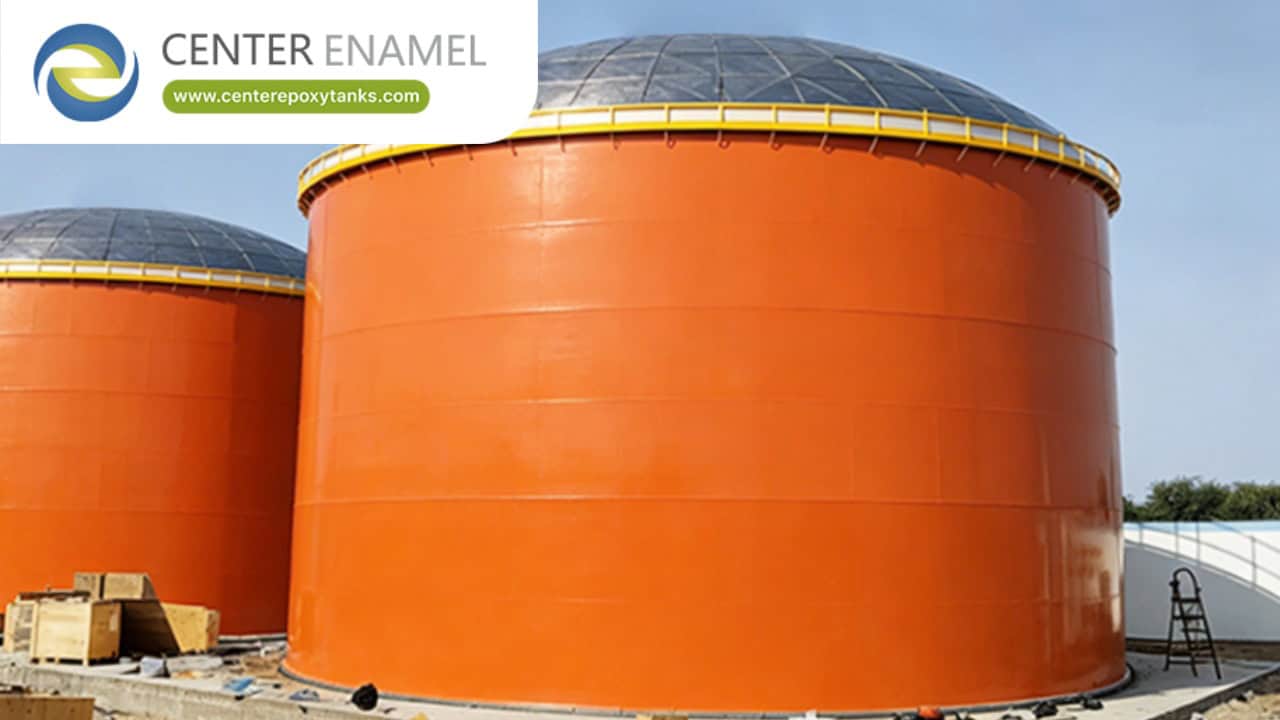
What is a Glycol Storage Tank?
A glycol storage tank is a specialized industrial containment vessel engineered to safely store, blend, or maintain reserve volumes of glycol-based compounds—most commonly ethylene glycol and propylene glycol. Because glycols serve as essential heat transfer fluids, coolants, and antifreeze agents in HVAC systems, natural gas dehydration units, chemical processing plants, and food manufacturing operations, their storage requires strict adherence to engineering standards.
Glycols are hygroscopic liquids (meaning they readily absorb moisture from the surrounding air) and can interact with container walls over extended operational lifecycles. Consequently, industrial glycol storage tanks are custom-designed with specific material compatibilities, moisture-mitigation accessories, and, when operating under positive internal pressure, coded compliance to ensure system integrity and prevent fluid degradation.
Core Engineering Requirements and Design Features
Proper containment of glycols involves several critical mechanical and environmental control systems:
1.
Material Compatibility and Selection: Tank walls must match the specific fluid chemistry. While inhibited carbon steel is widely used for industrial closed-loop ethylene glycol due to cost-efficiency, stainless steel (such as grades 304 and 316) is preferred for high-purity or food-grade propylene glycol applications to eliminate trace metal contamination.
2.
3.
Moisture Control & Venting (PVRV): Because glycols absorb atmospheric humidity, storage tanks require Pressure/Vacuum Relief Valves (PVRVs) and frequently utilize nitrogen blanketing (padding) systems. Nitrogen blankets isolate the fluid from ambient air, preventing moisture ingress, oxidation, and fluid discoloration.
4.
5.
ASME Pressure Vessel Compliance: When a glycol tank (such as a system makeup or surge vessel) operates at an internal pressure exceeding 15 psig, it is classified as a coded pressure vessel and must be engineered, fabricated, and tested in strict accordance with ASME Boiler and Pressure Vessel Code (BPVC) Section VIII.
6.
7.
Electrical Grounding: To eliminate risks associated with static electrical buildup during transfer operations, all glycol storage tanks, piping networks, and pumps must be thoroughly grounded.
8.
Technical Performance Matrix: Glycol Storage Tank Options
Technical Parameter | Inhibited Carbon Steel Tanks | Stainless Steel Tanks (304/316) | Factory-Lined Carbon Steel Tanks |
Primary Fluid Application | Industrial HVAC, closed-loop thermal transfer, and ethylene glycol systems | Food and beverage, pharmaceuticals, and high-purity propylene glycol | Aggressive or uninhibited glycol blends requiring specialized barrier protection |
Corrosion Defense | Relies on active chemical inhibitor packages within the glycol fluid | Inherent high corrosion resistance across a broad pH and chemical spectrum | Heavy-duty epoxy or cement-based internal coatings isolate the metal substrate |
Pressure Design Scope | Available in both atmospheric storage designs and ASME pressure-rated configurations | Highly customizable for sanitary and pressurized process requirements | Engineered for severe-service industrial applications |
Lifecycle Maintenance | Requires regular monitoring of fluid inhibitor levels to prevent acidic degradation | Minimal degradation; excellent long-term durability and easy washdown | Periodic inspection of internal linings to check for micro-wear or blistering |
Primary Industrial Applications
Glycol storage and feed tanks support a wide array of mission-critical industrial workflows:
·
HVAC and Chilled Water Loops: Acting as buffer or makeup tanks that automatically feed reserve fluid into closed cooling loops to maintain target system pressure and volume.
·
·
Oil and Gas Processing: Storing ethylene glycol utilized in natural gas dehydration units to strip water vapor from hydrocarbon streams.
·
·
Food and Beverage Manufacturing: Utilizing non-toxic propylene glycol tanks for secondary cooling jackets and food processing temperature control loops where toxicity isolation is mandatory.
·
Frequently Asked Questions (FAQ)
Q: What is the difference between storing ethylene glycol and propylene glycol?
A: Ethylene glycol is toxic and used primarily in closed industrial loops, typically housed in inhibited carbon steel tanks. Propylene glycol is non-toxic and widely used in food, pharmaceutical, and HVAC applications, requiring high-purity stainless steel containment to prevent product contamination.
Q: Why do glycol storage tanks require nitrogen blanketing?
A: Glycols are highly hygroscopic, meaning they absorb moisture from ambient air. Nitrogen blanketing introduces an inert gas barrier above the liquid surface, blocking moisture ingress, preventing oxidation, and preserving the chemical stability of the fluid.
Q: When does a glycol storage tank need to be ASME coded?
A: A glycol tank becomes an ASME-coded pressure vessel when its internal operating pressure exceeds 15 psig. Pressurized surge, feed, and expansion tanks in closed systems must comply with ASME Section VIII design and testing rules.
Q: Can I mix different types or brands of glycol in a storage tank?
A: No. Mixing propylene glycol and ethylene glycol—or even different chemical inhibitor packages from competing brands—is strongly discouraged. Mixing can cause fluid separation, form viscous gels that clog system filters, destroy corrosion protection, and potentially void manufacturer warranties.


