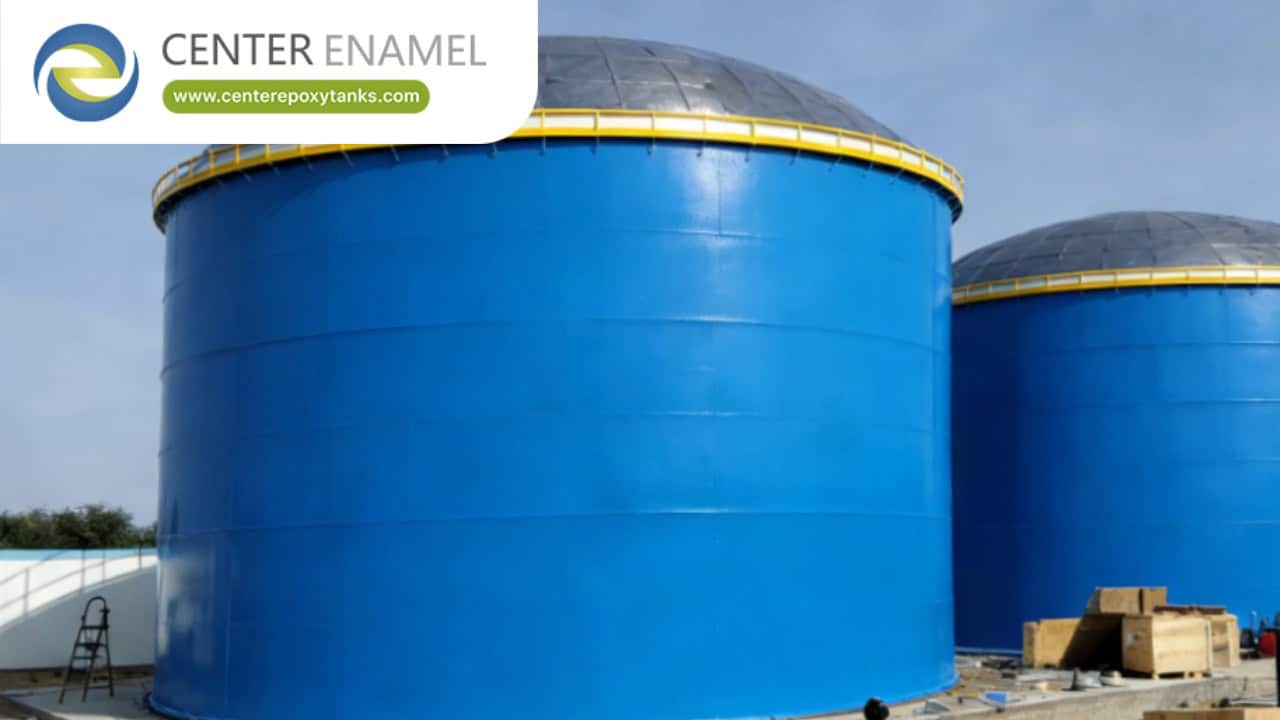
What Is a Fire Protection Tank (FPT)?
A fire protection tank is a dedicated water storage vessel sized to supply sprinkler systems and fire hose streams for the duration a facility's fire protection design demands. Built to NFPA 22 and related standards, it guarantees volume, pressure reliability, and freeze protection that public mains often cannot.
NFPA 22 — Water Tanks for Private Fire Protection — is the governing standard. It defines how much water must be stored (the sprinkler demand plus hose stream allowance for the design duration, adjusted for refill credit where the authority having jurisdiction allows), how the tank must be constructed and protected, and the reliability features — heating against freezing, overflow, level monitoring, and access — that keep the reserve ready at 3 a.m.
The tank is a facility's fire insurance in physical form: when the sprinkler system activates, the tank delivers design flow and pressure for the full design duration without depending on municipal supply. Welded steel tanks, coated bolted tanks, and elevated designs all serve, with dedicated fire connections kept protected, tested, and ready.
Why Public Mains Are Not a Fire Protection Plan
Insurance engineering and fire codes assume the water will be there at design flow for the full duration. Mains fail, pressures drop at the worst moment, and hydrant demand competes — the dedicated tank exists because that assumption cannot be left to chance.
l Municipal supply reliability and pressure frequently cannot support sprinkler demand.
l Rural and industrial sites often have no hydrant network at all.
l Freezing climates demand heated or insulated tanks to keep reserve usable.
Fire Tank Design and Compliance Path
An NFPA 22 tank project follows a fixed sequence:
1. Demand Calculation: Sprinkler system flow and duration plus hose stream allowance, per the fire protection design basis, set the required stored volume.
2. Standard Compliance Engineering: Tank type, construction, fill and drain rates, overflow, heating (freeze protection), and instrumentation are detailed to NFPA 22 and AHJ requirements.
3. Construction and Integration: The tank is erected and connected to fire pumps and the protection system with supervised valves and level monitoring.
4. Acceptance Testing: Fill, drain, flow, and alarm testing witnessed by the AHJ commission the tank into service.
Fire Protection Tank Options
Option | Welded Steel FPT (NFPA 22) | Coated Bolted FPT | Concrete Reservoir |
Speed of Installation | Site erection program | Fast modular assembly | Slow civil works |
Corrosion Protection | Site-applied or lining systems | Factory-applied coatings | Inherent but crack-prone |
Capacity Flexibility | Custom sizes to any demand | Modular expansion possible | Fixed at pour |
Typical Buyer | Industrial and campus plants | Municipal, rural, agricultural | Very large district reserves |
Fire Protection Tank Applications
l Warehouse and distribution center sprinkler reserves
l Manufacturing and chemical plant firewater storage
l Data center and mission critical facility protection
l Rural and agricultural facility protection
l Airport and transit facility reserves
l Combined potable-fire storage with dedicated compartments
Key Advantages of Dedicated Fire Protection Tanks
1. Insurance-Recognized Reliability
A code-compliant dedicated reserve satisfies underwriter engineering requirements — directly reflected in property premiums and insurability.
2. Independence From Municipal Supply
The tank guarantees design flow and duration whatever happens to the public main — the entire point of the investment.
3. Right-Sized Economics
Tanks sized to calculated demand rather than rules of thumb avoid both under-protection and paying for water that will never be needed.
Quality Standards and Proven References
Center Enamel provides design, fabrication, construction, and aftermarket services for storage tanks and silos under ISO 9001 and ISO 45001 certified quality systems, with EN 1090 structural steel certification. With three decades of experience and projects delivered to more than 100 countries — including biogas and wastewater references for Paques and Veolia and industrial references for PetroChina and Sinopec — the company supports tank assets from commissioning through decades of inspection-driven service.
Frequently Asked Questions (FAQ)
Q: How is fire tank size determined?
A: By multiplying sprinkler design flow plus hose stream allowance by the required duration, then crediting any reliable automatic refill the AHJ accepts — an engineering calculation from the facility's fire protection design.
Q: Must fire tanks be heated in cold climates?
A: Yes — NFPA 22 requires freeze protection by heating, insulation, or location so the stored reserve remains available in the coldest design weather.
Q: Can one tank serve fire and potable needs together?
A: Combined-use tanks are possible with compartmentation and protected fire connections, provided the fire reserve can never be drawn down by domestic use.
Q: What is the expected lifespan of a professionally engineered steel tank?
A: Steel tanks designed and built to recognized codes (API 650, API 620, AWWA D100, or ASME Section VIII) and maintained under scheduled inspection, coating, and repair programs routinely deliver service lives exceeding 30 years — and tanks managed under API 653-class integrity programs commonly remain in safe service for 50 years or more.


