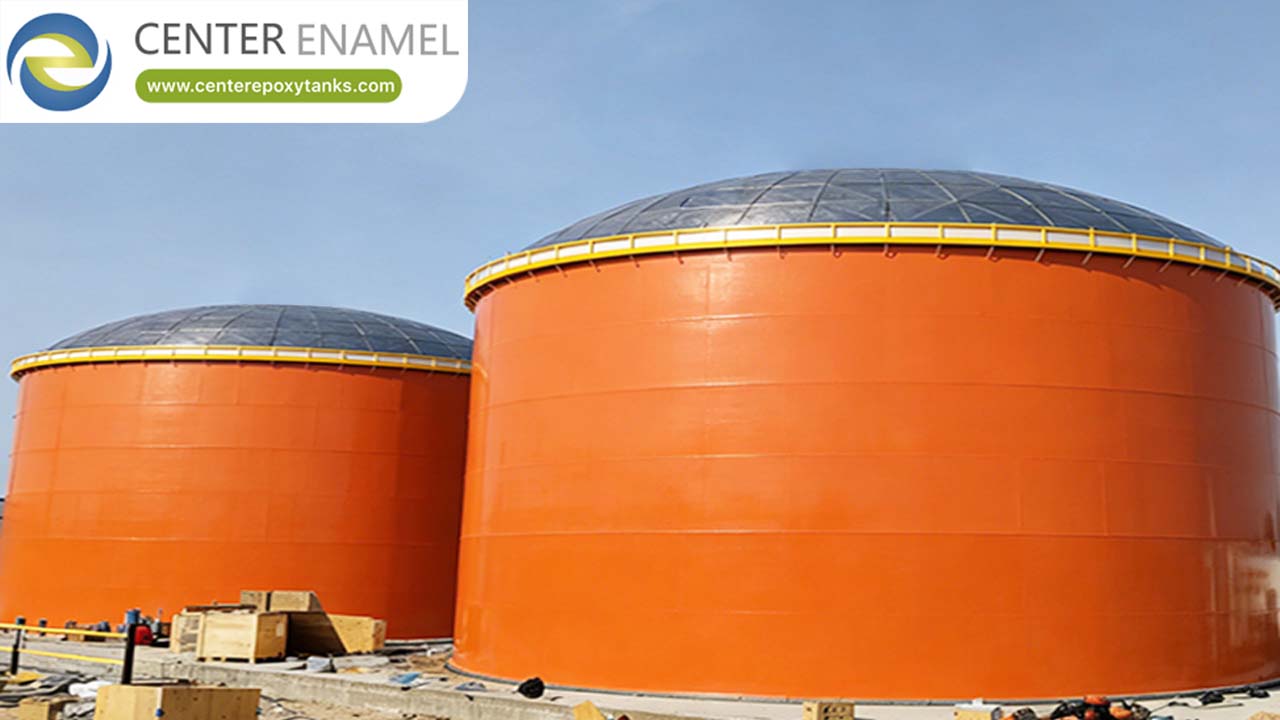
What is a Factory-Welded Storage Tank?
A factory-welded storage tank (also known as a shop-fabricated tank) is an industrial storage vessel fully manufactured and welded within a climate-controlled, professional workshop before being transported to the final project site. Unlike "field-erected" tanks that are built plate-by-plate on-site, factory-welded tanks arrive fully assembled or in large, pre-tested sections. This method ensures superior weld quality, standardized coating application, and a drastically reduced on-site installation timeline.
The Fabrication Advantage: Why "Shop-Built" Matters
The core differentiator of a factory-welded tank is the controlled environment. By moving fabrication from an open construction site to a dedicated manufacturing facility, several key variables are optimized:
1. Superior Quality Control (QC)
In a factory, welding conditions are consistent. Manufacturers use overhead cranes, automated rotators, and specialized positioning equipment to ensure welds are performed in optimal conditions. This prevents the "variable quality" often found in field-welding, which can be affected by wind, humidity, or precipitation.
2. Accelerated Project Timelines
Factory-welded tanks allow for parallel construction. While the site foundation is being poured and site preparation is underway, the tank is being fabricated, tested, and coated in the shop. Once the tank arrives, it only requires placement and piping connection, potentially reducing site work by weeks or months.
3. Coating and Lining Integrity
Applying protective coatings and linings (such as epoxy or polyurethanes) is highly sensitive to environmental factors. In a factory, temperature and humidity are strictly regulated, and curing ovens ensure the coating bonds perfectly to the steel, preventing the premature "flaking" or "bubbling" sometimes seen in field-applied coatings.
Factory-Welded vs. Field-Erected: The Decision Matrix
The choice between a factory-welded tank and a field-erected tank is usually determined by one factor: Logistics.
Feature | Factory-Welded (Shop) | Field-Erected (Site) |
Fabrication | Controlled factory environment | Directly on-site foundation |
Size Capacity | Limited by road transport | Virtually unlimited |
Installation Time | Rapid (Drop-and-connect) | Lengthy (Weeks/Months) |
Weld Quality | Highly consistent/Automated | Dependent on field conditions |
Cost Driver | Transportation/Oversized loads | On-site labor/Equipment rental |
Logistics Gate: If the tank diameter exceeds standard shipping limits (typically ~4–5 meters for standard road transport), a factory-welded tank may be impossible to deliver without expensive permitting for oversized loads. In these cases, field-erection becomes the default requirement.
Applications and Industries
Factory-welded tanks are the "gold standard" for small-to-medium capacity storage in:
● Petrochemicals: Oilfield separation, production, and storage.
● Water & Wastewater: Potable water tanks, chemical dosing vessels, and small reservoirs.
● Industrial Processing: Ingredient storage for food/beverage and specialized chemical processing.
● Power Generation: Storage for ash, activated carbon, and specialized process fluids.
Frequently Asked Questions (FAQ)
1. What is the size limit for a factory-welded tank?
The limit is defined by the transport route. If a tank exceeds height or width clearance for highway tunnels, bridges, and power lines, it cannot be shipped as one piece. Most manufacturers have a maximum shipping diameter of approximately 12–15 feet (3.5–4.5 meters), but modular designs can sometimes bypass this.
2. How does the quality of factory welding compare to field welding?
Factory welding is generally considered superior because it occurs in a stable environment with advanced equipment. It allows for automated processes and non-destructive testing (NDT) to be performed much more efficiently than in the field.
3. Can I have a factory-welded tank customized?
Yes. Despite being "pre-fabricated," these tanks can be fitted with specific nozzles, manways, internal coils, agitators, and specialized interior linings to meet your specific chemical or industrial process requirements.
4. Are factory-welded tanks more expensive than field-erected tanks?
Not necessarily. While the transportation of a large, pre-built tank is more expensive, you save significantly on on-site labor, equipment rentals (cranes/welding rigs), and the cost of site-based inspections. For many projects, the "Total Cost of Ownership" is lower for shop-built tanks.
5. What if I need a tank larger than what can be shipped?
You should explore modular, shop-built sections. These are large tank "rings" or sections fabricated in the factory, shipped, and then joined together in the field. This hybrid approach offers high-quality factory welds while overcoming transportation size constraints.


