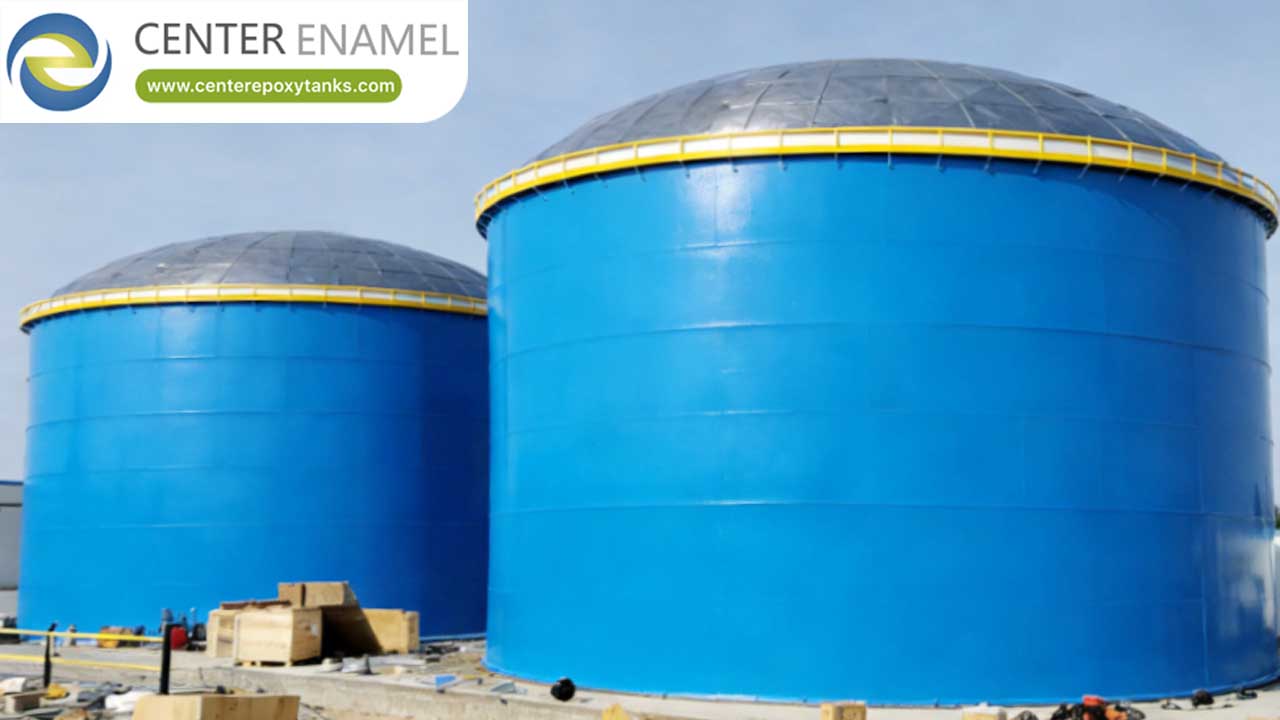
What Are Welded Steel Water Storage Tanks?
A welded steel water storage tank is a permanent, high-integrity industrial vessel constructed by fusion-welding steel plates into a monolithic, seamless structure. Engineered primarily to meet AWWA D100 standards, these tanks are the industry benchmark for municipal potable water systems, fire protection, and industrial water storage. Unlike bolted alternatives, welded tanks are fully sealed and lack mechanical fasteners, offering superior structural rigidity, zero-leak performance, and a service lifespan that can exceed 100 years with proper maintenance.
Why Engineers Specify Welded Steel Tanks
In critical infrastructure, the storage vessel is the foundation of system reliability. Welded steel is chosen when long-term performance and structural "peace of mind" outweigh the initial speed of modular construction.
1. Monolithic Structural Integrity
The defining feature of a welded tank is its continuous fusion. Because the shell, floor, and roof are welded into a single unit, the structure is incredibly resistant to hydrostatic stress, wind loads, and seismic activity. There are no gaskets or bolts that can vibrate loose or fail over time.
2. Leak-Proof Reliability
Bolted tanks rely on gaskets and sealants, which can degrade. Welded tanks are essentially "leak-proof by design." For municipalities and industrial plants where water loss (or contamination ingress) is a major concern, the seamless nature of welded steel provides a definitive barrier.
3. Regulatory Compliance (AWWA D100)
Welded steel water tanks are built to rigorous standards, most notably AWWA D100 (American Water Works Association). This standard dictates strict requirements for:
● Material Quality: Use of certified ASTM structural steel.
● Welding Procedures: Mandatory qualification of welders and weld inspection protocols.
● Safety: Design factors for wind, snow, and earthquake loads.
● Water Quality: Compliance with NSF/ANSI 61 for all interior coatings, ensuring no harmful substances leach into the water supply.
Technical Comparison: Welded vs. Bolted Water Tanks
Procurement teams must balance lifecycle value against installation speed.
Feature | Welded Steel Tanks | Bolted Steel Tanks |
Primary Standard | AWWA D100 | AWWA D103 |
Structure | Monolithic (Seamless) | Modular (Panelized) |
Maintenance | Low (Periodic coating) | Moderate (Gasket/Seal checks) |
Repairability | High (Field weldable) | Low (Requires factory parts) |
Lifespan | 50–100+ years | 20–30 years (Typical) |
Best For | Permanent Municipal/Industrial | Remote sites, phased expansion |
Frequently Asked Questions (FAQ)
1. What is the expected lifespan of a welded steel water tank?
With proper maintenance—specifically, regular inspection and timely re-coating of the interior and exterior—a welded steel water tank is designed to last 50 to 100 years. This makes it a long-term capital asset rather than a temporary solution.
2. Why are welded tanks often preferred for municipal water?
Municipalities prefer welded steel for its extreme durability and low operational cost over time. Because the tanks are monolithic and don't rely on seals, they are less prone to the "weeping" leaks that can develop in bolted structures as gaskets degrade.
3. Can welded steel tanks be repaired on-site?
Yes. This is a significant advantage. If a welded tank sustains damage (e.g., from an impact or localized corrosion), a qualified local welding team can perform repairs in the field. Bolted tanks often require specialized, proprietary parts from the manufacturer, which can lead to longer downtime.
4. Are these tanks safe for drinking (potable) water?
Yes. When designed for potable service, the interior of these tanks is coated with specialized materials that are NSF/ANSI 61 certified. This certification ensures the coating is safe for contact with drinking water and will not leach contaminants.
5. Are welded steel tanks more expensive to install?
The initial capital cost of a welded tank is often higher than a bolted one due to the labor-intensive nature of on-site welding and inspection. However, because welded tanks require less maintenance and have a significantly longer service life, their Total Cost of Ownership (TCO) is often lower over the life of the asset.


