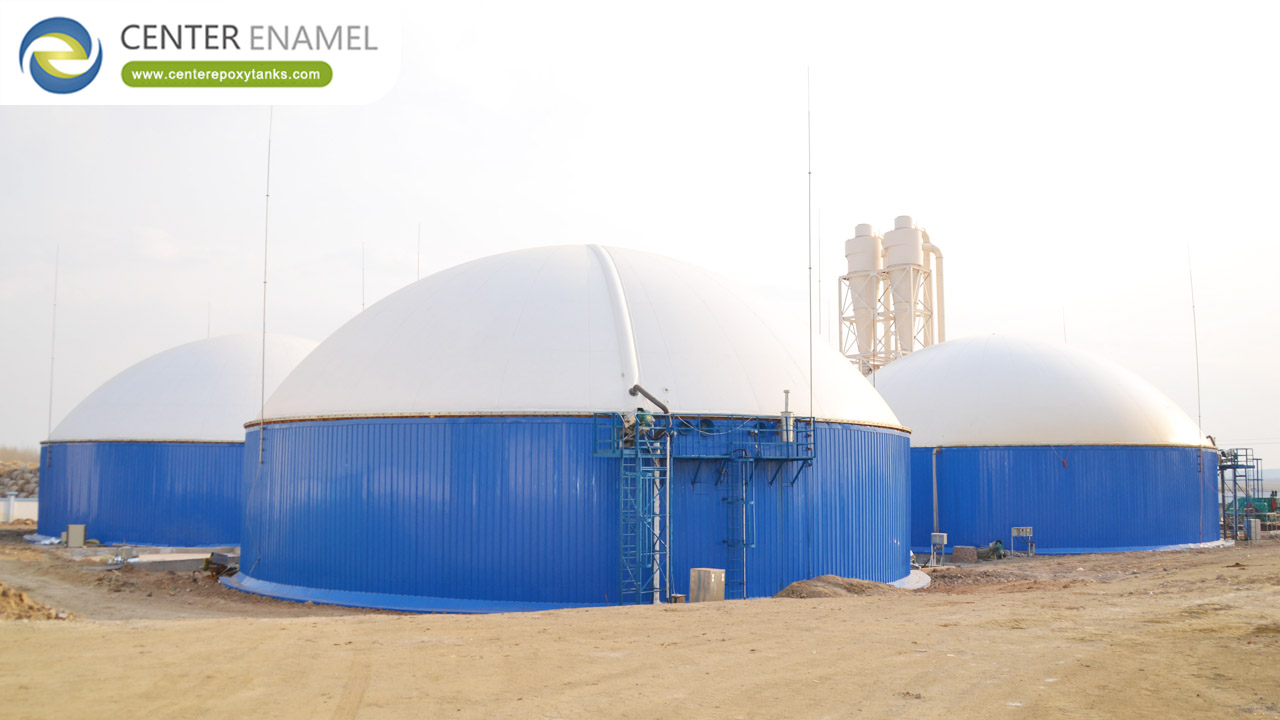
What Is a Double-Membrane Biogas Cover? Structure, Working Principle, and Applications
A double-membrane biogas cover is an advanced, flexible storage and containment system engineered to seal anaerobic digesters, wastewater treatment tanks, and agricultural slurry silos. Acting as the structural "lung" of a biogas facility, it simultaneously captures volatile methane emissions, prevents foul odors, and stores variable volumes of biogas at a constant, reliable delivery pressure.
Unlike traditional rigid concrete slab covers or single-layer sheeting, double-membrane systems utilize high-tensile technical fabrics welded via high-frequency radio technology. This creates a completely gas-tight, highly durable asset capable of withstanding corrosive biogas components (such as hydrogen sulfide and moisture) while enduring severe external weather loads.
Core Structural Layers and Components
A standard double-membrane biogas cover consists of three primary functional layers working in tandem:
The Inner Membrane (Gas Storage Reservoir): This flexible, chemically resistant layer forms the lower boundary of the dome. It dynamically expands and contracts to hold fluctuating volumes of produced biogas, moving independently of the outer shell.
The Outer Membrane (Weather Shield & Pressure Shell): This outer layer forms the characteristic spherical dome. It is continuously inflated by an explosion-proof support air blower, providing a rigid structural shield against wind, rain, and snow loads.
The Support Air System & Control Unit: A continuous-duty blower injects ambient air into the interstitial space between the inner and outer membranes. This maintains a constant pressure (typically between 2 mbar and 20 mbar), pushing downward uniformly on the inner membrane to force stored biogas into the plant piping network at a steady rate.
How It Works: The Operational Cycle
The dynamic interaction between the inner gas chamber and the outer pressurized air buffer optimizes plant efficiency:
During High Gas Production / Low Consumption: When the anaerobic digester produces more gas than downstream engines consume, the excess methane collects under the inner membrane. The inner membrane rises, and excess air between the membranes escapes through an automated regulating valve.
During High Gas Consumption / Low Production: When the Combined Heat and Power (CHP) engine draws more gas than is actively produced, the inner membrane descends. The blower simultaneously maintains air pressure in the outer chamber, ensuring the outer dome retains its aerodynamic shape and structural integrity.
Data Table: Double-Membrane Biogas Cover Technical Specifications
Parameter / Feature | Technical Specification Range |
Standard Diameters | Up to 40 – 50 meters (customizable) |
Operating Gas Pressure | 2 mbar to 20 mbar (higher with structural cable reinforcement) |
Membrane Fabric Material | PVC-coated polyester with UV-resistant & anti-fungal topcoats |
Fabric Weight / Quality | 700 g/m² up to 1,300 g/m² |
Seaming Method | High-Frequency (HF) / Hot-Air Molecular Welding |
Expected Service Lifespan | 15 to 20+ Years (with regular inspection and maintenance) |
Frequently Asked Questions (FAQ)
Q: What prevents the double-membrane cover from over-pressurizing?
A: Every certified biogas cover includes a mechanical hydraulic safety relief valve (water seal) and an overpressure protection mechanism. If the internal gas volume exceeds design limits, the valve automatically vents excess biogas safely to a flare or the atmosphere, protecting the tank structure.
Q: Can a double-membrane cover be mounted on top of existing tanks?
A: Yes. They can be installed as top-mounted covers on existing steel or concrete digesters using a heavy-duty stainless steel clamping ring and anchor profile. They can also be deployed as ground-mounted, standalone gas holders using a third bottom membrane.
Q: How is the gas volume monitored inside the cover?
A: Storage capacity is tracked using an electronic volume measurement system—typically an ultrasonic or radar sensor mounted at the apex of the outer dome. This sensor measures the distance to the shifting inner membrane, feeding real-time 0-100% capacity data into the plant's automation system.
Q: How do the membranes resist corrosive gases like hydrogen sulfide (H2S)?
A: The inner membrane is fabricated from specialized low-permeability polymers treated specifically to resist chemical degradation from organic acids, moisture, and hydrogen sulfide present in the digester headspace.


