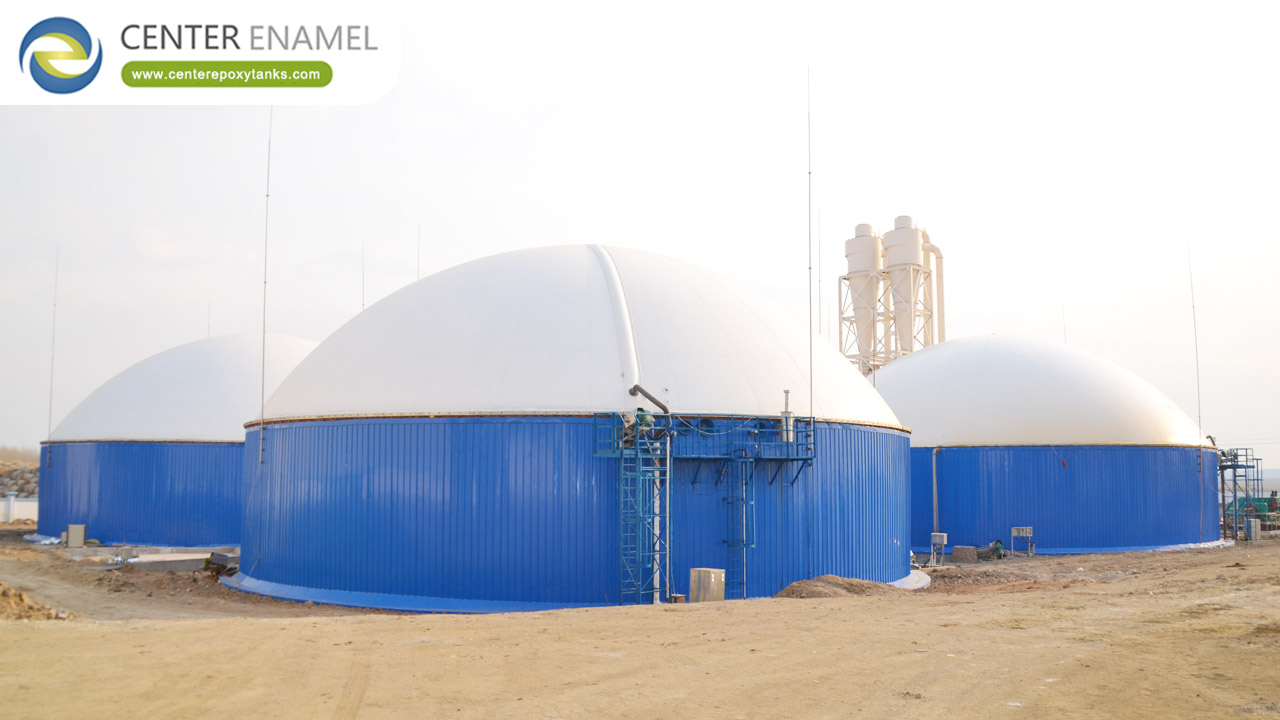
What is a Biogas Membrane Cover? Design, Functions, and Applications
A biogas membrane cover is a specialized, high-tensile fabric structure engineered to seal the top of an anaerobic digester, wastewater treatment tank, or agricultural slurry silo. Its primary functions are to contain volatile greenhouse gases, eliminate fugitive odor emissions, capture methane for renewable energy generation, and provide temporary gas storage.
Unlike traditional rigid steel or concrete roofs, industrial membrane covers are constructed from advanced, PVC-coated polyester fabrics treated with specialized anti-fungal and UV-resistant topcoats. These materials withstand highly corrosive internal environments—specifically high concentrations of hydrogen sulfide (H2S), moisture, and methane—while enduring extreme external weather loads.
Core Functions of Biogas Membrane Covers
Gas Containment & Methane Recovery: By creating a 100% airtight seal over the digester headspace, the membrane prevents methane (CH4) from escaping into the atmosphere, allowing facilities to channel the gas directly into combined heat and power (CHP) engines, boilers, or gas upgrading systems.
Odor and Emission Control: In municipal wastewater treatment plants and large agricultural biogas facilities, open-top tanks generate heavy hydrogen sulfide and ammonia odors. Membrane covers trap these compounds entirely, protecting surrounding communities and satisfying strict environmental regulations.
Dynamic Volume Accommodation: Because biological digestion is a continuous, fluctuating process, membrane covers expand and contract safely in response to changing internal gas pressures and volumes, acting as the structural "lung" of the plant.
Single vs. Double Membrane Configurations
Facility engineers typically choose between two main structural designs depending on their gas buffering requirements and site architecture:
Single Membrane Covers
A single membrane cover consists of a single layer of reinforced fabric stretched across a central support column or a radial network of stainless steel support straps, forming a conical or domed shape.
Primary Purpose: Primarily utilized for basic odor control, emissions containment, and low-pressure gas collection where active gas storage is not required.
Operational Note: Internal volume fluctuates freely with weather and biological activity, requiring secondary mechanical gas boosters to feed downstream equipment.
Double Membrane Covers (Biogas Domes)
A double membrane cover features two distinct fabric layers. The inner membrane expands and contracts inside the tank to hold the biogas. The outer membrane encapsulates the inner layer and is continuously pressurized by an explosion-proof air blower, creating a rigid external dome.
Data Table: Single vs. Double Membrane Biogas Covers
Technical Metric | Single Membrane Cover | Double Membrane Cover (Biogas Dome) |
Primary Function | Odor control & basic gas containment | Active gas buffering & constant-pressure delivery |
Membrane Layers | Single fabric layer | Dual layers (Inner gas layer + Outer air-supported dome) |
Gas Delivery Pressure | Variable / Low | Constant (2 mbar to 25 mbar) |
Weather Resilience | Moderate (Relies on internal tension/straps) | High (Rigid outer shell sheds snow and high winds) |
Thermal Insulation | Low | High (Pressurized air buffer insulates digester slurry) |
Typical Integration | Municipal clarifiers, small agricultural tanks | Commercial CSTR digesters, industrial GFS tanks |
Frequently Asked Questions (FAQ)
Q: What materials are used to manufacture industrial biogas membrane covers?
A: They are typically constructed from high-tensile industrial polyester base fabric coated with heavy-duty Polyvinyl Chloride (PVC). The fabrics feature specialized surface lacquers (such as PVDF or acrylic treatments) to resist ultraviolet (UV) radiation, microbial degradation, and permeation by hydrogen sulfide (H2S) and methane.
Q: Can a membrane cover be installed on top of existing concrete or steel tanks?
A: Yes. Membrane covers can be retrofitted onto existing concrete or carbon steel tanks using specialized stainless steel mounting brackets, expansion anchors, and EPDM sealing gaskets, provided the upper tank wall structure is structurally certified to bear the tensile loads.
Q: How do double membrane covers maintain a constant gas pressure?
A: A continuous-duty, explosion-proof air blower injects ambient air into the interstitial space between the inner and outer membranes. This air pressure pushes down uniformly on the inner gas-containing membrane, forcing the biogas out of the holder into the piping network at a steady, regulated pressure.
Q: What is the typical service lifespan of a biogas membrane cover?
A: A professionally engineered and properly maintained biogas membrane cover typically lasts between 15 and 20 years. The inner membrane often outlasts the outer shell because it is protected from direct ultraviolet sunlight degradation.


