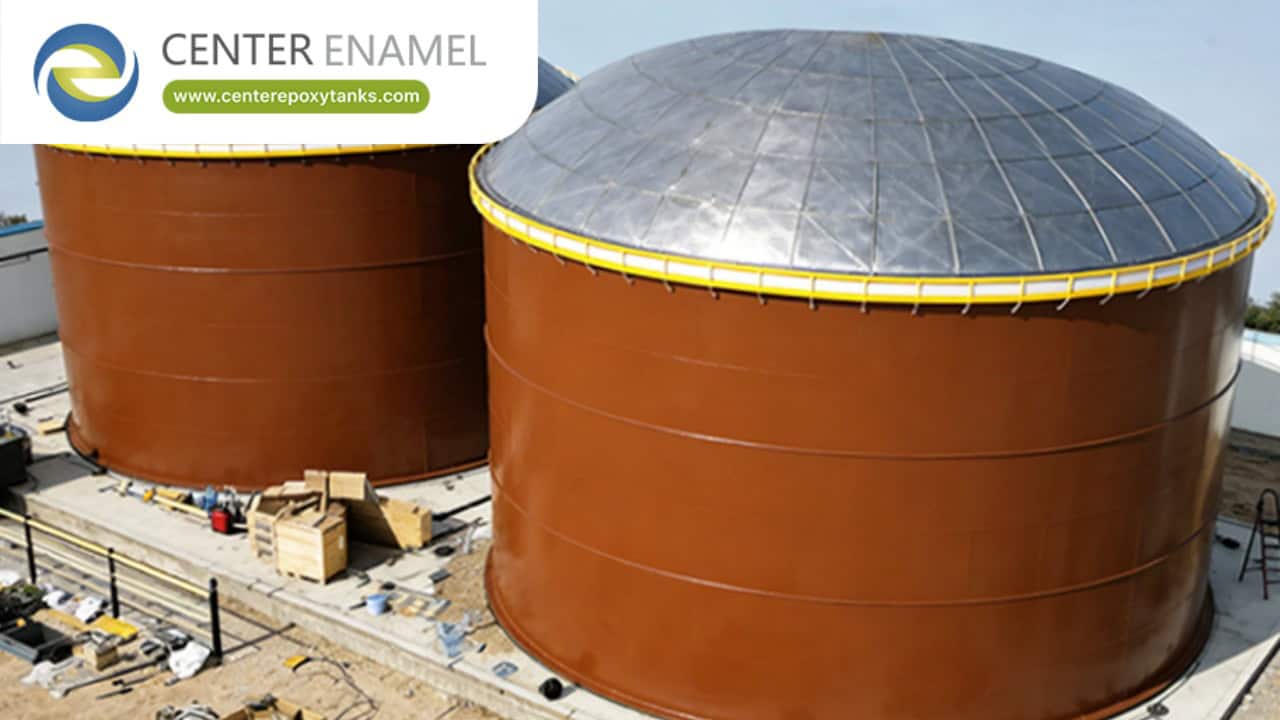
What Is a Cone Roof Tank? Design, Structure, and Industrial Applications
In the landscape of industrial bulk liquid containment, aboveground storage tanks (ASTs) are engineered in various configurations depending on the volatility, density, and volume of the stored media. Among fixed-roof options, the cone roof tank stands as the most common and traditional vessel design.
Characterized by a conical roof shaped like an inverted funnel welded directly to the top of a vertical cylindrical shell, cone roof tanks are widely deployed across petroleum refineries, chemical processing plants, wastewater facilities, and agricultural liquid storage hubs.
1. Core Structural Mechanics of a Cone Roof Tank
A cone roof tank is classified as an atmospheric storage vessel, meaning it is designed to operate at ambient pressures or under minimal internal pressure (up to 2.5 psig). The conical geometry allows rainwater, snow, and environmental debris to drain naturally away from the center toward the outer perimeter of the tank wall.
Depending on the diameter of the tank and load requirements, cone roofs are engineered in two primary structural configurations:
Self-Supported Cone Roofs: Designed for smaller-diameter tanks, these roofs rely on structural rafters or self-supporting conical plates that span the entire diameter without requiring internal vertical support columns. This ensures a clean interior space.
Column-Supported Cone Roofs: For large-diameter industrial tanks exceeding standard self-span limits, the roof structure is supported by an internal array of center columns, intermediate girders, and radial rafters to safely distribute dead and live snow loads.
2. Governing Standards and Safety Features
To prevent structural failure and catastrophic overpressure, cone roof tanks are strictly designed in accordance with international engineering codes:
Core Compliance Frameworks:
API 650: Governs welded steel tanks for oil storage, detailing specific slope requirements, plate thicknesses, and roof-to-shell junction details.
Fragile Joint Design: Per API 650 specifications, the connection between the cone roof and the top shell angle is often engineered as a "fragile joint." In the event of an accidental internal explosion or excessive overpressure, this seam is designed to fail before the bottom-to-shell weld, releasing pressure safely upward and protecting the tank foundation.
Data Table: Cone Roof Tank Design Matrix
Cone Roof Design Type | Maximum Diameter Span | Internal Support Requirement | Primary Industrial Application | Governing Standard |
Self-Supported Cone Roof | Typically up to 35–50 meters | None (Clear-span via self-supporting plates/rafters) | Chemical storage, refined fuels, medium crude | API 650 |
Column-Supported Cone Roof | Unlimited (Exceeding 50+ meters) | Requires internal center and intermediate support columns | Large municipal water reserves, bulk crude oil tanks | API 650 / AWWA D100 |
Frequently Asked Questions (FAQ)
Q: What is a cone roof tank?
A: A cone roof tank is a fixed-roof, vertical cylindrical storage vessel featuring a conical-shaped roof that slopes downward from the center, designed primarily for atmospheric bulk liquid containment.
Q: What is the difference between a self-supported and a column-supported cone roof?
A: A self-supported cone roof spans the tank diameter without internal columns (ideal for smaller tanks), whereas a column-supported cone roof utilizes internal vertical posts and girders to support massive roof loads on large-diameter tanks.
Q: What engineering standards govern cone roof tank design?
A: Cone roof tanks are primarily designed, fabricated, and tested in accordance with international codes such as API 650 for industrial and petroleum applications and AWWA D100 for municipal water storage.
Q: How do cone roof tanks handle internal vapor space?
A: Because cone roof tanks feature a fixed vapor space between the liquid surface and the roof, they require pressure-vacuum (PV) vents or vapor recovery systems to manage breathing losses and volatile organic compound (VOC) emissions.


