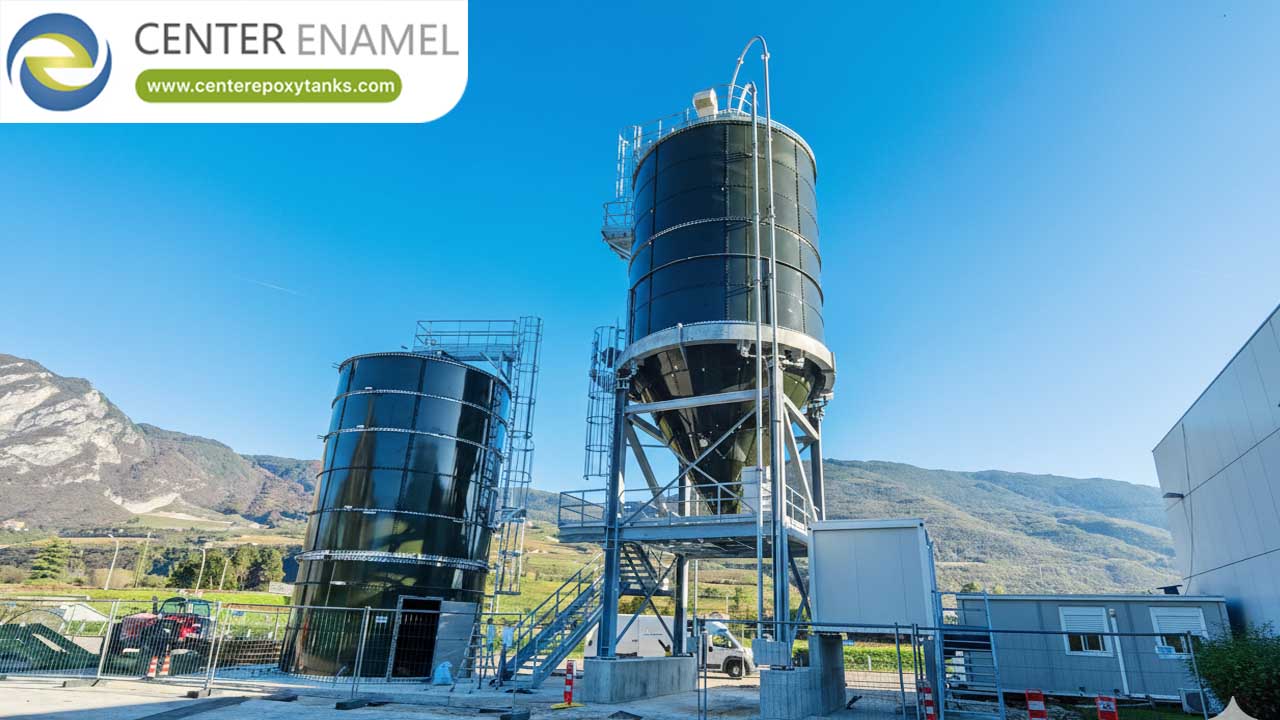
What is a Cone Bottom Tank?
A cone bottom tank is an industrial storage vessel characterized by a sloped, conical base that facilitates the complete drainage of liquids, slurries, or dry materials via gravity. Unlike standard flat-bottom tanks, the funnel-shaped geometry directs contents to a central outlet at the lowest point, effectively eliminating product buildup and residue. These tanks are the industry standard for applications where total discharge, ease of cleaning, and contamination prevention are mission-critical.
The Engineering Advantage of Conical Geometry
The primary function of a cone bottom tank is to leverage gravity to manage substances that are difficult to drain. By utilizing a specific slope angle, these tanks ensure that even high-viscosity materials or solids in suspension move efficiently toward the discharge port.
Why Industries Choose Cone Bottom Tanks:
● 100% Drainage: The slope prevents "dead zones" where materials typically settle in flat-bottom vessels. This minimizes waste and ensures the tank can be emptied completely without manual intervention.
● Enhanced Cleaning: Because they are designed to discharge completely, flushing out the tank during product changeovers is faster and safer, reducing the risk of cross-contamination.
● Solids Suspension: For industries dealing with slurries or settling particles, the funnel shape encourages natural flow and prevents clumping, making it ideal for mixing and dosing processes.
Technical Considerations for Procurement
Selecting the right cone bottom tank involves more than just choosing a volume. Engineers must consider the physical properties of the stored material.
1. The Importance of the Slope Angle
The angle of the cone is perhaps the most critical design specification:
● Shallow Slope (10° – 15°): Best for low-viscosity, free-flowing liquids like water or thin chemicals.
● Steep Slope (30° – 45°+): Necessary for heavy slurries, powders, grains, or viscous materials prone to "bridging" or clogging.
2. Support Systems (Stands & Baskets)
Unlike flat-bottom tanks that sit directly on a foundation, cone bottom tanks require an external support structure.
● Stands: Usually fabricated from epoxy-coated carbon steel or stainless steel, these stands keep the cone off the ground, allowing for gravity-fed discharge and the installation of valves or piping.
● Baskets: For plastic (PE) tanks, a support "basket" is often necessary to prevent the weight of the liquid from distorting the cone shape under pressure.
Comparison: Cone Bottom vs. Flat Bottom
Feature | Cone Bottom Tank | Flat Bottom Tank |
Drainage | Complete (Gravity-fed) | Partial (Requires pump/residual handling) |
Maintenance | Low (Self-cleaning) | Moderate (Requires entry/manual flush) |
Installation | Requires overhead clearance/stand | Ground-level (Simple foundation) |
Best Use | Viscous fluids, slurries, powders | Bulk water, stable chemicals, storage |
Cost | Higher (Due to stand/structure) | Lower (Simple design) |
Frequently Asked Questions (FAQ)
1. What is the main disadvantage of a cone bottom tank?
The primary disadvantage is the requirement for headroom and support. Because the cone extends downward, you need a tall stand and significant overhead clearance, which can be an issue in facilities with limited space. They are also generally more expensive than flat-bottom tanks due to the cost of the stand/basket.
2. Do I need a stand for every cone bottom tank?
Yes. To utilize the gravity-drain feature, the tank must be elevated. The stand must be engineered to handle the full weight of the tank when filled, including seismic and wind load requirements if installed outdoors.
3. Can I use a cone bottom tank for mixing?
Yes, but with caveats. If the cone angle is too steep (usually >15°), it can cause stratification or fluid stall in the bottom of the cone. For mixing applications, low-angle cone bottoms or dished-bottom tanks are often preferred to ensure proper flow circulation.
4. How steep should my cone angle be?
The angle depends entirely on your material.
● Water or thin liquids: 10°–15° is usually sufficient.
● Grains, seeds, or powders: 30°–45° is standard.
● Thick sludge or high-viscosity paste: 45°–60° may be required to ensure the material flows without bridging.
5. Can I convert a flat-bottom tank to a cone-bottom tank?
Generally, no. The structural integrity of the tank shell is designed to support specific forces. A cone bottom requires different reinforcement and structural support than a flat bottom. It is significantly safer and more cost-effective to purchase a tank specifically engineered as a cone bottom system.


