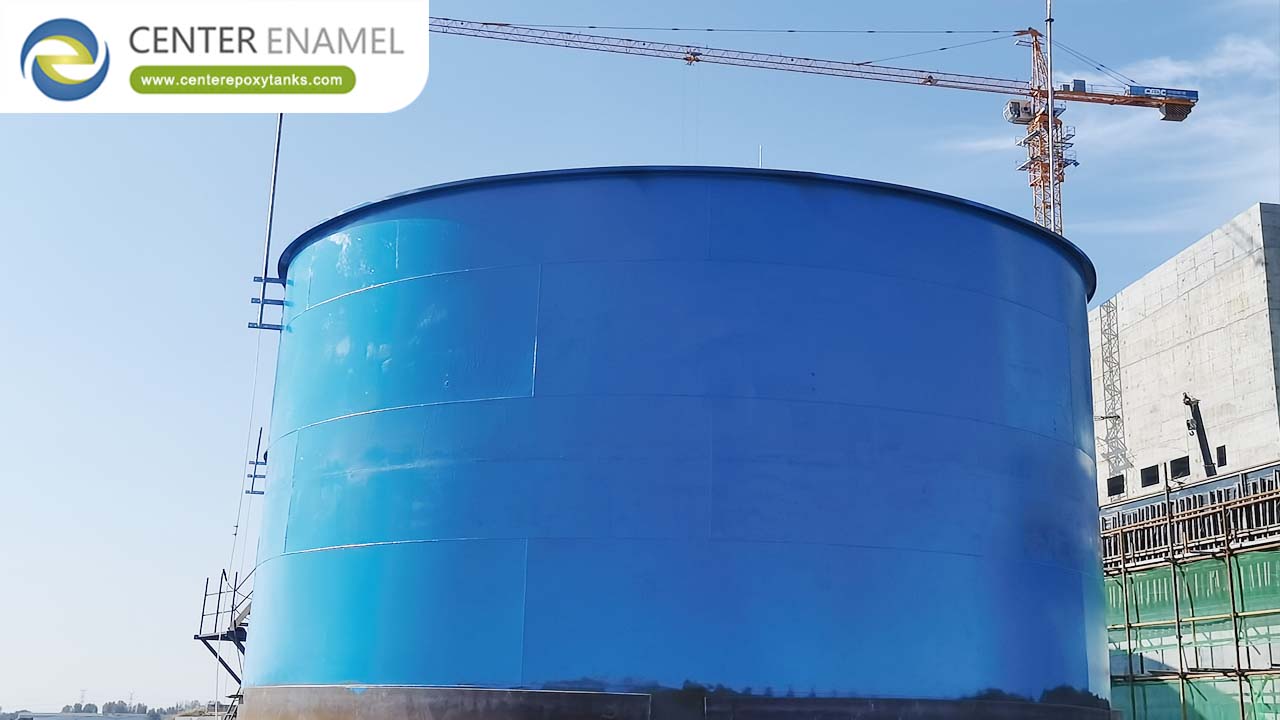
What is a Coated Steel Tank? Industrial Engineering & Corrosion Guide
A coated steel tank is a high-performance industrial storage vessel that combines the structural strength of high-tensile steel with a specialized chemical barrier—such as vitreous enamel (Glass-Fused-to-Steel) or Fusion Bonded Epoxy (FBE)—designed to prevent corrosion, abrasion, and chemical degradation. While raw carbon steel is susceptible to rust and oxidation, these advanced coatings are applied at the factory to create a continuous, non-porous dielectric layer. This technology transforms the steel into an inert, chemically resistant container suitable for aggressive environments, including wastewater treatment, anaerobic digestion, and high-purity chemical storage, ensuring a design life of 30+ years with minimal maintenance.
The "Why": The Science of Coating Steel
In industrial engineering, the primary enemy of steel is the environment. Whether it's liquid waste, acidic gases, or water, the medium stored inside will eventually destroy bare steel. Coating technology is the critical solution to this problem.
● The Dielectric Barrier: The coating acts as an insulator, preventing the electrochemical reaction between the steel and the stored medium (the "corrosion cell").
● Holiday-Free Integrity: Leading-edge manufacturers perform "Holiday Testing" (high-voltage inspection) on every panel. This ensures that even microscopic pinholes in the coating are detected and repaired before the tank reaches the site, guaranteeing 100% surface protection.
● Mechanical & Chemical Synergy: Unlike paint, which can flake, modern industrial coatings are chemically bonded (GFS) or thermoset (FBE) to the steel. This provides a surface that is not only chemically inert but also physically tough enough to withstand the abrasive nature of sludge or slurries.
Primary Types of Tank Coatings
While "coated steel tank" is a broad term, the industry relies on two dominant technologies for high-demand applications:
1. Glass-Fused-to-Steel (GFS)
● Process: Porcelain enamel is fused to steel at temperatures between 800C and 900C.
● Best For: Extreme chemical resistance (pH 2--12), long-term storage of aggressive wastewater, and potable water.
● Longevity: Exceptional; the glass surface does not degrade or require repainting.
2. Fusion Bonded Epoxy (FBE)
● Process: Thermoset epoxy powder is applied electrostatically and cured at 200^circtext{C} to form a molecular bond.
● Best For: Agricultural slurry, biogas digesters, and industrial effluent where mechanical toughness and budget optimization are priorities.
● Longevity: High; highly resistant to impacts and internal cleaning equipment.
Comparative Overview: Industrial Storage Solutions
Feature | Coated Steel (GFS/FBE) | Reinforced Concrete | Welded Carbon Steel |
Corrosion Resistance | High (Dielectric Barrier) | Low (Porous) | Low (Needs frequent painting) |
Maintenance | Minimal | High (Structural repair) | High (Recurrent recoating) |
Installation Speed | Rapid (Modular) | Very Slow (Curing) | Moderate |
Chemical Inertness | Excellent | Poor (Acid attack) | Moderate |
Regulatory Compliance | High (AWWA/ISO) | Variable | API 650 |
Frequently Asked Questions (FAQ)
Q: Does the coating on a steel tank eventually peel off?
A: With factory-controlled processes like GFS (fusing) or FBE (thermoset bonding), the coating is not a "paint." It is part of the steel’s surface chemistry. It will not peel under normal operating conditions.
Q: Can a coated steel tank be used for high-acidity environments?
A: Absolutely. GFS (Glass-Fused-to-Steel) is specifically designed to resist acids. FBE is also highly capable, though the specific coating formulation should be matched to the pH and chemical concentration of the stored medium.
Q: Why choose a coated steel tank over concrete?
A: Concrete is porous, making it susceptible to seepage, microbial-induced corrosion (MIC), and structural cracking. Coated steel provides a modular, sealed, and non-porous barrier that eliminates these risks entirely.
Optimizing Your Industrial Infrastructure
Selecting the right coating is the most important decision in your tank procurement process. It determines your maintenance costs, your environmental compliance, and your asset's total lifecycle.
Are you evaluating storage solutions for an upcoming infrastructure project?
[Contact our engineering team] to discuss the chemical profile of your stored medium, review our coating adhesion test data, or obtain a comprehensive design proposal tailored to your specific application requirements.
Would you like a detailed technical brief on the difference between factory-applied coatings and field-applied linings for large-scale steel tanks?


