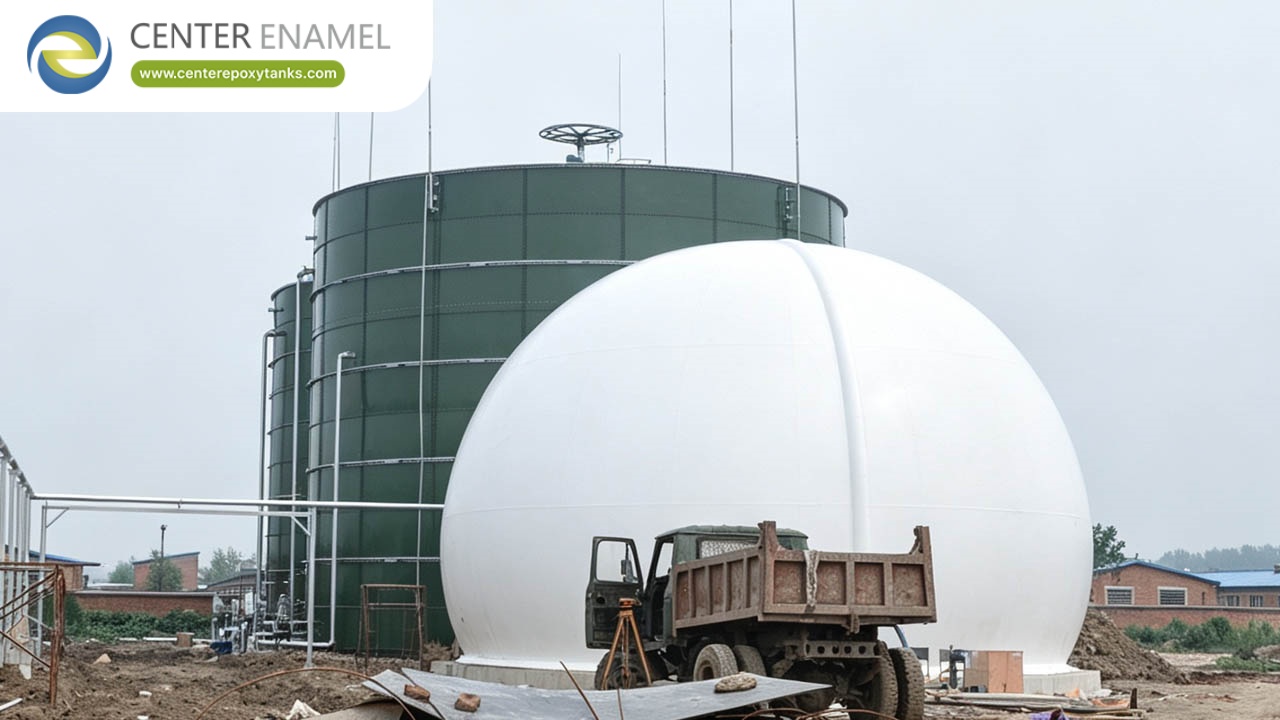
What is a Biomethane Plant?
A biomethane plant converts organic waste into pipeline-quality renewable natural gas. It combines anaerobic digestion, biogas upgrading to more than 97% methane, and grid injection or vehicle fuel supply, with bolted steel digesters and digestate tanks as core infrastructure.
What is a Biomethane Plant?
A biomethane plant is a biogas facility taken to its highest-value conclusion: raw biogas is not burned locally but upgraded — carbon dioxide, hydrogen sulfide, and water removed — until the gas exceeds 97% methane and qualifies as renewable natural gas (RNG) for grid injection, LNG/CNG vehicle fuel, or certified green gas sales.
The plant flows are familiar from biogas — feedstock reception, anaerobic digestion, digestate storage — but with an upgrading plant replacing the CHP engine and gas quality instrumentation throughout. The tank estate is identical: epoxy coated bolted steel vessels for digestion, buffering, and digestate, engineered to AWWA D103-09 and installed in weeks to keep the biomethane value chain on schedule.
Why Biomethane Is the Highest-Value Biogas Strategy
Upgrading biogas to biomethane multiplies the value of the same gas molecule: grid gas displaces fossil natural gas directly, qualifies for renewable fuel and carbon incentives in many markets, and reaches customers beyond the plant fence.
l CHP captures only the energy saleable locally as power and heat; biomethane reaches the entire gas market.
l Vehicle-fuel RNG commands premium prices under low-carbon fuel standards.
l Grid injection stabilizes revenue against fluctuating electricity prices.
The Upgrading Path: From Biogas to Biomethane
The biomethane production chain adds three stages to classic anaerobic digestion:
1. Surface Preparation (Shot Blasting): Premium structural steel plates undergo automated grit or shot blasting to achieve a pristine anchor profile, removing all rust, mill scale, oils, and surface impurities.
2. Electrostatic Powder Application: Specialized thermoset epoxy powder is applied uniformly across both sides of the steel panels using automated electrostatic spray equipment.
3. Thermal Cross-Link Curing: The coated sheets pass through precision tunnel ovens (150°C to 250°C), where the epoxy powder melts, flows, and chemically cross-links into a dense, continuous protective polymer film.
4. Rigorous Quality Control & Holiday Testing: Every individual panel undergoes strict dry film thickness verification and high-voltage holiday spark testing (typically at 1,100V to 1,500V) to guarantee absolute zero pinholes or micro-discontinuities.
Technical Performance Matrix: Biogas Utilization Options
Parameter | CHP (Power + Heat) | Boiler / Direct Use | Biomethane Upgrading |
Product | Electricity plus heat | Heat or steam only | Pipeline-quality RNG (>97% CH4) |
Market Reach | Local grid and heat users | On-site only | Entire gas grid and vehicle fuel market |
Revenue Streams | Power sales, heat sales, incentives | Fuel substitution value | Gas sales, vehicle fuel premiums, carbon credits |
Energy Efficiency | 35% to 45% electrical | 80%+ thermal | Up to 97% methane recovery |
Biomethane Plant Applications
l Agricultural biomethane hubs co-digesting manure and regional waste
l Municipal sludge and food waste plants injecting into local gas grids
l Industrial effluent plants converting waste gas liabilities into fuel
l Landfill gas upgrading projects at closed and active sites
l Dedicated RNG vehicle fuel production for transport fleets
l Wastewater utility energy self-sufficiency programs
Key Advantages of the Biomethane Plant Model
1. Premium Value From the Same Gas
Upgrading lifts raw biogas into renewable fuel markets where it earns gas, fuel, and carbon revenue simultaneously — typically the strongest business case in the biogas sector.
2. Feedstock Flexibility, Modular Tankage
Bolted steel reception, digestion, and digestate tanks expand in stages as feedstock contracts grow, matching capital deployment to gas offtake commitments.
3. Proven, Financeable Technology Chain
Anaerobic digestion and membrane-based upgrading are mature, bankable technologies; standardized tank packages shorten construction and de-risk project schedules.
Quality Standards and Proven References
Center Enamel's epoxy coated and glass-fused-to-steel tanks are engineered in strict accordance with AWWA D103-09, OSHA, ISO 28765, and EN 1090, and manufactured under ISO 9001 and ISO 45001 certified quality systems. As the first manufacturer of glass-fused-to-steel tanks in China — holding nearly 200 enameling patents — Center Enamel has delivered bolted tank projects to more than 100 countries, including a 16,760 m³ biogas project in Inner Mongolia and wastewater and biogas references for global environmental leaders such as Paques and Veolia.
Frequently Asked Questions (FAQ)
Q: What is the difference between biogas and biomethane?
A: Biogas is the raw product of anaerobic digestion, typically 55% to 70% methane; biomethane is that gas upgraded above 97% methane with CO2, H2S, and water removed, making it equivalent to natural gas.
Q: What feedstocks feed a biomethane plant?
A: Manure and slurry, food waste, sewage sludge, crop residues, greases, and high-strength industrial effluents — the same feedstock base as biogas, since upgrading happens after digestion.
Q: Which tanks make up a biomethane plant?
A: Feedstock reception and buffer tanks, primary and secondary digesters, gas holders feeding the upgrader, and digestate storage — all deliverable on one epoxy coated bolted steel platform.
Q: What is the expected lifespan of an epoxy coated bolted steel tank infrastructure on a biomethane plant?
A: When manufactured in strict compliance with international design codes (such as AWWA D103) and properly maintained, an epoxy coated bolted steel tank infrastructure on a biomethane plant is engineered for a dependable operational lifespan exceeding 30 years.


