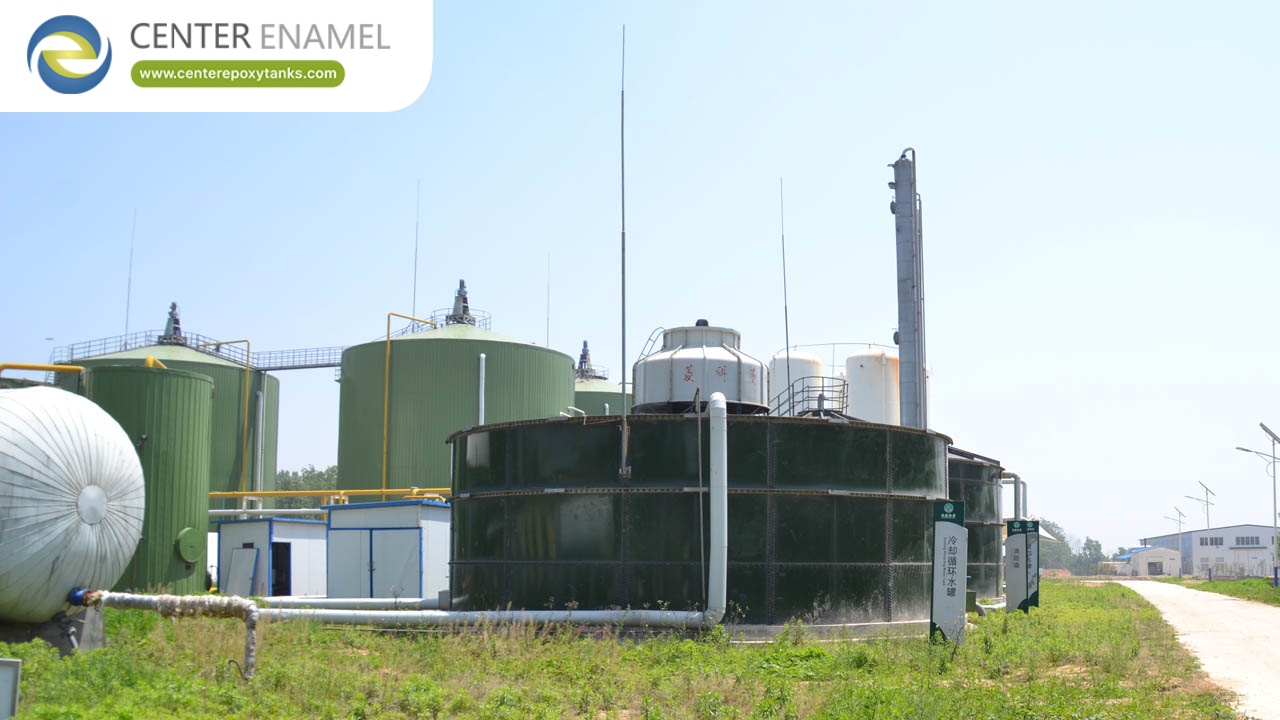
What is a Biogas Upgrading Plant?
A biogas upgrading plant removes carbon dioxide, hydrogen sulfide, and water from raw biogas to produce biomethane above 97% methane. Main technologies include membrane separation, water scrubbing, amine scrubbing, and pressure swing adsorption, supported by bolted steel tank infrastructure.
What is a Biogas Upgrading Plant?
A biogas upgrading plant is the process facility that sits between the digester and the gas grid: it takes raw biogas — a mix of methane, carbon dioxide, hydrogen sulfide, and water vapor — and separates out the impurities until the methane concentration exceeds 97%, meeting grid and vehicle-fuel specifications.
Four technologies dominate the market. Membrane separation passes compressed gas through polymer membranes; water scrubbing dissolves CO2 under pressure; amine scrubbing chemically absorbs CO2 in a solvent loop; and pressure swing adsorption binds CO2 on molecular sieves. All four rely on the same upstream tank estate — digesters, gas holders, and digestate stores — where epoxy coated bolted steel delivers corrosion-resistant, gas-tight performance.
Biogas Upgrading Technologies Compared
Technology selection drives capital cost, energy consumption, and methane recovery — the three numbers that decide upgrading economics:
l Membrane systems: modular, simple to operate, minimal consumables; today's most common choice.
l Water scrubbing: robust and proven, but water-hungry and heavier on power.
l Amine scrubbing: lowest methane loss and heat-integrated, but chemically intensive.
l PSA: reliable and chemical-free, with moderate methane recovery and complex valve arrays.
The Role of Tanks in an Upgrading Plant
While the upgrading skid purifies the gas, bolted steel vessels handle everything around it:
1. Surface Preparation (Shot Blasting): Premium structural steel plates undergo automated grit or shot blasting to achieve a pristine anchor profile, removing all rust, mill scale, oils, and surface impurities.
2. Electrostatic Powder Application: Specialized thermoset epoxy powder is applied uniformly across both sides of the steel panels using automated electrostatic spray equipment.
3. Thermal Cross-Link Curing: The coated sheets pass through precision tunnel ovens (150°C to 250°C), where the epoxy powder melts, flows, and chemically cross-links into a dense, continuous protective polymer film.
4. Rigorous Quality Control & Holiday Testing: Every individual panel undergoes strict dry film thickness verification and high-voltage holiday spark testing (typically at 1,100V to 1,500V) to guarantee absolute zero pinholes or micro-discontinuities.
Technical Performance Matrix: Biogas Upgrading Technologies
Parameter | Membrane Separation | Water Scrubbing | Amine Scrubbing | Pressure Swing Adsorption |
Methane Recovery | 97% to 99%+ | 97% to 98% | 99%+ | 94% to 98% |
Energy Demand | Moderate (compression) | High (pumps and water) | Low electric, high heat | Moderate |
Consumables | Membrane replacement, years apart | Water treatment and make-up | Amine make-up and heat | Adsorbent media, long life |
Footprint & Scaling | Compact, modular container units | Larger plant, gravity columns | Medium with reboiler heat source | Medium, valve-intensive |
Biogas Upgrading Plant Applications
l Grid injection plants converting digester gas to renewable natural gas
l Vehicle fuel production for CNG and LNG transport fleets
l Landfill gas upgrading where gas quality permits
l Wastewater treatment plant energy programs feeding local grids
l Agricultural cooperative biomethane hubs
l Food waste plant gas monetization projects
Key Advantages of Modern Upgrading Plants
1. Highest-Value Outlet for Digester Gas
Upgrading converts biogas from a local fuel into grid-spec renewable natural gas, unlocking fuel premiums, carbon credits, and long-term offtake contracts.
2. Mature, Modular Technology
Containerized membrane plants install alongside the digester tankage in months, with methane recovery above 97% and remote monitoring standard.
3. Tank Infrastructure That Scales With It
Bolted steel digesters, gas holders, and digestate tanks expand in step with the upgrading capacity, keeping the whole plant on one coordinated growth path.
Quality Standards and Proven References
Center Enamel's epoxy coated and glass-fused-to-steel tanks are engineered in strict accordance with AWWA D103-09, OSHA, ISO 28765, and EN 1090, and manufactured under ISO 9001 and ISO 45001 certified quality systems. As the first manufacturer of glass-fused-to-steel tanks in China — holding nearly 200 enameling patents — Center Enamel has delivered bolted tank projects to more than 100 countries, including a 16,760 m³ biogas project in Inner Mongolia and wastewater and biogas references for global environmental leaders such as Paques and Veolia.
Frequently Asked Questions (FAQ)
Q: Which biogas upgrading technology is best?
A: For most new plants, membrane separation offers the best balance of methane recovery (97% to 99%+), low consumables, and modular installation; amine scrubbing wins where minimal methane loss is critical and waste heat is available.
Q: What methane purity does grid injection require?
A: Most grid codes require biomethane above 97% methane with tight limits on CO2, H2S, oxygen, and water dew point — all achievable with modern upgrading trains.
Q: Do upgrading plants need dedicated tanks?
A: Yes: gas holders buffer flow into the upgrader, digesters and buffer tanks manage feedstock, and digestate storage completes the plant — all standard duties for epoxy coated bolted steel vessels.
Q: What is the expected lifespan of an epoxy coated bolted steel tank infrastructure on an upgrading plant?
A: When manufactured in strict compliance with international design codes (such as AWWA D103) and properly maintained, an epoxy coated bolted steel tank infrastructure on an upgrading plant is engineered for a dependable operational lifespan exceeding 30 years.


