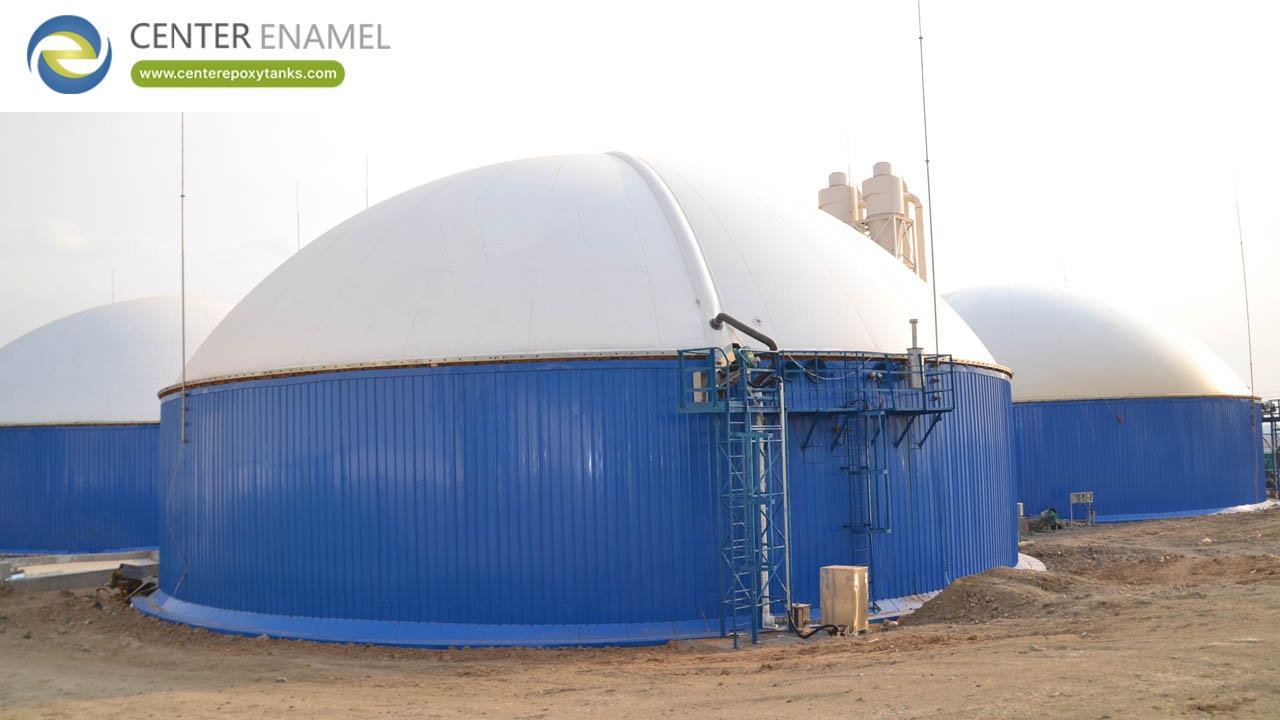
What is a Biogas Storage Tank?
A biogas storage tank holds biogas produced by anaerobic digestion at low pressure until it is burned in a CHP unit, upgraded, or flared. Options range from double-membrane holders on bolted steel tanks to standalone silo holders, buffering gas production around the clock.
What is a Biogas Storage Tank?
A biogas storage tank is any dedicated vessel that buffers biogas between its production in the digester and its consumption in engines, boilers, upgrading plants, or flares. Because biogas is generated continuously but used unevenly, storage is not optional equipment — it is what converts raw production into reliable, monetizable energy supply.
Biogas is stored at low pressure, typically 2 to 10 mbar in membrane systems, because compressing raw biogas is expensive and the methane is only a fraction of the volume. The dominant configuration is the double-membrane gas holder — either roof-mounted on the digester or freestanding on a bolted steel silo tank — with capacities from tens to several thousand cubic meters per unit.
Matching Storage to the Plant's Gas Balance
Sizing and configuring biogas storage is a gas-balance exercise: production rate, engine or upgrader consumption, and maintenance downtime windows together set the buffer volume required.
l Too little storage: engines trip on lean gas and surplus production flares.
l Too much storage: capital tied up in membrane that rarely fills.
l Location matters: roof-mounted holders save footprint; silo holders add capacity anywhere on site.
Biogas Storage Configurations
Three configurations cover virtually every plant requirement:
1. Surface Preparation (Shot Blasting): Premium structural steel plates undergo automated grit or shot blasting to achieve a pristine anchor profile, removing all rust, mill scale, oils, and surface impurities.
2. Electrostatic Powder Application: Specialized thermoset epoxy powder is applied uniformly across both sides of the steel panels using automated electrostatic spray equipment.
3. Thermal Cross-Link Curing: The coated sheets pass through precision tunnel ovens (150°C to 250°C), where the epoxy powder melts, flows, and chemically cross-links into a dense, continuous protective polymer film.
4. Rigorous Quality Control & Holiday Testing: Every individual panel undergoes strict dry film thickness verification and high-voltage holiday spark testing (typically at 1,100V to 1,500V) to guarantee absolute zero pinholes or micro-discontinuities.
Technical Performance Matrix: Biogas Storage Options
Parameter | Double-Membrane Holder on Digester Roof | Standalone Silo Holder | Pressurized Steel Storage |
Operating Pressure | 2 to 10 mbar | 2 to 10 mbar | 8 bar and above |
Capacity per Unit | 50 to 5,000+ m³ | 100 to 5,000+ m³ | Small, costly per m³ |
Footprint Impact | Zero — uses existing digester roof | Small circular footprint on site | Small but heavy pressure equipment |
Best Fit | Most agricultural and WWTP digesters | Plants needing extra buffer volume | Niche high-pressure duties |
Biogas Storage Tank Applications
l CHP fuel buffering on agricultural and municipal biogas plants
l Surge volume ahead of biogas upgrading plants
l Wastewater treatment sludge gas systems
l Food waste digestion plants with variable gas quality
l Landfill gas collection buffering
l Engine maintenance and downtime gas holding
Key Advantages of Dedicated Biogas Storage
1. Every Cubic Meter of Gas Finds a Buyer
Storage lets the plant sell gas steadily instead of flaring surpluses, and keeps CHP engines and upgraders running at their most efficient load.
2. Constant Pressure, Simple Control
Blower-regulated membrane systems deliver a steady 2 to 10 mbar supply with the inner membrane height giving operators an instant visual gas inventory.
3. Storage That Grows With the Plant
Bolted steel silo holders and roof-mounted membranes are added or enlarged as digesters multiply — storage scales in the same modular steps as production.
Quality Standards and Proven References
Center Enamel supplies complete biogas storage solutions — double-membrane gas holders integrated on epoxy coated and glass-fused-to-steel bolted tank platforms — engineered in accordance with AWWA D103-09, OSHA, ISO 28765, and EN 1090, and manufactured under ISO 9001 and ISO 45001 certified quality systems. With bolted tank projects delivered to more than 100 countries and biogas references for environmental leaders such as Paques and Veolia, the company provides tank, roof, and gas holder packages as one coordinated system.
Frequently Asked Questions (FAQ)
Q: At what pressure is biogas stored?
A: Most biogas storage operates at low pressure — typically 2 to 10 mbar in membrane holders — since biogas is consumed on or near site; high-pressure steel storage is reserved for special duties.
Q: How is biogas storage capacity calculated?
A: Common practice sizes storage at 25% to 50% of daily biogas production, or 8 to 12 hours of CHP consumption, adjusted for expected downtime and flaring policy.
Q: Can storage be added to an existing digester?
A: Yes — double-membrane holders retrofit directly onto existing digester roofs, or freestanding bolted silo holders add buffer volume anywhere on the plant.
Q: What is the expected lifespan of an bolted steel tank supporting a membrane gas holder?
A: When manufactured in strict compliance with international design codes (such as AWWA D103) and properly maintained, an bolted steel tank supporting a membrane gas holder is engineered for a dependable operational lifespan exceeding 30 years.


