What Are the Different Types of Crude Oil Storage Tanks?
Crude oil containment requires specialized aboveground storage tanks (ASTs) designed to withstand massive hydrostatic loads, prevent environmental contamination, and minimize the evaporation of volatile hydrocarbons. Because crude oil varies widely in viscosity, sulfur content, and vapor pressure, tank engineering must be tailored to specific operational requirements.
Governed primarily by API 650 and API 620 standards, crude oil storage tanks are categorized primarily by their roof configuration and vapor control mechanisms. Below is a comprehensive breakdown of the different types of crude oil storage tanks used across upstream production fields, midstream pipelines, and downstream refineries.
1. External Floating Roof Tanks (EFRTs)
External Floating Roof Tanks are the industry standard for large-volume, highly volatile crude oil storage where minimizing vapor loss is critical.
Open-Top Design with a Floating Deck: An EFRT features an open-top cylindrical shell equipped with a steel deck that floats directly on the surface of the crude oil.
Dynamic Rim Seals: A flexible mechanical or liquid-filled rim seal bridges the gap between the floating deck and the tank shell, accommodating shell irregularities while preventing hydrocarbon vapors from escaping.
Emission Control: By eliminating the vapor space between the liquid surface and the roof, EFRTs drastically reduce volatile organic compound (VOC) emissions and lower the risk of explosive vapor accumulation.
2. Internal Floating Roof Tanks (IFRs)
Internal Floating Roof Tanks combine the weather protection of a fixed roof with the vapor-reduction benefits of a floating deck.
Fixed Outer Dome with Floating Pan: An IFR consists of a standard fixed cone or geodesic dome roof installed atop the tank shell, housing a lightweight internal floating pan or pontoon deck inside.
Weather Protection: Because the fixed roof shields the interior from rain, snow, and direct sunlight, rainwater management issues common to external floating roofs are eliminated.
Application Scope: Highly favored in regions with extreme weather patterns or for storing intermediate refined petroleum products and volatile crude oils in populated industrial zones.
3. Fixed Cone Roof Tanks
Fixed Cone Roof Tanks feature a permanently attached, self-supporting conical roof welded directly to the top shell course.
Vapor Space Management: Unlike floating roof tanks, a fixed roof tank leaves a vapor space (ullage) between the liquid level and the roof.
Pressure-Vacuum Relief Valves (PVRVs): To manage breathing losses and standing storage losses caused by thermal expansion, these tanks are fitted with PVRVs and flame arrestors.
Storage Application: Deployed primarily for heavy, low-volatility crude oils, heavy fuel oils, asphalt, and non-volatile sludges where evaporation risk is minimal.
4. Low-Pressure and Dome Roof Tanks
For crude oils with slightly higher vapor pressures that push the limits of standard atmospheric tanks, specialized low-pressure designs are implemented.
API 620 Compliance: While most aboveground oil tanks follow API 650 (up to 2.5 psig), tanks operating under internal pressures between 2.5 psig and 15 psig are engineered in accordance with API 620 standards.
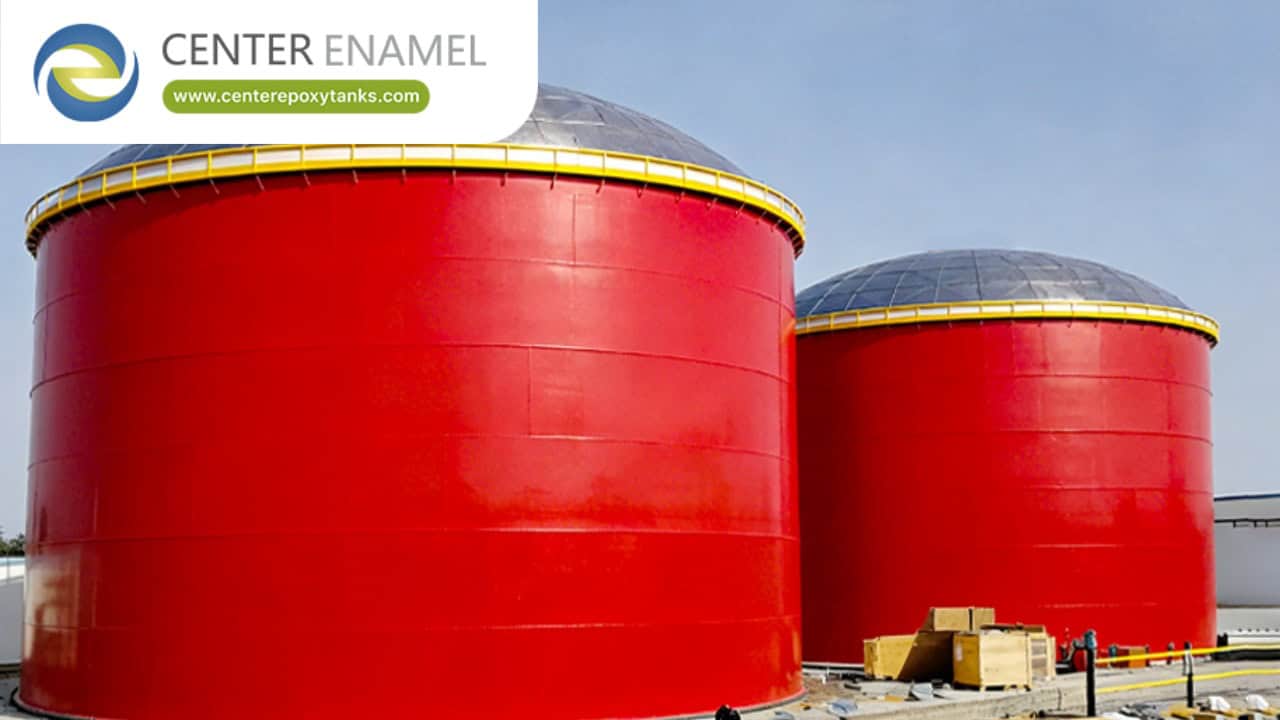
Geodesic Aluminum Domes: Modern tank retrofits frequently replace aging carbon steel cone roofs with clear-span aluminum geodesic domes, enhancing corrosion resistance and eliminating internal structural support columns.
Data Table: Crude Oil Storage Tank Comparison Matrix
Tank Type | Roof Configuration | Primary Vapor Control Mechanism | Typical Stored Media | Governing Standards |
External Floating Roof (EFRT) | Open top with dynamic floating deck | Floating deck in direct contact with liquid + rim seals | Volatile crude oil, gasoline, condensate | API 650 (Annex C) |
Internal Floating Roof (IFR) | Fixed outer roof + internal floating pan | Enclosed vapor space + internal floating deck | Volatile crude oil, jet fuel, naphtha | API 650 (Annex H) |
Fixed Cone Roof | Permanently welded conical roof | Vapor space managed via PVRVs and breather vents | Heavy crude oil, bunker fuel, residual oils | API 650 |
Low-Pressure Storage | Welded dome or torispherical shape | Designed for internal pressure up to 15 psig | High-vapor-pressure crude, volatile condensates | API 620 |
Frequently Asked Questions (FAQ)
Q: What is the most common type of tank used for crude oil storage?
A: External Floating Roof Tanks (EFRTs) and Internal Floating Roof Tanks (IFRs) are the most common types used for crude oil storage because their floating decks minimize vapor space, reducing evaporation losses and explosion risks.
Q: Why do crude oil storage tanks need floating roofs?
A: Floating roofs eliminate the vapor pocket (ullage) above the liquid surface. This prevents volatile organic compounds (VOCs) from evaporating into the atmosphere, protecting the environment and conserving product value.
Q: What engineering standard governs crude oil storage tanks?
A: Aboveground welded steel storage tanks for petroleum are primarily designed, fabricated, and inspected in accordance with API 650 (for atmospheric and low-pressure service up to 2.5 psig) and API 620 (for pressures up to 15 psig).
Q: Can fixed cone roof tanks store volatile crude oil?
A: Generally, no. Fixed cone roof tanks are typically reserved for heavy, low-volatility crude oils or refined heavy products. Storing volatile crude in a fixed roof tank creates hazardous vapor accumulation and high evaporative emissions.


