What Are Floating Roof Tanks? Definition, Design, and Industrial Applications
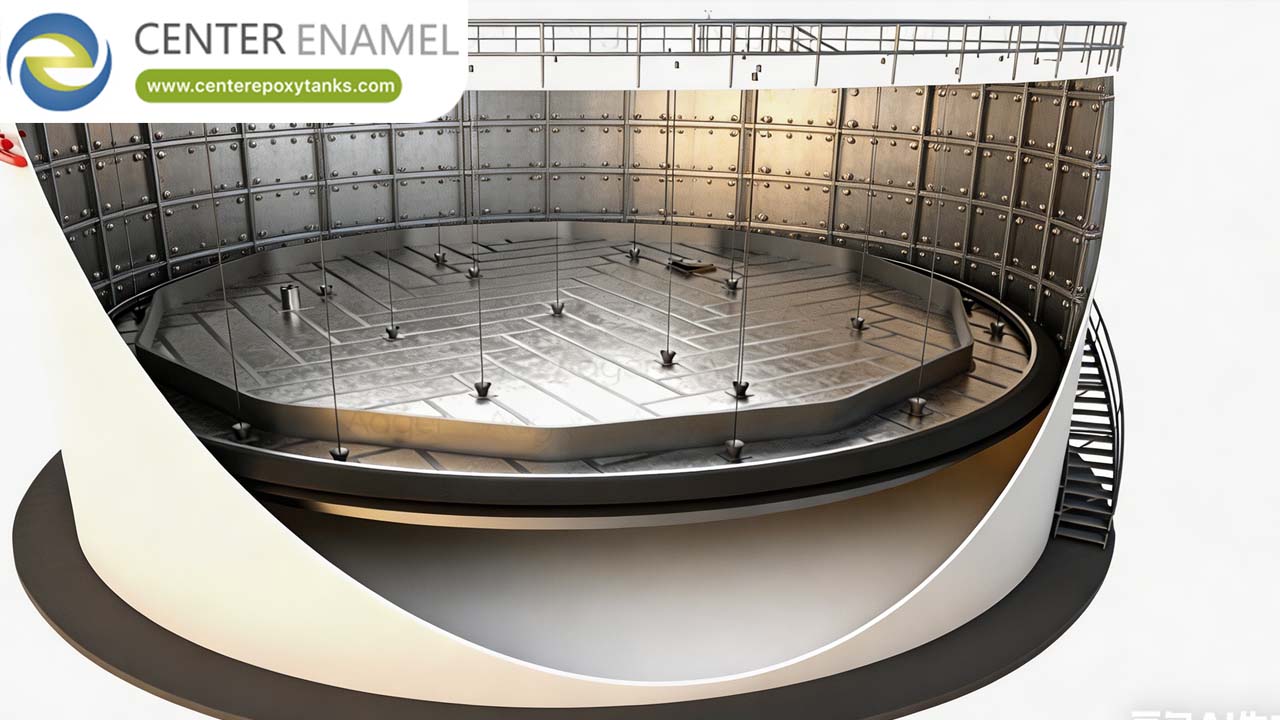
In the global oil, gas, and petrochemical sectors, the safe containment of volatile liquids requires specialized engineering to prevent product loss and dangerous vapor accumulation. Floating roof tanks are specialized atmospheric storage vessels equipped with a movable deck that floats directly on the surface of the stored liquid.
Unlike traditional fixed-roof tanks that leave a large vapor space (ullage) between the liquid and the roof, a floating roof rises and falls dynamically with inventory levels. By eliminating this headspace, floating roof tanks drastically reduce volatile organic compound (VOC) emissions, curb evaporative product loss, and mitigate fire hazards.
How Floating Roof Tanks Work
The operational mechanism of a floating roof tank relies on passive buoyancy and continuous surface contact:
1.
Direct Liquid Contact: The steel, aluminum, or composite deck floats directly on top of the stored product, leaving virtually no air gap or vapor pocket.
2.
3.
Peripheral Rim Seals: A flexible mechanical or liquid-mounted rim seal system spans the narrow annular gap between the outer edge of the deck and the interior tank wall, preventing vapor escape while accommodating vertical movement.
4.
5.
Automatic Level Adjustment: As liquid is pumped into or drawn out of the tank, the buoyant roof moves up or down automatically without requiring external mechanical intervention.
6.
Core Components of a Floating Roof Tank
Regardless of structural subtype, all floating roof tanks integrate several critical engineering components:
·
The Floating Deck: The primary buoyant platform (pontoon, double-deck, or full-contact style) that rides on the liquid surface.
·
·
Rim Seal System: Primary and secondary seals that close the boundary edge to restrict gas leakage.
·
·
Guide Poles / Anti-Rotation Devices: Vertical structures that stabilize the roof and prevent it from spinning or jamming during operation.
·
·
Drainage Systems & Rolling Ladders (EFRTs): Specialized internal drain lines and articulated stairs that manage rainwater collection on open-top models.
·
Primary Types of Floating Roof Tanks
1. External Floating Roof Tanks (EFRTs)
Characterized by an open-top cylindrical steel shell, an EFRT features a floating roof directly exposed to the atmosphere. They are widely used for massive crude oil storage terminals and large-scale petroleum depots.
2. Internal Floating Roof Tanks (IFRs)
An IFR combines a floating deck housed inside a tank shell capped by a permanent fixed outer roof (such as a conical steel roof or geodesic aluminum dome). This configuration completely shields the floating deck from rain, wind, and solar radiation.
Data Table: Internal vs. External Floating Roof Tanks
Technical Parameter | Internal Floating Roof Tank (IFR) | External Floating Roof Tank (EFRT) |
Tank Shell Structure | Closed top (Fixed outer roof over floating deck) | Open top (Floating deck exposed to atmosphere) |
Weather Shielding | High (Fixed roof blocks rain, snow, and UV rays) | None (Roof directly exposed to precipitation) |
Rainwater Management | Not required (Fixed roof prevents moisture ingress) | Required (Articulated roof drains and flexible hoses) |
VOC Emission Control | Extremely high (Dual-stage containment via fixed and floating roofs) | Very high (Suppressed by deck and rim seals) |
Primary Stored Products | Refined fuels, aviation gas, volatile chemicals | Crude oil, heavy petroleum distillates |
Industrial Benefits of Floating Roof Tanks
·
Massive VOC Reduction: Suppresses evaporative losses by up to 99%, ensuring strict compliance with global environmental regulations (such as EPA and Clean Air Act mandates).
·
·
Enhanced Fire Safety: By eliminating the flammable vapor-air mixture layer common in fixed-roof tanks, the risk of lightning-induced or static spark explosions is heavily minimized.
·
·
Preservation of Product Quality: Preventing evaporation protects light ends (volatile fractions) from escaping, preserving the chemical composition and economic value of stored fuels.
·
Frequently Asked Questions (FAQ)
Q: What is the primary function of a floating roof tank?
A: The primary function is to store volatile liquids like crude oil and gasoline while eliminating the vapor space (ullage) above the liquid, which minimizes evaporative product loss and harmful VOC emissions.
Q: How do floating roof tanks prevent explosions?
A: By keeping the roof in direct contact with the liquid surface, these tanks eliminate the flammable vapor-air mixture layer that typically accumulates in traditional fixed-roof tanks, drastically reducing ignition and explosion risks.
Q: What is the difference between internal and external floating roofs?
A: An external floating roof is exposed directly to the open atmosphere in an open-top tank, whereas an internal floating roof operates beneath a permanent fixed outer roof or geodesic dome that shields it from weather conditions.
Q: Do floating roof tanks require external power to move?
A: No. Floating roof tanks operate passively; the roof rises and falls automatically based on the hydrostatic pressure and volume of the liquid being pumped into or out of the tank.


