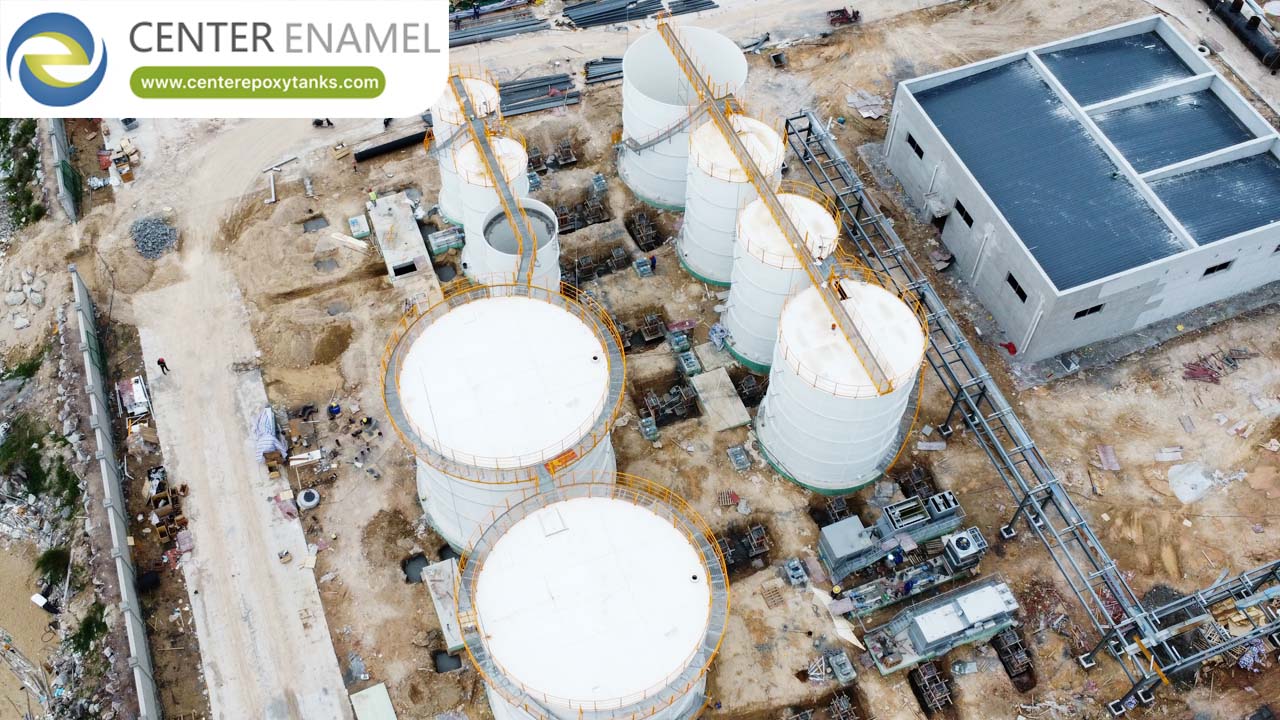
Welded Steel Tanks: Industrial Applications & Engineering Guide
Welded steel tanks are precision-engineered industrial vessels used across sectors where structural integrity, pressure containment, and site-specific customization are paramount. Unlike modular or bolted storage, welded steel tanks provide a seamless, monolithic structure that is ideal for storing volatile liquids, high-pressure gases, and aggressive chemicals. Key applications include petrochemical processing, fire protection systems, municipal water reservoir storage, and industrial effluent containment. By adhering to rigorous international standards like API 650 and AWWA D100, these tanks ensure maximum safety, leak-free operation, and a longevity profile that can span 30 to 50+ years, making them a foundational asset in heavy industry and public infrastructure.
Sector-Specific Applications
The versatility of welded steel construction lies in its ability to be custom-fabricated to meet unique process requirements.
● Oil, Gas, & Petrochemical: This is the primary domain of welded steel. Due to the need for fire safety and pressure regulation, welded tanks serve as crude oil storage, refined product reservoirs, and pressure vessels. Their seamless construction minimizes the risk of leaks associated with volatile substances.
● Municipal Water & Wastewater: While bolted tanks are popular for modular needs, large-scale welded reservoirs are often specified for high-capacity municipal water storage where the site footprint allows for field-welded assembly. They are valued for their extreme durability and resistance to seismic loading.
● Fire Protection Systems: Welded tanks provide the structural confidence required for NFPA-compliant fire water storage. Their rigid design ensures the tank will not compromise during an emergency, providing a guaranteed water supply for sprinkler and hydrant systems.
● Chemical & Effluent Processing: In plants where chemical exposure is severe, welded tanks can be fabricated using specialized steel alloys (or stainless steel) and lined with high-performance coatings to provide a chemically inert environment.
Comparative Overview: Construction Methodologies
Feature | Welded Steel Tanks | Bolted Steel Tanks | Concrete Reservoirs |
Structural Integrity | Highest (Monolithic) | High (Joint-dependent) | Moderate (Prone to cracking) |
Pressure Handling | Excellent | Low to Moderate | Low |
Site Installation | Moderate (Field-welded) | Fast (Bolt-together) | Slow (Curing required) |
Customization | Unlimited | Modular/Standardized | Limited |
Maintenance | Minimal (Coating only) | Moderate (Seals/Gaskets) | High (Structural repair) |
Key Engineering Benchmarks for Procurement
When specifying welded steel tanks, procurement teams and project engineers should prioritize the following compliance standards:
1. API 650 Compliance: The global standard for welded tanks for oil storage. It dictates specific requirements for steel thickness, welding techniques, and tank foundation design.
2. AWWA D100 Compliance: If the tank is for potable water, adherence to this standard ensures the vessel meets the structural and safety requirements for public water supply.
3. NDT (Non-Destructive Testing) Certification: Demand reports including Radiographic Testing (RT) or Ultrasonic Testing (UT) for all major shell and floor welds. This documentation is your guarantee of weld penetration and structural soundness.
4. Coating & Lining Specifications: Since the tank is welded, the internal surface may need field-applied specialized coatings (e.g., epoxy, polyurethane) to match the chemical resistance of factory-fused alternatives.
Frequently Asked Questions (FAQ)
Q: Are welded steel tanks always better than bolted tanks?
A: Not necessarily. Welded tanks are superior for high-pressure, high-temperature, or volatile petrochemical applications. However, for wastewater, biogas, and municipal storage, bolted tanks (like Glass-Fused-to-Steel) often offer lower total cost of ownership, faster installation, and standardized quality control.
Q: Can welded steel tanks be repaired if they leak?
A: Yes. Because they are steel, leaks—though rare in professionally constructed tanks—can be effectively repaired by certified welders, returning the tank to its original structural integrity.
Q: Does site location affect the choice of welded vs. bolted?
A: Yes. If the site has limited access or strict environmental regulations that forbid "hot work" (welding), bolted tank solutions are usually the preferred and more compliant choice.
Partnering for Reliable Infrastructure
Selecting between welded or modular bolted storage is a strategic decision that depends on your specific medium, regulatory environment, and long-term maintenance strategy. Whether your project demands the high-pressure integrity of a welded vessel or the rapid deployment of a bolted GFS system, we provide the engineering rigor required for your infrastructure.
Are you evaluating containment solutions for an upcoming industrial or municipal project?
[Contact our engineering team] to request a structural feasibility study, review our API 650/AWWA compliance credentials, or obtain a comparative proposal tailored to your capacity and material requirements.
Would you like a detailed technical brief on the specific site-preparation and foundation requirements for large-scale welded tanks compared to our modular GFS systems?


