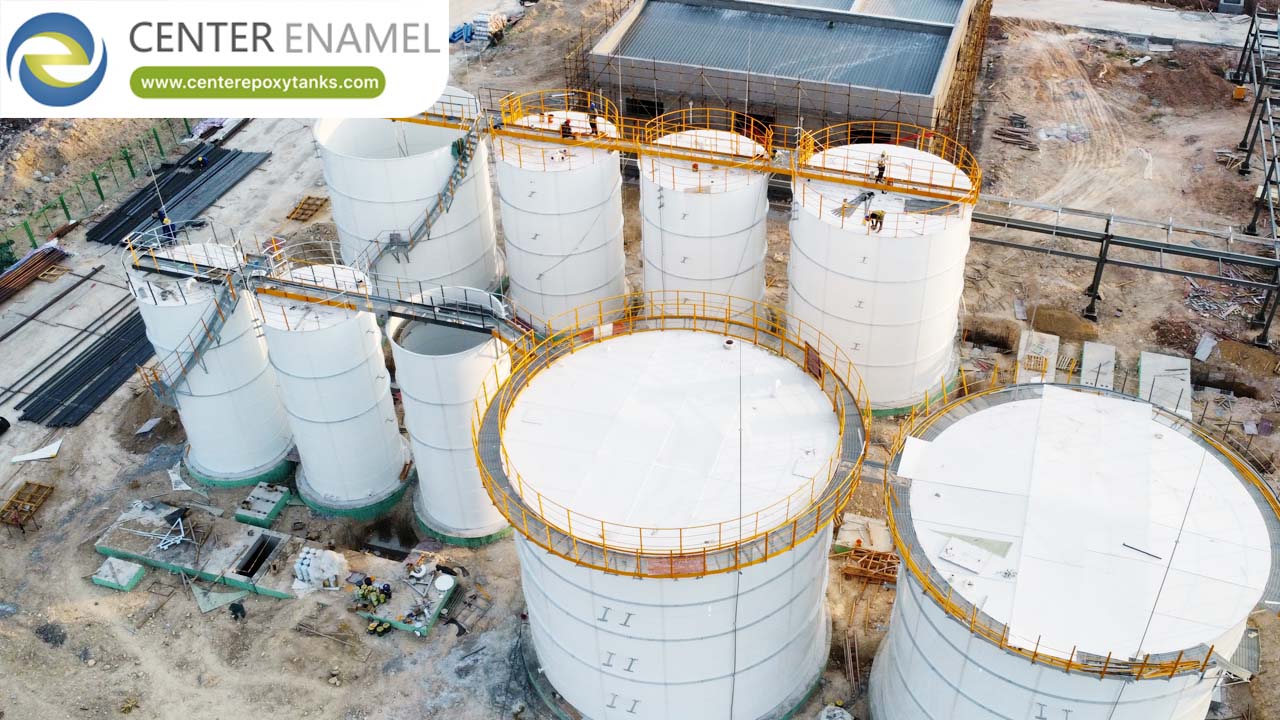
Factory-Welded Storage Tank: Engineering & Procurement Guide
A factory-welded storage tank is an industrial vessel constructed and assembled in a climate-controlled manufacturing facility before being transported to the final site. Unlike field-welded tanks, which are constructed piece-by-piece at the client’s location, factory-welded tanks benefit from a rigorous, automated production environment. This process allows for 100% radiographic or ultrasonic testing of all welds, standardized structural compliance (such as API 650 or ASME standards), and rapid on-site commissioning. These tanks are the preferred choice for applications where high-pressure integrity, precise quality control, and minimized site-construction time are mission-critical.
The "Shop vs. Field" Engineering Advantage
In industrial tank manufacturing, the environment where the welding occurs is the single greatest predictor of the tank’s service life.
● Controlled Environment: Field welding is subject to rain, wind, humidity, and fluctuating temperatures—all of which can introduce defects into weld seams. Factory welding takes place in a shielded, climate-controlled shop, ensuring the steel reaches the optimal temperature for consistent, deep-penetration welds.
● Automated Quality Assurance: Factory settings allow for the use of automated submerged arc welding (SAW) and rigorous non-destructive testing (NDT). Tanks are inspected with X-ray (radiographic) or ultrasonic equipment before they ever leave the factory, eliminating the risk of undetected defects.
● Safety & Logistics: Factory-welded tanks significantly reduce the "on-site footprint." Because the tank arrives as a finished (or near-finished) unit, there is minimal heavy machinery, site traffic, or labor risk required at the customer's facility.
Comparative Overview: Construction Methods
Feature | Factory-Welded Tank | Field-Welded Tank | Bolted Storage Tank |
Weld Quality | Superior (Automated) | Variable (Site-dependent) | N/A (Mechanical) |
Construction Time | Fast (Drop-in ready) | Slow (Weeks/Months) | Moderate |
Site Impact | Minimal | High (Heavy Equipment) | Minimal |
Size Constraints | Limited (Transportable) | Unlimited (Built on-site) | Unlimited |
QA/QC | High (Lab Tested) | Moderate (Spot Checks) | High (Factory Tested) |
When to Choose Factory-Welded Tanks
Factory-welded tanks are highly efficient, but they are subject to logistical constraints. They are the ideal choice when:
1. Capacity Allows for Transport: Your project volume fits within standard shipping (e.g., up to 4–5 meters in diameter). If the capacity requirement is massive (e.g., 50+ meters in diameter), bolted or field-welded tanks become necessary.
2. High-Pressure Applications: If the tank is storing volatile substances under pressure, the superior weld consistency of a factory-produced vessel provides an extra layer of structural confidence.
3. Strict Compliance: For projects requiring stringent ASME or API documentation, the factory-welded path simplifies the "paper trail" by centralizing fabrication within a single, certified facility.
Technical Benchmarks for Procurement
Procurement and project engineers should verify the following to ensure the quality of their factory-welded asset:
● Weld Certification: Ensure the manufacturer provides certified welding procedures (WPS) and that the welders are certified for the specific materials used.
● NDT Reporting: Ask for the non-destructive testing reports. A professional manufacturer will provide documentation for X-ray or ultrasonic inspection of all critical shell and floor welds.
● Surface Preparation: Verify the interior and exterior coating process. A factory-welded tank should be blast-cleaned (to SA 2.5 or SA 3.0 standard) and coated in a controlled environment to ensure zero rust-bleed.
● Pressure/Leak Testing: The tank should be hydrostatically tested (filled with water and pressurized) at the factory to prove integrity before it is shipped.
Frequently Asked Questions (FAQ)
Q: Are factory-welded tanks safer than field-welded ones?
A: In terms of structural reliability, yes. Because they are built in a controlled environment, the risk of "human error" is drastically reduced, and the testing protocols are far more rigorous than what is typically possible in a remote field location.
Q: How are these tanks shipped to my site?
A: Depending on the diameter, factory-welded tanks are shipped via standard flatbed trucks, heavy-haul trailers, or sea freight. Our engineering team provides lifting and placement plans to ensure safe installation once the unit arrives.
Q: Can a factory-welded tank be customized?
A: Yes. We can integrate custom nozzles, manways, internal heating coils, insulation jackets, and specialized instrumentation at the factory, so the tank arrives fully ready for process integration.
Optimizing Your Industrial Infrastructure
Selecting a factory-welded storage tank is a decision to prioritize quality, safety, and project speed. By moving the complexity of fabrication from your job site to our controlled factory, you ensure a higher-quality asset with a lower total cost of ownership.
Are you currently evaluating containment solutions for an upcoming project?
[Contact our engineering team] to receive a structural load-bearing assessment, a transportation feasibility study, or a design proposal for your specific volume and process requirements.
Would you like a detailed technical brief on the difference between factory-welded construction and modular bolted-steel construction for high-capacity industrial projects?


