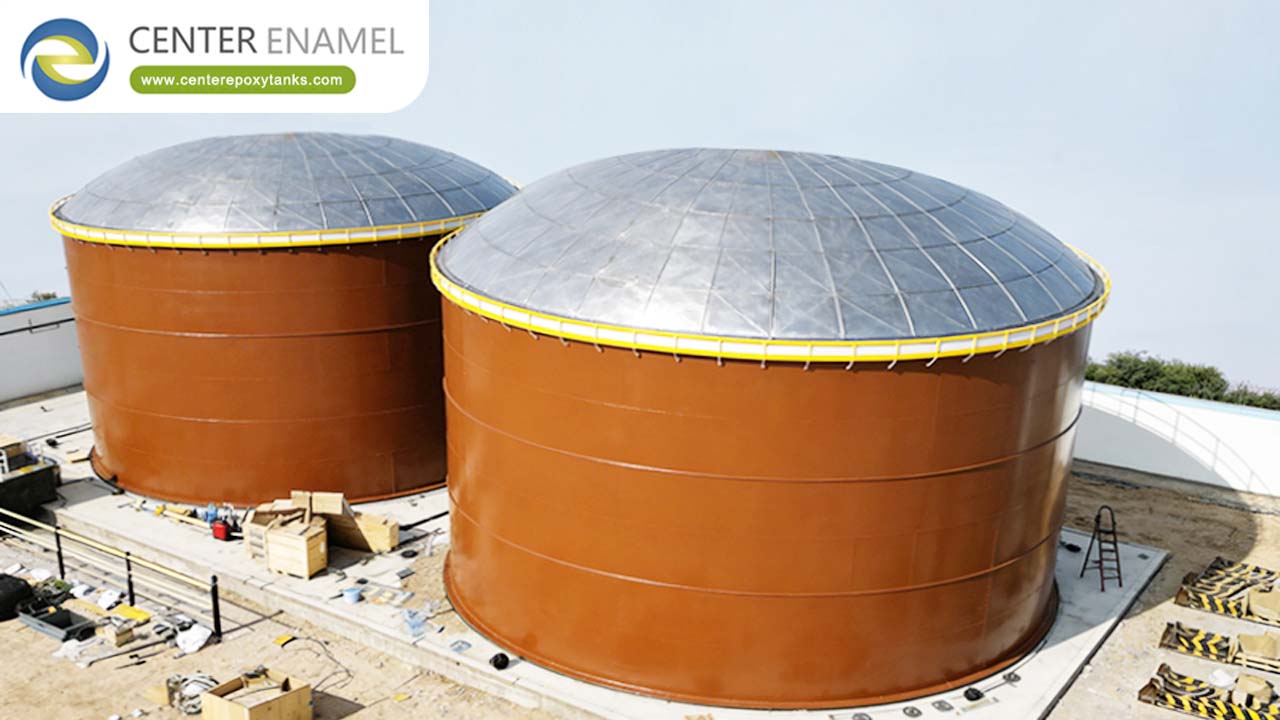
Welded Steel Tanks for Water Storage: Engineering, Standards, and Monolithic Safety
When municipalities, industrial facilities, and large-scale agricultural operations require dependable liquid containment, structural integrity and long-term water safety are paramount. Among the various containment options available, welded steel tanks for water storage represent the gold standard for high-capacity, heavy-duty applications. Built through precision field-erection or shop-fabrication welding, these tanks provide a monolithic structure capable of withstanding immense hydrostatic pressures, severe wind loads, and seismic activities.
Designed in strict compliance with rigorous engineering benchmarks such as AWWA D100, welded steel reservoirs offer unmatched durability and a seamless liquid barrier. As a globally trusted leader in advanced water storage and containment manufacturing, Shijiazhuang Zhengzhong Technology Co., Ltd. (Center Enamel) delivers robust steel storage solutions engineered to secure community and industrial water supplies for decades.
Structural Advantages of Welded Steel Water Reservoirs
Unlike modular bolted designs, welded steel tanks are constructed by welding heavy-gauge steel plates together, creating a continuous, monolithic steel shell. This engineering approach offers several distinct operational advantages:
Maximum Structural Integrity: Continuous full-penetration welding eliminates mechanical joints on the shell, providing superior resistance to high internal hydrostatic pressures in large-diameter municipal tanks.
Superior Seismic and Wind Resilience: Welded structures distribute lateral stress uniformly across the steel body, making them exceptionally resilient in earthquake-prone regions and hurricane zones.
Customizable Geometries and Appurtenances: Welded fabrication allows for seamless integration of specialized nozzles, internal baffles, overflow pipes, and structural platforms tailored precisely to project specifications.
Regulatory Standards and Potable Water Safety
Ensuring that stored drinking water remains clean and untainted requires strict adherence to international health and structural codes:
AWWA D100 Standards: Governs the minimum requirements for the design, fabrication, erection, and testing of welded carbon steel tanks for water storage, ensuring structural safety and operational reliability.
NSF/ANSI 61 Certification: Mandates that all interior coatings and tank surfaces in direct contact with potable water are safe, non-toxic, and free of harmful chemical leaching.
AWWA D102 Protective Coatings: Specifies surface preparation and multi-layer coating systems to safeguard the steel against internal moisture corrosion and exterior weathering.
Data Table: Comprehensive Comparison of Water Storage Tank Technologies
Technical Parameter | Welded Steel Water Tanks | Bolted Steel Water Tanks | Cast-in-Place Concrete Reservoirs |
Primary Construction Method | Field-erected or shop-fabricated continuous welding | Precision modular steel panels bolted together on-site | On-site formwork, rebar assembly, and concrete pouring |
Structural Continuity | Monolithic steel barrier with zero mechanical shell joints | Modular assembly utilizing engineered gasket and sealant joints | Solid mass structure prone to micro-cracking over time |
Seismic & Pressure Performance | Exceptional flexibility and stress distribution under high loads | High structural strength with standardized modular design | High mass, but vulnerable to cracking during severe ground shifts |
Installation Timeline | Moderate to long timeline requiring certified welding and NDT inspection | Rapid assembly timeline independent of complex wet trades | Very slow construction timeline with extended weather-dependent curing |
Long-Term Maintenance | Requires periodic exterior/interior recoating and weld inspections | Low maintenance with periodic gasket and bolt torque checks | High remediation cost if concrete spalling or structural leaks occur |
Frequently Asked Questions (FAQ)
Q: What are the main applications for welded steel tanks in water storage?
A: Welded steel tanks are widely used for municipal potable water reservoirs, raw water storage, fire protection suppression systems, agricultural irrigation, and large-scale industrial process water management.
Q: What is the primary design standard for welded water storage tanks?
A: The American Water Works Association standard, AWWA D100, is the internationally recognized benchmark governing the design, fabrication, erection, and testing of welded carbon steel tanks for water storage.
Q: How do welded steel tanks prevent internal corrosion?
A: Welded tanks utilize specialized, high-performance interior coating systems compliant with NSF/ANSI 61 and AWWA D102 standards, creating an inert, protective barrier between the water and the steel shell.
Q: Why choose a welded steel tank over a concrete reservoir?
A: Welded steel tanks offer faster installation timelines, predictable factory-controlled quality, superior seismic flexibility without catastrophic cracking risks, and easier future modification or expansion capabilities compared to massive concrete structures.


