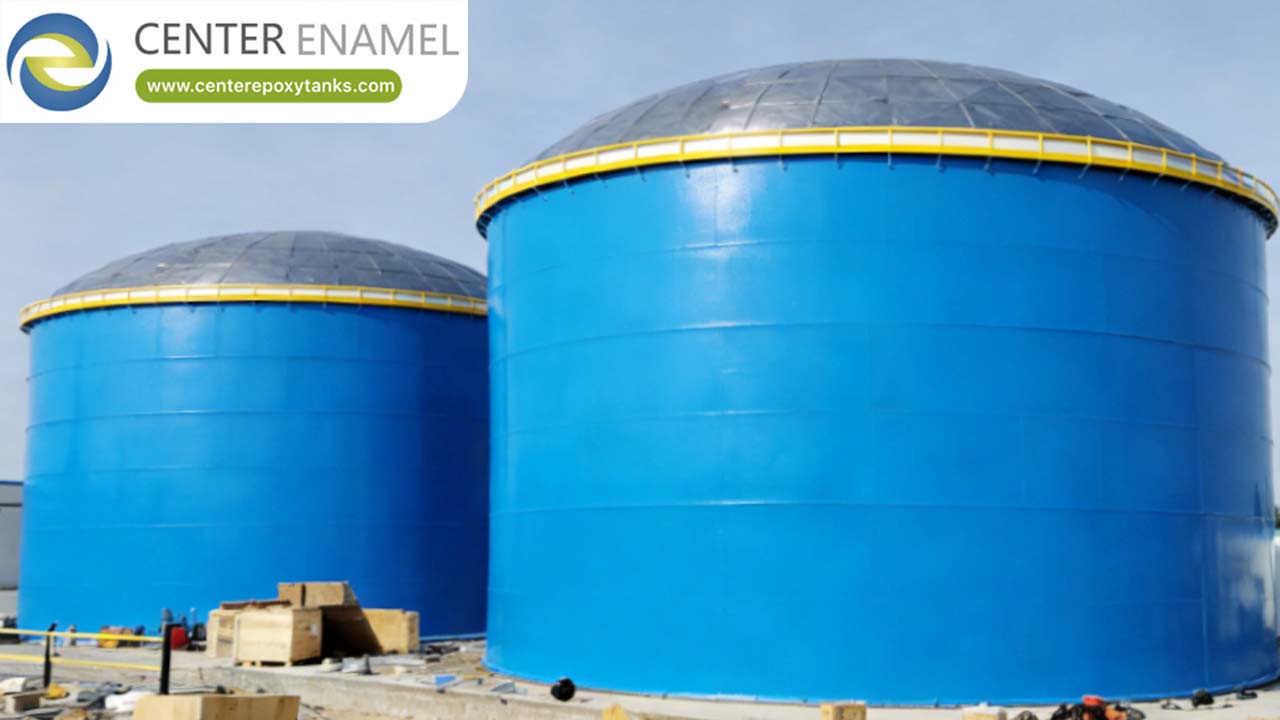
Welded Steel Tanks for Mining and Mineral Processing Applications: Engineering Durability and Slurry Resilience
In the demanding realm of global mining and mineral processing, infrastructure must withstand some of the most aggressive physical and chemical environments on Earth. From gold, copper, and rare-earth leaching circuits to heavy coal washing and tailing water management, processing plants require containment vessels capable of managing heavy, abrasive slurries, corrosive acids, and high-volume process water.
When operations demand absolute leak prevention, structural stability under heavy mechanical loads, and resistance to severe vibration, standard container solutions fall short. Industrial plant operators and engineering procurement construction (EPC) firms rely heavily on welded steel tanks for mining and mineral processing. Offering seamless structural continuity and high-tensile strength, welded steel infrastructure provides the reliable backbone required for continuous 24/7 mineral extraction operations.
Critical Applications in Mineral Processing Facilities
Welded steel tanks are deployed across multiple distinct stages of the mineral extraction lifecycle, each presenting unique engineering demands:
Slurry Storage and Conditioning: Mineral slurries combine crushed ore, water, and various chemical reagents, creating dense, abrasive mixtures that exert immense dynamic stress on tank walls. Welded steel vessels provide the rigidity necessary to prevent structural flexing.
Agitation and Leaching Circuits: Equipped with reinforced bridge mounts and internal baffles, welded tanks safely support high-torque agitators and mechanical mixers required to maintain homogenous suspensions without dead zones.
Reagent and Acid Containment: Processes like solvent extraction and electrowinning (SX-EW) involve highly corrosive acids, cyanide solutions, and saline brines. High-alloy welded steel tanks (such as those using 316L stainless steel or specialized protective linings) prevent inner wall degradation.
Process Water and Effluent Management: Recycling water to meet strict environmental and ESG mandates requires secure storage reservoirs capable of handling fluctuating chemical compositions and high-volume inflows.
Technical Performance Matrix: Mining Containment Solutions
Technical Parameter | Field-Erected & Factory-Welded Steel Tanks | Bolted Metal Storage Tanks | Earthen Tailings Ponds & Basins |
Structural Integrity & Seam Sealing | Seamless welded joints eliminate mechanical fastener leak pathways | Utilizes gaskets and bolts; requires periodic torque maintenance in high-vibration zones | Prone to liner tears, seepage, and geotechnical instability |
Agitator & Dynamic Load Support | Exceptional rigidity to support heavy bridge-mounted mixers and high-torque drives | Requires specialized structural reinforcement packages for heavy mixing loads | Incapable of supporting active mechanical agitation infrastructure |
Abrasion & Slurry Resilience | High structural thickness combined with customizable wear-resistant alloy plates or liners | Limited by panel seam stress points under continuous abrasive scouring | Highly vulnerable to mechanical erosion from heavy aggregate flow |
Environmental Safety Risk | Extremely low risk of catastrophic rupture when properly inspected and maintained | Moderate risk if gasket degradation occurs under severe chemical exposure | High environmental risk of seepage, overflow, and catastrophic dam failure |
Engineering Standards and Corrosion Defense
To survive the punishing conditions of mineral processing plants, welded steel tanks are engineered in strict compliance with globally recognized industrial standards:
Design Codes: Fabrication follows rigorous specifications such as API 650 for welded atmospheric tanks, ASME Section VIII for pressure-rated processing vessels, and ISO 12944 for comprehensive corrosion protection systems.
Advanced Metallurgy and Linings: Depending on the ore processed—whether hard-rock spodumene or high-salinity brines—tanks utilize high-grade carbon steel paired with thick rubber linings, polyurethane coatings, or stainless-steel overlays to prevent internal pitting.
Quality Assurance: Non-destructive testing (NDT), including ultrasonic weld thickness mapping and vacuum box testing, ensures that every seam achieves zero-defect integrity before commissioning.
Frequently Asked Questions (FAQ)
Q: Why are welded steel tanks preferred over bolted tanks for heavy mineral slurry applications?
A: Welded steel tanks offer seamless structural continuity and superior rigidity, making them better equipped to handle the intense vibrations, hydrodynamic forces, and heavy loads exerted by high-torque agitators and dense mineral slurries.
Q: What materials are used to protect welded steel mining tanks from corrosive acids and abrasive ores?
A: Depending on the application, tanks are fabricated from high-grade carbon steel with specialized internal protective linings (such as abrasion-resistant rubber or polyurethane), or constructed entirely from corrosion-resistant alloys like 316L stainless steel.
Q: Do welded steel tanks comply with environmental and safety regulations in mining?
A: Yes. Modern welded tanks are designed in accordance with strict international codes like API 650 and ASME, minimizing containment failure risks, preventing toxic seepage into surrounding soils, and supporting stringent ESG and water-recycling mandates.
Q: How do operators monitor the structural health of welded mining tanks during operation?
A: Advanced mining facilities integrate IoT monitoring systems—such as acoustic emission sensors for early crack detection and ultrasonic wall-thinning gauges—to track structural stress and wear rates without requiring continuous internal entry.


