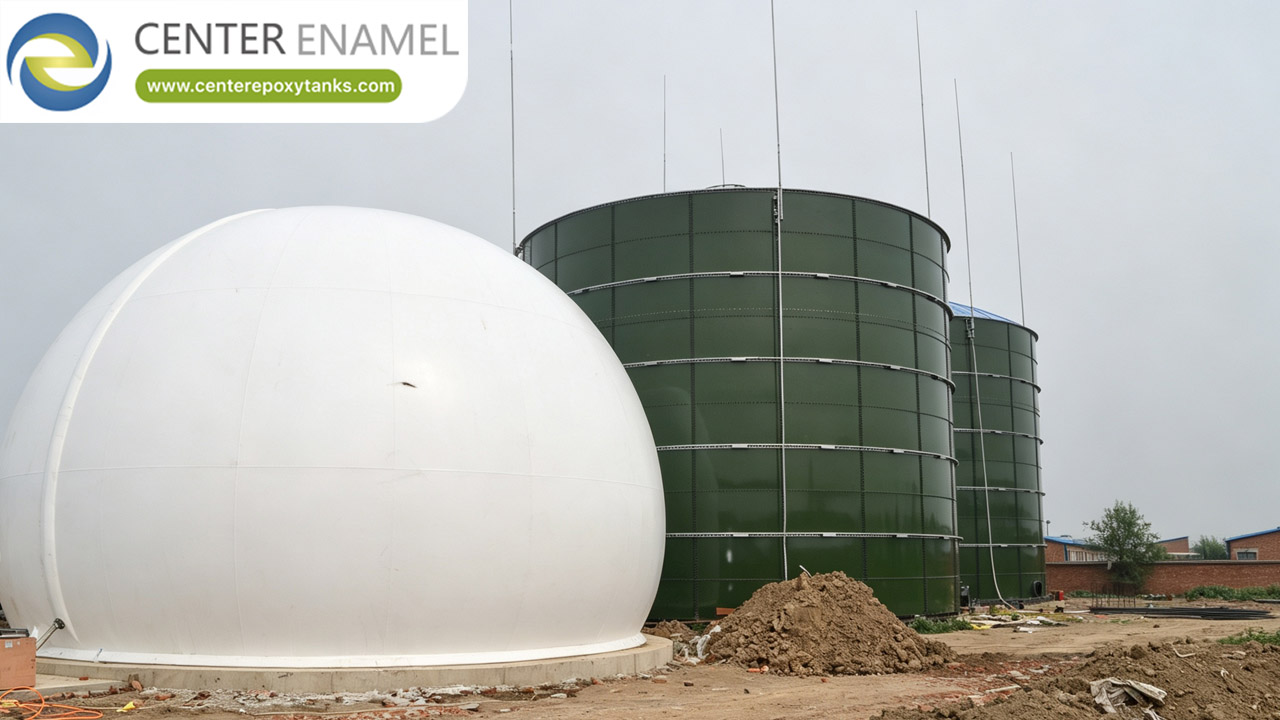
Biogas Holders for Organic Waste Management in Agriculture: Engineering Sustainable Energy and Nutrient Recovery
Modern agricultural operations face mounting environmental and economic pressures regarding waste management. The intensive generation of livestock manure, crop residues, and post-harvest organic processing byproducts requires secure, sustainable containment strategies to prevent greenhouse gas emissions, groundwater contamination, and odor pollution.
Through farm-scale anaerobic digestion (AD), agricultural organic waste is biologically stabilized by microorganisms in an oxygen-free environment, transforming waste streams into high-nutrient organic fertilizer and renewable biogas (methane and carbon dioxide). To capture, buffer, and safely regulate this clean energy source, modern farms rely on specialized biogas holders. These engineered storage vessels ensure a continuous, stable fuel supply for agricultural combined heat and power (CHP) generators, boilers, or grid injection systems.
Core Engineering Principles and Agricultural Design
Designing biogas storage infrastructure for agricultural waste management requires addressing unique biological and environmental challenges:
Double-Membrane Structural Resilience: Modern agricultural biogas plants predominantly utilize double-membrane gas holders. These systems feature an inner membrane (which directly contacts and contains the biogas), an outer protective membrane (shielding the system against wind, UV exposure, and heavy rain), and an active air blower system maintaining constant inter-membrane pressure for structural rigidity.
Corrosion Defense Against Agricultural Gases: Biogas generated from livestock manure and agricultural waste carries high moisture levels and trace concentrations of hydrogen sulfide (H2S). Biogas holders utilize specialized, high-tenacity polyester fabrics coated with anti-fungal and PVC/PVDF treatments that completely resist sulfide oxidation and microbial degradation.
Volume Buffering for Variable Feedstocks: Agricultural feeding schedules and seasonal crop waste cycles cause biogas production rates to fluctuate. Biogas holders act as crucial volumetric buffers, absorbing peak production surges and maintaining steady working pressure for downstream agricultural energy systems.
Data Table: Comprehensive Comparison of Agricultural Biogas Holder Technologies
Technical Parameter | Double-Membrane Ground-Mounted Holders | Tank-Top Mounted Biogas Holders | Traditional Steel Pressure Holders |
Spatial Footprint | Independent ground-mounted footprint requiring a dedicated concrete foundation | Maximizes farm space by mounting directly atop the anaerobic digester | Large cylindrical or spherical footprint requiring heavy civil foundations |
Pressure Control | Consistent low-pressure operation regulated by active air-pressure balancing | Integrated directly with digester headspace pressure | High-pressure containment requiring specialized compressor systems |
Corrosion Defense | High-grade PVC/PVDF membranes completely immune to sulfide oxidation | Membrane inner layer protected against wet digester headspace gases | Carbon steel shell vulnerable to H2S condensation without intensive epoxy lining |
Primary Farm Application | Flexible mid-to-large-scale volume buffering and seasonal energy storage | Compact farm-scale biogas plants with limited available real estate | High-pressure gas grid injection and heavy industrial gas storage |
Frequently Asked Questions (FAQ)
Q: What is the role of a biogas holder in agricultural organic waste management?
A: It captures, stores, and buffers the biogas produced during the anaerobic digestion of livestock manure and crop waste, ensuring a steady, reliable fuel supply for farm CHP engines, boilers, or electrical generators.
Q: Why are double-membrane biogas holders preferred on farms?
A: They offer a cost-effective, modular design that provides constant working pressure, excellent resistance to corrosive trace gases like hydrogen sulfide (H2S), and high volumetric storage capacity compared to rigid steel tanks.
Q: How do agricultural biogas holders handle variable gas production from seasonal crop waste?
A: Their flexible double-membrane architecture expands and contracts dynamically, allowing the facility to absorb peak production surges during high-yield agricultural seasons without risking over-pressurization.
Q: Can biogas holders be mounted directly on top of agricultural anaerobic digesters?
A: Yes. Tank-top mounted biogas holders save valuable physical space on farms by integrating the flexible gas storage membrane directly onto the upper shell of the concrete or bolted steel digester.


