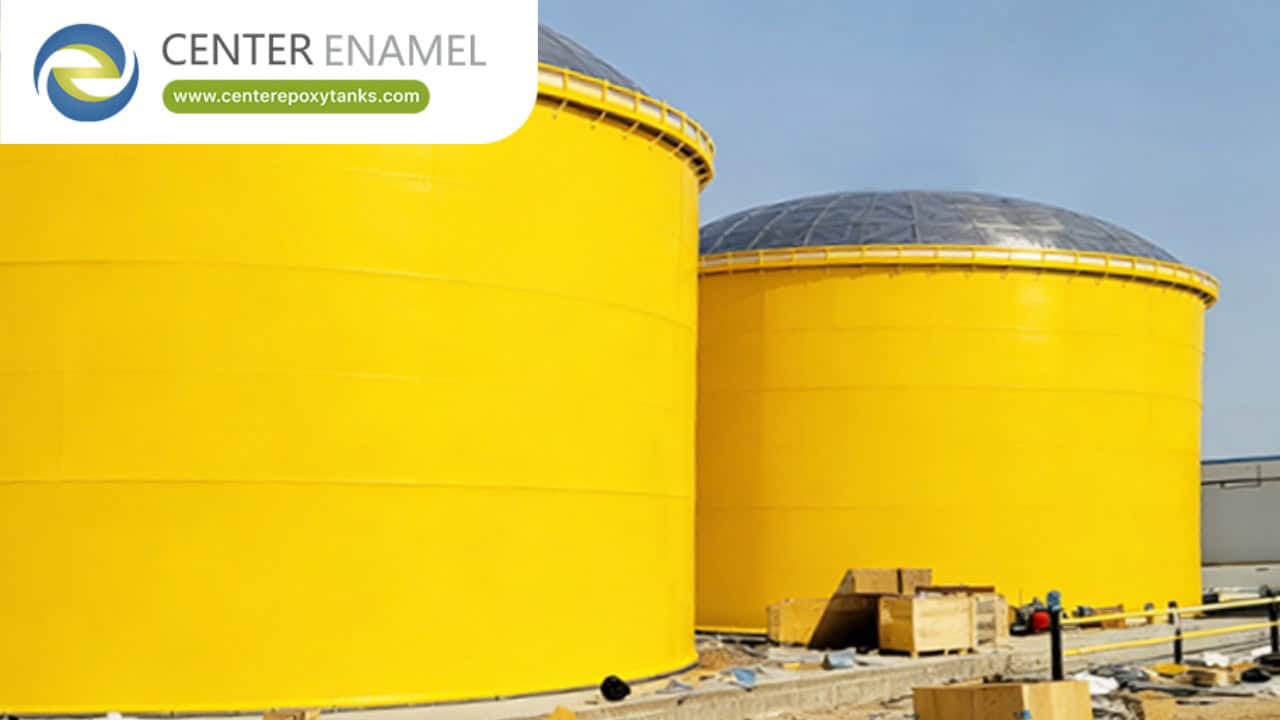
Welded Steel Oil Tanks: Design, Standards, and Industrial Applications
In the global petroleum supply chain—spanning crude oil extraction fields, regional pipeline terminals, and refinery storage farms—safe and reliable bulk liquid containment is vital. Because crude oil and refined petroleum products are volatile, heavy, and hazardous, the vessels storing them must meet uncompromising structural and safety benchmarks. Among all containment options, welded steel oil tanks represent the undisputed industry standard for high-capacity petroleum storage.
Engineered to withstand intense hydrostatic pressures, environmental wind shear, and seismic forces, welded steel tanks provide the permanent, leak-proof structural integrity required by modern energy infrastructure.
1. Why Welded Steel is Critical for Petroleum Containment
Storing millions of gallons of crude oil or refined fuels (such as diesel, gasoline, and aviation kerosene) demands superior material performance and structural continuity:
Monolithic Leak-Proof Integrity: Unlike bolted storage tanks that rely on gaskets, sealants, and thousands of mechanical fasteners, welded oil tanks feature continuous, fused metallic joints created by certified field-welding. This eliminates joint weeping and ensures absolute containment for volatile hydrocarbons.
High Tensile Strength Under Hydrostatic Load: As oil tank diameters and heights expand to maximize storage volume, the pressure on lower shell courses increases exponentially. Using structural carbon steel plates (such as ASTM A516 Grade 70 or ASTM A36) provides the high yield strength needed to prevent shell bulging or structural fatigue.
2. Governing Standards and Safety Compliance
To prevent catastrophic environmental leaks and industrial accidents, welded steel oil tanks are strictly designed, fabricated, and inspected in compliance with rigorous international codes:
Core Compliance Frameworks:
API 650: The global standard for welded steel tanks for oil storage, governing ambient and low-pressure atmospheric storage vessels.
API 653: Establishes guidelines for the inspection, repair, alteration, and reconstruction of in-service petroleum tanks.
NFPA 30: Governs flammable and combustible liquid storage safety, fire protection spacing, and emergency venting.
Data Table: Welded Steel Oil Tank Technical Specifications
Parameter / Specification | Industrial Standard for Welded Oil Tanks |
Primary Construction Material | Structural Carbon Steel (ASTM A36, A516 Gr. 70, A283 Gr. C) |
Design Standard | API 650 (Welded Steel Tanks for Oil Storage) |
Roof Configuration | Fixed Cone Roof, External Floating Roof (EFRT), or Aluminum Dome |
Vapor Emission Control | Primary and secondary rim seals, floating decks, vapor recovery ports |
Inspection & Testing | Radiographic weld examination, vacuum box testing, full hydrostatic water test |
3. Vapor Emission Control and Environmental Protection
Petroleum storage must strictly control Volatile Organic Compound (VOC) emissions to prevent air pollution and product loss:
Floating Roof Integration: Many large welded oil tanks utilize external or internal floating roofs equipped with advanced rim seal systems (mechanical shoes and secondary wiper blades) that rest directly on the oil surface, eliminating the vapor headspace.
Corrosion Mitigation: Internal epoxy linings and cathodic protection systems safeguard the steel shell against acidic crude components and produced water accumulation.
Frequently Asked Questions (FAQ)
Q: What is the primary advantage of a welded steel oil tank over a bolted tank?
A: Welded steel oil tanks provide monolithic, leak-proof structural integrity. By fusing metal plates together permanently, they eliminate gaskets and mechanical fasteners that can degrade and leak when exposed to hydrocarbons.
Q: What engineering standards govern welded steel oil storage tanks?
A: They are primarily designed, fabricated, and tested in accordance with API 650 for new construction and API 653 for ongoing inspection and maintenance.
Q: How do welded oil tanks prevent harmful vapor emissions?
A: They frequently incorporate floating roof designs (internal or external) equipped with specialized primary and secondary rim seals that eliminate vapor space and prevent volatile organic compounds (VOCs) from escaping into the atmosphere.
Q: What materials are typically used to construct welded oil tanks?
A: They are constructed using high-quality structural carbon steel plates, such as ASTM A36 for general structural elements and ASTM A516 Grade 70 for high-stress lower shell courses.


