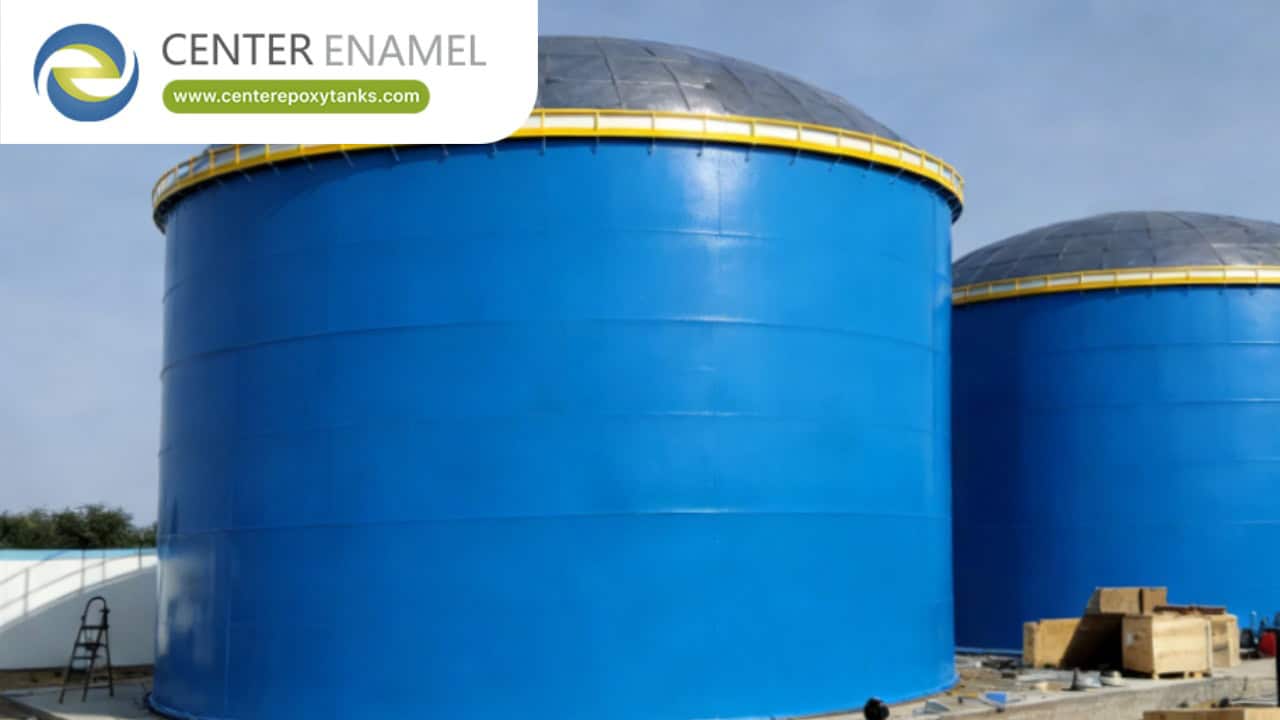
Field-Erected Welded Steel Tanks (API 650 / AWWA D100): Design, Standards, and Engineering Guide
When bulk fluid storage requirements scale into millions of gallons, shop-fabricated or bolted tanks become impractical due to transportation and capacity limits. For large-scale industrial liquids, municipal water reserves, and petroleum products, the absolute benchmark for structural integrity is the field-erected welded steel tank.
Constructed directly on-site by welding heavy steel plates course-by-course on an engineered foundation, these massive vessels are designed and built under two primary global engineering codes: API 650 (American Petroleum Institute) and AWWA D100 (American Water Works Association). Selecting the correct governing standard is critical for safety, regulatory compliance, and lifecycle performance.
1. Understanding API 650: The Petroleum and Industrial Standard
Published by the American Petroleum Institute, API 650 is the dominant global standard for large, field-erected, vertical, cylindrical steel storage tanks storing petroleum products, chemicals, biofuels, and non-potable industrial water.
Operating Parameters: Designed for atmospheric storage (internal pressure up to 2.5 psig) at standard ambient temperatures ranging from -40°F to 500°F (with higher temperatures permissible under specialized annexes).
Material Flexibility: API 650 permits a wide range of materials, including carbon steel structural grades (like ASTM A36 and A516 Gr. 70), austenitic stainless steels, and duplex stainless steels.
Custom Roof and Emission Options: Accommodates fixed cone roofs, aluminum geodesic domes, and internal or external floating roofs equipped with advanced rim seals for vapor emission control.
2. Understanding AWWA D100: The Water Storage Standard
Published by the American Water Works Association, AWWA D100 governs the design, fabrication, and erection of welded carbon steel tanks specifically dedicated to municipal water systems, community drinking water, and fire protection reservoirs.
Potable Water Focus: AWWA D100 tanks feature interior coating and lining specifications certified for safe contact with drinking water, adhering strictly to public health and safety regulations.
Structural Configurations: Encompasses ground-storage reservoirs, standpipes (taller than they are wide), and elevated storage tanks engineered to maintain steady municipal water pressure.
Rigorous Seismic and Hydrodynamic Design: Incorporates complex hydrodynamic sloshing analyses and references ASCE 7 seismic standards to ensure uninterrupted structural performance during major earthquakes.
Data Table: API 650 vs. AWWA D100 Comparison Matrix
Engineering Parameter | API 650 Standard | AWWA D100 Standard |
Primary Industry / Application | Petroleum, petrochemicals, chemicals, industrial liquids | Municipal water supply, potable reservoirs, fire protection |
Operating Pressure | Atmospheric up to 2.5 psig | Atmospheric storage water systems |
Common Materials | Carbon steel, stainless steel, duplex alloys | High-strength carbon steel with certified potable linings |
Seismic Provisions | Appendix E (Self-contained flat-bottom seismic analysis) | ASCE 7 referencing rigorous hydrodynamic sloshing |
Inspection & Maintenance | Governed by API 653 inspection standards | Utility-managed programs referencing AWWA guidelines |
3. The Field-Erection Process: From Plate to Mega-Tank
Building a field-erected welded steel tank requires meticulous engineering execution, specialized equipment, and certified craftsmanship:
Engineering and Stamped Drawings: Calculating hydrostatic head pressures, wind shear, and seismic loads to determine exact shell plate thicknesses and anchor bolt patterns.
Shop Plate Preparation: Cutting, beveling, and rolling structural steel plates in a controlled manufacturing plant before shipping them flat to the job site.
On-Site Erection and Welding: Raising shell courses sequentially using crane equipment and permanently fusing plates together with rigorous multi-pass welding.
Quality Control and Testing: Performing non-destructive examination (NDE) such as radiographic weld testing, vacuum box leak tests on bottom plates, and a full hydrostatic water test to verify structural safety.
Frequently Asked Questions (FAQ)
Q: What is a field-erected welded steel tank?
A: A field-erected welded steel tank is a high-capacity storage vessel built directly on-site by welding individual steel plates together course-by-course on a prepared foundation, allowing for unlimited diameter and capacity scaling.
Q: When should I choose API 650 over AWWA D100?
A: Choose API 650 for crude oil, refined petroleum, industrial chemicals, or non-potable process water. Choose AWWA D100 when the tank is part of a municipal potable water or fire protection system governed by public health codes.
Q: Can an API 650 tank store water?
A: Yes. Industrial plants frequently specify API 650 for non-potable process water, cooling water, or wastewater storage to maintain consistency with other process equipment in the facility.
Q: What testing is required for field-erected welded tanks?
A: Construction codes mandate rigorous quality assurance, including radiographic testing of vertical and horizontal butt welds, vacuum testing of floor seams, and a comprehensive hydrostatic water test prior to commissioning.


