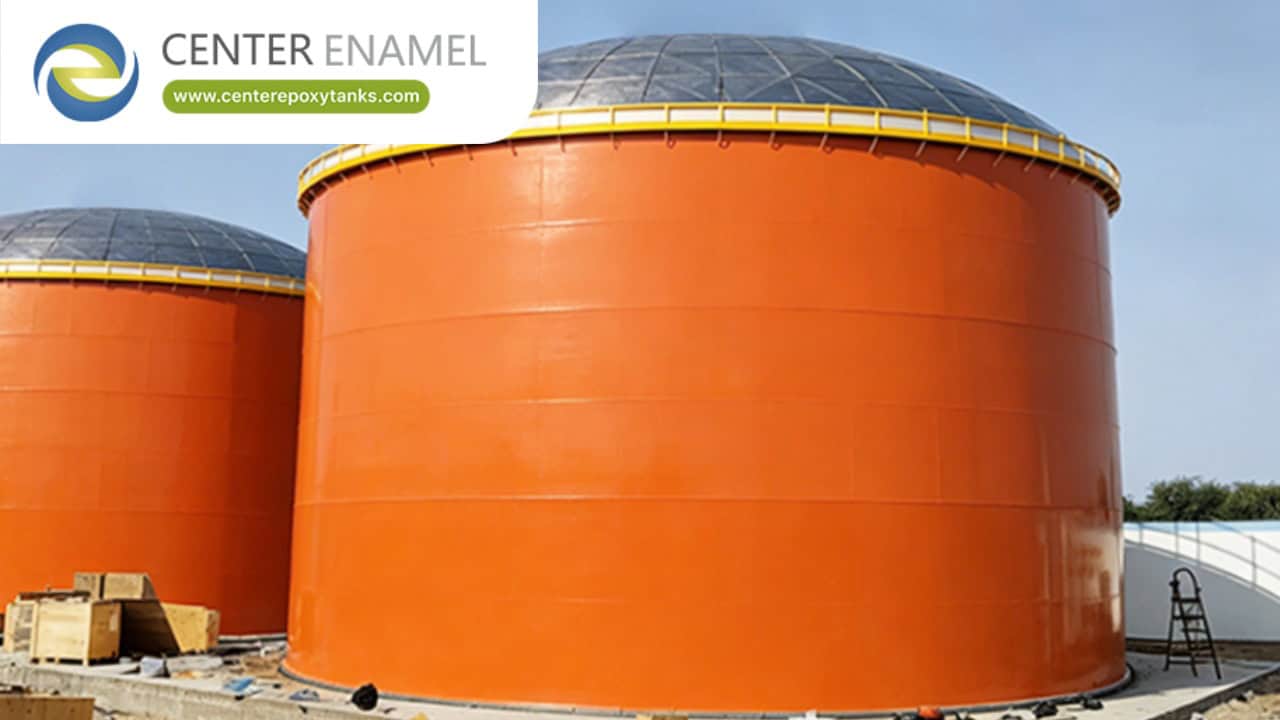
API 650 Field-Erected Welded Carbon Steel Storage Tanks: Engineering & Design Guide
In industrial fluid containment—spanning petroleum refining bulk terminals, chemical processing plants, and water storage reserves—bulk liquids demand robust, high-capacity infrastructure. When storage volumes scale into millions of gallons, shop-fabricated vessels become impractical due to transportation limits. The global engineering benchmark for large-scale containment is the API 650 Field-Erected Welded Carbon Steel Storage Tank.
Governed by the American Petroleum Institute, API 650 sets the definitive standard for welded steel tanks designed to store petroleum products, chemicals, and water at ambient or near-ambient temperatures.
1. Why Field Erection and Welded Carbon Steel Are Essential
API 650 tanks are designated as "field-erected" because their immense dimensions—often spanning hundreds of feet in diameter and height—require steel plates to be fabricated in a shop, shipped flat to the job site, and welded together on location by certified technicians.
● Monolithic Structural Strength: Field welding carbon steel plates (such as ASTM A36 or ASTM A516 Grade 70) creates a continuous, fused metallic barrier. Unlike bolted tanks, welded joints eliminate gaskets and mechanical fasteners, ensuring absolute leak prevention for hazardous media.
● Scalable Storage Capacity: Field erection allows engineers to customize tank dimensions precisely to facility footprints, building massive vertical cylindrical tanks capable of holding hundreds of thousands of barrels of crude oil or refined fuel.
2. Core Structural Components of an API 650 Tank
An API 650 welded storage tank is meticulously engineered as an integrated assembly of specialized structural components:
● Foundation and Bottom Plates: Welded lap-joint or butt-welded annular bottom plates rest on compacted ringwalls or engineered soil foundations, designed to support the dead weight of the entire structure and contained liquid.
● Shell Courses: Stacked horizontal steel rings (courses) that increase in thickness toward the base of the tank to counteract surging hydrostatic head pressure.
● Roof Systems: Depending on operational requirements, tanks feature fixed cone roofs, aluminum geodesic domes, or internal/external floating roofs to control vapor emissions and prevent rainwater accumulation.
● Wind Girders and Anchor Rings: Exterior structural rings stabilize the open-top or shell structure against severe wind shear and seismic uplift forces.
Data Table: API 650 Field-Erected Tank Technical Matrix
Parameter / Specification | API 650 Standard Requirements |
Construction Method | Field-erected via plate-by-plate or roll-out welding |
Primary Material | Carbon Steel (ASTM A36, A283 Gr. C, A516 Gr. 70) |
Design Pressure | Atmospheric up to 2.5 kPa (0.36 psi) internal pressure |
Maximum Operating Temp | Up to 93°C (200°F), with higher options under annex codes |
Inspection & Testing | Radiographic weld testing, vacuum box testing, hydrostatic water testing |
Frequently Asked Questions (FAQ)
Q: What does "field-erected" mean for an API 650 storage tank?
A: Field-erected means the tank components are fabricated off-site and transported as flat steel plates and structural shapes, then assembled and welded together directly at the final operational site due to their massive size.
Q: What is the primary advantage of an API 650 welded carbon steel tank over a bolted tank?
A: The primary advantage is monolithic structural integrity and absolute leak prevention. Welded tanks fuse metal plates together permanently, removing the need for gasketed joints and bolt maintenance.
Q: What materials are typically used for API 650 carbon steel tanks?
A: They are typically constructed using high-quality structural carbon steel grades such as ASTM A36 for general structural components and ASTM A516 Grade 70 for higher tensile strength requirements on lower shell courses.
Q: What quality control tests are required during API 650 tank erection?
A: Construction requires rigorous quality assurance, including radiographic or ultrasonic testing of vertical and horizontal welds, vacuum box testing of bottom plate seams, and a full hydrostatic water test to verify structural and leak-tight performance.


