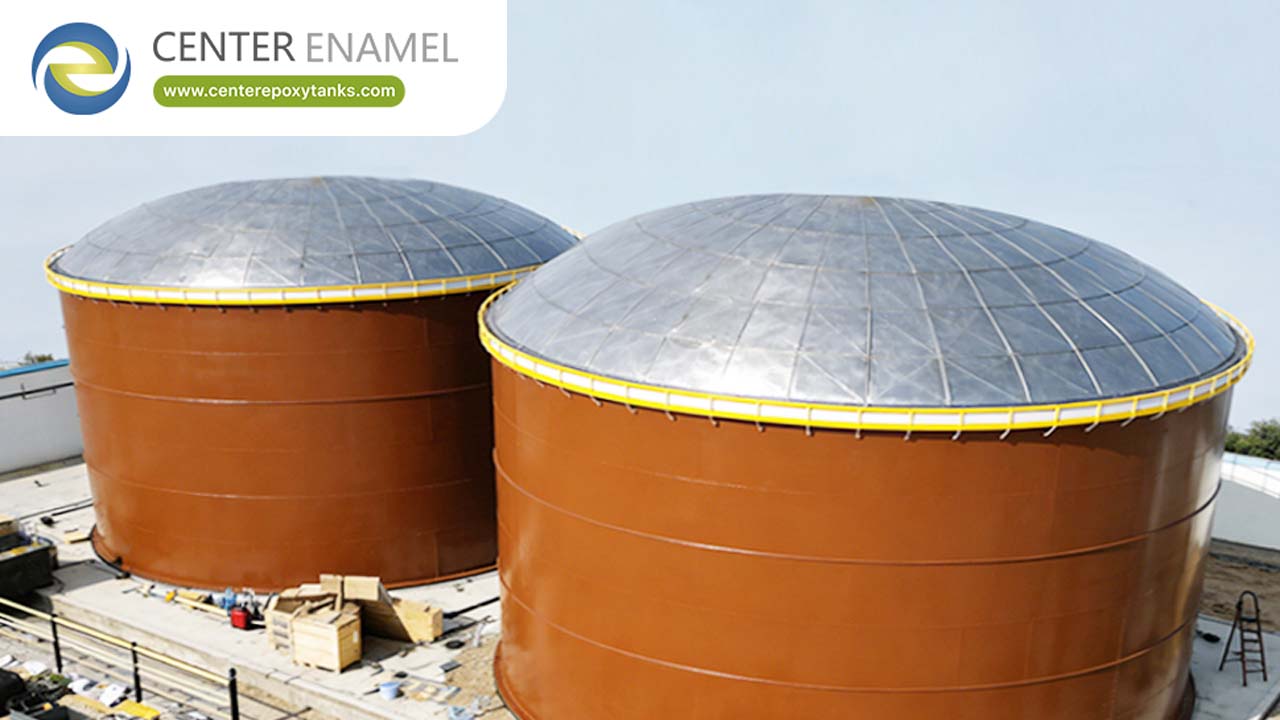
Welded Steel Diesel Tanks: Heavy-Duty Structural Engineering for Secure Fuel Containment and Backup Power
In industrial plants, commercial data centers, emergency backup power stations, mining sites, and petroleum distribution terminals, uninterrupted access to diesel fuel is vital to operational continuity. When primary electrical grids fail or remote machinery requires continuous fueling, the reliability of the storage vessel dictates overall system safety. To handle large-scale fuel reserves safely while resisting intense environmental and mechanical stresses, engineers specify welded steel diesel tanks.
Fabricated using high-grade carbon steel plates joined via continuous full-penetration welding, these tanks provide a monolithic, leak-tight structural envelope engineered for maximum safety and durability. As a globally trusted leader in advanced liquid storage manufacturing, Shijiazhuang Zhengzhong Technology Co., Ltd. (Center Enamel) delivers precision-engineered welded steel fuel tanks designed in strict compliance with international petroleum and fire safety codes.
Engineering Superiority: Governing Standards and Safety Compliance
Diesel fuel storage involves strict regulatory oversight to prevent environmental contamination, mitigate fire hazards, and ensure structural stability during emergencies:
·
API 650 and UL 142 Compliance: Large-scale vertical field-erected fuel reserves comply with API 650 specifications for welded tanks for oil storage, while shop-fabricated horizontal, vertical, or rectangular tanks conform strictly to UL 142 standards for aboveground flammable and combustible liquids.
·
·
NFPA 30 and NFPA 37 Alignment: Designs incorporate mandatory normal and emergency venting, overfill protection, and appropriate setbacks to comply with National Fire Protection Association guidelines for stationary combustion engines and fuel storage.
·
·
Monolithic Field-Welded Seams: Unlike bolted panels requiring rubber or synthetic gaskets that can degrade over time when exposed to hydrocarbons, continuous welding fuses steel plates into a unified, impermeable barrier.
·
·
Advanced Corrosion and Moisture Defense: Internal surfaces can be coated with fuel-compatible, corrosion-resistant barrier linings to prevent rust formation, while exterior finishes protect against severe weathering, UV degradation, and atmospheric oxidation.
·
Data Table: Comprehensive Comparison of Diesel Storage Tank Technologies
Technical Parameter | Welded Steel Diesel Tanks (API 650 / UL 142) | Bolted Steel Storage Tanks | Fiberglass Reinforced Plastic (FRP) Tanks |
Structural Integrity | Monolithic welded steel shell; absolute leak-tightness for hydrocarbons | Bolted panels utilizing specialized elastomeric sealing gaskets | Molded polymer composite shell; vulnerable to impact damage |
Fire Safety & Heat Resistance | Excellent; non-combustible steel maintains structural integrity during external fires | High-strength steel panels with fire-resistant properties | Low; prone to structural softening or structural failure under high heat |
Fuel Compatibility | Excellent for diesel, biodiesel blends, and heavy fuel oils | Suitable with proper chemical-resistant gasket selections | Susceptible to degradation with certain aggressive fuel additives or high aromatic blends |
Installation Profile | Precision field-erection (API 650) or shop-fabricated units (UL 142) | Rapid modular bolted assembly using high-tensile hardware | Pre-formed single-piece placement requiring careful bedding |
Primary Industrial Application | Data center backup generators, bulk fuel terminals, and refineries | Regional fuel distribution and commercial back-up storage | Underground or small-scale specialized chemical/fuel service |
Key Industrial and Commercial Applications
Welded steel diesel tanks serve as critical infrastructure components across diverse sectors:
1.
Mission-Critical Data Centers: Maintaining massive emergency fuel reserves to power continuous backup generators during primary grid disruptions.
2.
3.
Commercial and Municipal Emergency Power: Storing fuel for hospital backup systems, water treatment pump stations, and emergency response facilities.
4.
5.
Bulk Fuel Terminals and Refineries: Containing large-volume refined petroleum products prior to commercial distribution.
6.
Frequently Asked Questions (FAQ)
Q: Why choose a welded steel tank for diesel fuel storage?
A: Welded steel tanks offer unmatched structural strength, absolute leak-tightness for combustible liquids, superior fire resistance, and full compliance with stringent petroleum codes like API 650 and UL 142.
Q: Do welded steel diesel tanks require secondary containment?
A: Yes. To comply with environmental regulations (such as EPA and NFPA 30 guidelines), diesel storage systems typically utilize double-wall welded construction or are placed inside diked containment areas to capture potential spills or leaks.
Q: How are welded seams tested on an industrial diesel storage tank?
A: All field and shop welds undergo rigorous Non-Destructive Examination (NDE)—including radiographic, ultrasonic, or vacuum box testing—performed by certified technicians to verify complete structural soundness.
Q: Can welded steel diesel tanks store biodiesel blends?
A: Absolutely. With proper interior coating selection and moisture management protocols, welded steel tanks are fully compatible with standard diesel as well as various biodiesel blends (such as B20).


