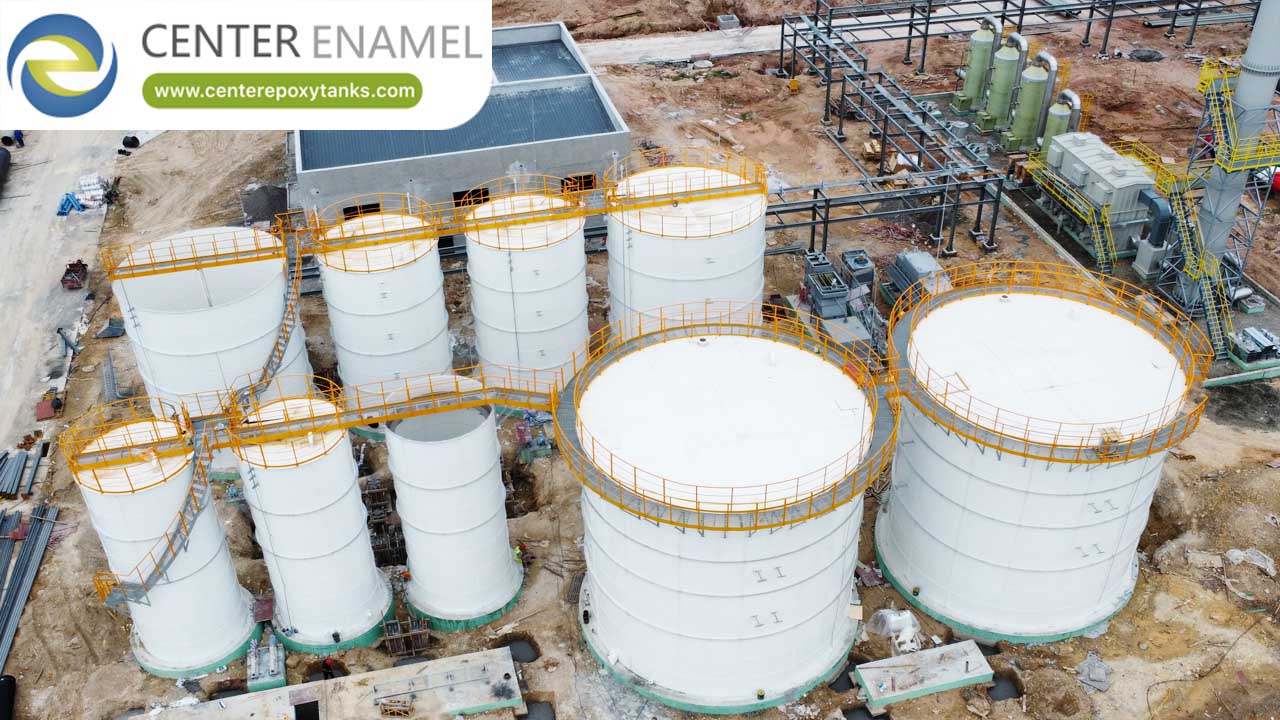
Welded Steel Effluent Sludge Storage Tanks: Heavy-Duty Industrial Engineering for Wastewater and Biosolids Containment
In municipal wastewater treatment plants, chemical processing facilities, pulp and paper mills, and heavy industrial complexes, managing liquid effluent and solid byproducts is a critical environmental mandate. As wastewater flows through clarification, aeration, and biological treatment stages, it generates substantial volumes of thick, chemically aggressive semi-solid waste known as sludge. Storing, thickening, and buffering this material prior to dewatering or disposal requires containment infrastructure that can withstand severe chemical exposure, abrasive solids, and high structural loads.
To handle these punishing conditions safely and reliably, facility operators rely on welded steel effluent sludge storage tanks. Constructed from heavy-gauge carbon or stainless steel plates joined through continuous, high-precision welding, these tanks deliver a monolithic, leak-tight structural envelope. As a globally recognized leader in advanced liquid storage manufacturing, Shijiazhuang Zhengzhong Technology Co., Ltd. (Center Enamel) delivers precision-engineered welded steel tanks designed to meet the rigorous demands of industrial wastewater treatment applications worldwide.
Engineering Superiority: Why Welded Construction Excels in Sludge Service
Effluent and sludge storage environments are among the most corrosive and mechanically demanding sectors in the tank industry. Welded steel fabrication provides distinct engineering advantages:
·
Monolithic Leak-Tight Integrity: Unlike mechanical or bolted joints that rely on gaskets, continuous full-penetration field welding fuses steel plates into a unified shell. This eliminates joint leakage pathways, ensuring absolute containment of hazardous wastewater and foul-smelling effluent liquors.
·
·
Resistance to Biogenic Sulfide Corrosion: In enclosed sludge and wastewater holding tanks, anaerobic bacteria produce hydrogen sulfide (H2S) gas, which reacts to form aggressive sulfuric acid above the waterline. Welded steel tanks can be paired with high-performance, corrosion-resistant interior barrier coatings (such as 100% solids epoxy systems) to prevent chemical attack.
·
·
Support for Heavy Dynamic and Mechanical Loads: Sludge holding and thickening tanks frequently require bridge-mounted mechanical scrapers, center-feed wells, high-torque mixers, and internal sludge-raking mechanisms. The structural rigidity of welded steel provides exceptional load-bearing support for heavy industrial rotating equipment.
·
·
Custom Geometries for Flow Dynamics: Field-erected welded tanks can be custom-engineered with sloped floors, specialized hopper bottoms, and anti-vortex configurations optimized for the gravity settling and discharge of viscous, abrasive sludge slurries.
·
Data Table: Comprehensive Comparison of Sludge Storage Technologies
Technical Parameter | Field-Erected Welded Steel Tanks | Bolted Steel Storage Tanks | Cast-in-Place Concrete Basins |
Structural Integrity | Monolithic welded steel shell; absolute leak-tightness | High-strength bolted panels utilizing perimeter sealing gaskets | Massive monolithic structure; vulnerable to micro-cracking over time |
Corrosion Defense | High-build industrial epoxies or corrosion-resistant alloy plates | Factory-applied powder coats or glass-fused ceramic bonds | Prone to sulfate attack and biogenic concrete spalling |
Mechanical Equipment Support | Exceptional structural rigidity for heavy bridge mixers and rakes | Suitable for standard loads; requires custom mounting brackets | High compressive rigidity, but difficult to modify post-pour |
Installation Profile | Complex field welding, NDE testing, and crane erection | Rapid modular bolted assembly using high-tensile hardware | Multi-month multi-stage pouring, formwork, and curing |
Primary Wastewater Application | Primary/secondary sludge holding, thickeners, and digesters | Equalization basins, aerobic digesters, and biosolids storage | Large municipal clarifiers, aeration basins, and clearwells |
Key Industrial and Municipal Applications
Welded steel sludge and effluent tanks serve as critical process hubs across multiple sectors:
1.
Municipal Wastewater Treatment Plants: Holding waste-activated sludge (WAS), thickened sludge, and digested biosolids prior to belt-press dewatering or agricultural land application.
2.
3.
Industrial Effluent Pretreatment: Managing high-BOD wastewater streams, chemical manufacturing effluent, and settling slurries from food processing and textile plants.
4.
5.
Anaerobic Sludge Digestion: Serving as gas-tight digestion vessels where organic sludge is broken down to produce renewable biogas while isolating hazardous gases safely.
6.
Frequently Asked Questions (FAQ)
Q: Why choose a welded steel tank for effluent sludge storage?
A: Welded steel tanks provide a monolithic, seamless structure with absolute leak-tightness, superior resistance to mechanical vibration from mixers, and high load-bearing capacity for heavy sludge-handling equipment.
Q: How do welded sludge tanks protect against hydrogen sulfide (H2S) corrosion?
A: Interior surfaces are prepared via abrasive blasting (such as SSPC-SP10) and coated with high-performance, chemically resistant barrier linings—like 100% solids epoxy—that withstand biological acid attack in the tank headspace.
Q: Can welded steel effluent tanks be custom-designed with sloped hopper bottoms?
A: Yes. Field-erected welded tanks can be fabricated with custom floor slopes and internal sumps to facilitate smooth gravity drainage and prevent the accumulation of viscous sludge deposits.
Q: What design standards govern industrial welded wastewater and sludge tanks?
A: High-quality welded tanks are engineered in strict compliance with globally recognized benchmarks, including API 650 for industrial wastewater structures and AWWA D100 for water and wastewater storage facilities.


