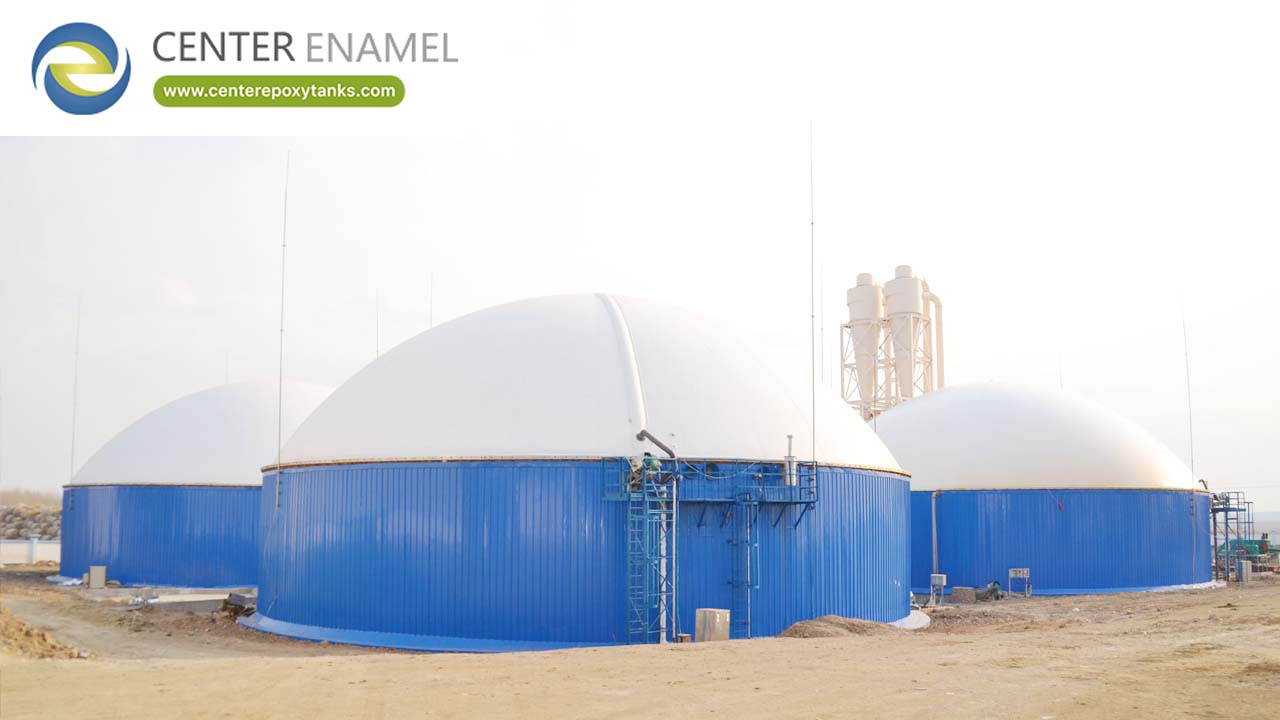
Welded Steel Biogas Tanks: Heavy-Duty Structural Engineering for Anaerobic Digestion and Methane Containment
In the global transition toward renewable energy and sustainable waste management, anaerobic digestion (AD) facilities play a pivotal role. By breaking down organic materials—such as agricultural waste, municipal sewage sludge, and industrial effluents—in an oxygen-free environment, these systems generate clean biogas primarily composed of methane (CH4) and carbon dioxide (CO2).
However, the biological digestion process creates a chemically aggressive environment coupled with internal gas pressure fluctuations. To ensure zero methane leakage, withstand dynamic mechanical loads, and secure decades of reliable operation, engineers rely on welded steel biogas tanks. Fabricated from high-strength steel plates joined via continuous, full-penetration welding, these tanks provide a monolithic, hermetically sealed enclosure engineered for maximum structural resilience. As a globally trusted leader in advanced liquid and gas containment, Shijiazhuang Zhengzhong Technology Co., Ltd. (Center Enamel) delivers precision-engineered welded steel tanks designed to meet the rigorous demands of modern biogas projects.
Engineering Superiority: Why Welded Construction Excels in Biogas Applications
Welded steel biogas tanks are specified for mission-critical renewable energy projects where structural failure or gas permeation is unacceptable:
·
Absolute Gas-Tightness and Zero Permeation: Unlike mechanical joints or bolted laps that rely on gaskets, continuous shop or field welding fuses steel plates into a unified shell. This ensures complete gas containment, preventing fugitive methane emissions and maintaining optimal headspace pressure.
·
·
High-Pressure and Volumetric Headspace Tolerance: Biogas storage requires reliable containment of pressurized gas before utilization in combined heat and power (CHP) engines or upgrading to biomethane. Welded steel structures provide exceptional tensile strength to manage internal gas pressures safely.
·
·
Resistance to Aggressive Chemical Byproducts: Anaerobic digestion generates corrosive compounds, including hydrogen sulfide (H2S) and volatile fatty acids. Welded tanks can be paired with high-performance protective coatings or fabricated from specialized corrosion-resistant alloys to prevent internal degradation.
·
·
Rigorous Non-Destructive Examination (NDE): Every welded seam undergoes strict inspection—including radiographic (RT), ultrasonic (UT), and vacuum box testing—by certified technicians to guarantee a 100% leak-proof structure before commissioning.
·
Data Table: Comprehensive Comparison of Biogas Digester Technologies
Technical Parameter | Welded Steel Biogas Tanks | Glass-Fused-to-Steel (GFS) Bolted Tanks | Cast-in-Place Concrete Digesters |
Structural Integrity | Monolithic welded steel shell; absolute gas-tightness | High-strength bolted panels with specialized sealing gaskets | Massive monolithic structure; prone to micro-cracking over time |
Gas Pressure Containment | Excellent tolerance for high-pressure headspace gas storage | High structural reliability; optimized for double membrane roofs | Moderate pressure capacity; requires internal gas-tight liners |
Corrosion Defense | High-grade interior barrier coatings or corrosion-resistant steel | Fused glass-steel barrier immune to biological acids | Vulnerable to sulfate attack and biogenic sulfuric acid corrosion |
Installation & Erection | Precision field-erected welding and heavy crane assembly | Rapid modular bolted assembly using high-tensile hardware | Slow, multi-month multi-stage pouring, formwork, and curing |
Primary Biogas Application | Large-scale high-pressure digesters and centralized gas holders | Agricultural AD plants, municipal sludge tanks, and GFS roofs | Large municipal wastewater sludge digesters |
Key Industrial and Agricultural Applications
Welded steel biogas containment systems serve as critical operational hubs across multiple sectors:
1.
Agricultural Biomass and Farm Digesters: Processing animal manure and crop residues into decentralized green energy while producing nutrient-rich digestate.
2.
3.
Municipal Wastewater Treatment Plants (WWTP): Containing primary and secondary sewage sludge digestion circuits to offset facility energy costs.
4.
5.
Industrial Waste-to-Energy Facilities: Stabilizing high-COD organic effluents from food processing plants, distilleries, and paper mills.
6.
Frequently Asked Questions (FAQ)
Q: Why choose a welded steel tank for biogas storage and anaerobic digestion?
A: Welded steel tanks provide a monolithic, seamless structure with absolute gas-tightness, high tensile strength for pressure containment, and superior resistance to mechanical stress and seismic activity.
Q: How do welded biogas tanks handle hydrogen sulfide (H2S) and corrosive byproducts?
A: They are engineered using specialized high-performance interior epoxy coatings or corrosion-resistant alloy plates that withstand exposure to hydrogen sulfide, moisture, and organic acids generated during anaerobic digestion.
Q: Can welded steel biogas tanks be integrated with double membrane roofs?
A: Yes. Welded tanks can be custom-fitted with perimeter compression rings and mounting profiles to support advanced double membrane biogas roofs, optimizing both liquid digestion volume and gas storage capacity.
Q: What quality control measures are used during the fabrication of welded biogas tanks?
A: All structural plates and field welds are subjected to rigorous Non-Destructive Examination (NDE)—including ultrasonic, radiographic, and vacuum testing—ensuring compliance with international engineering standards like ASME and API 650.


