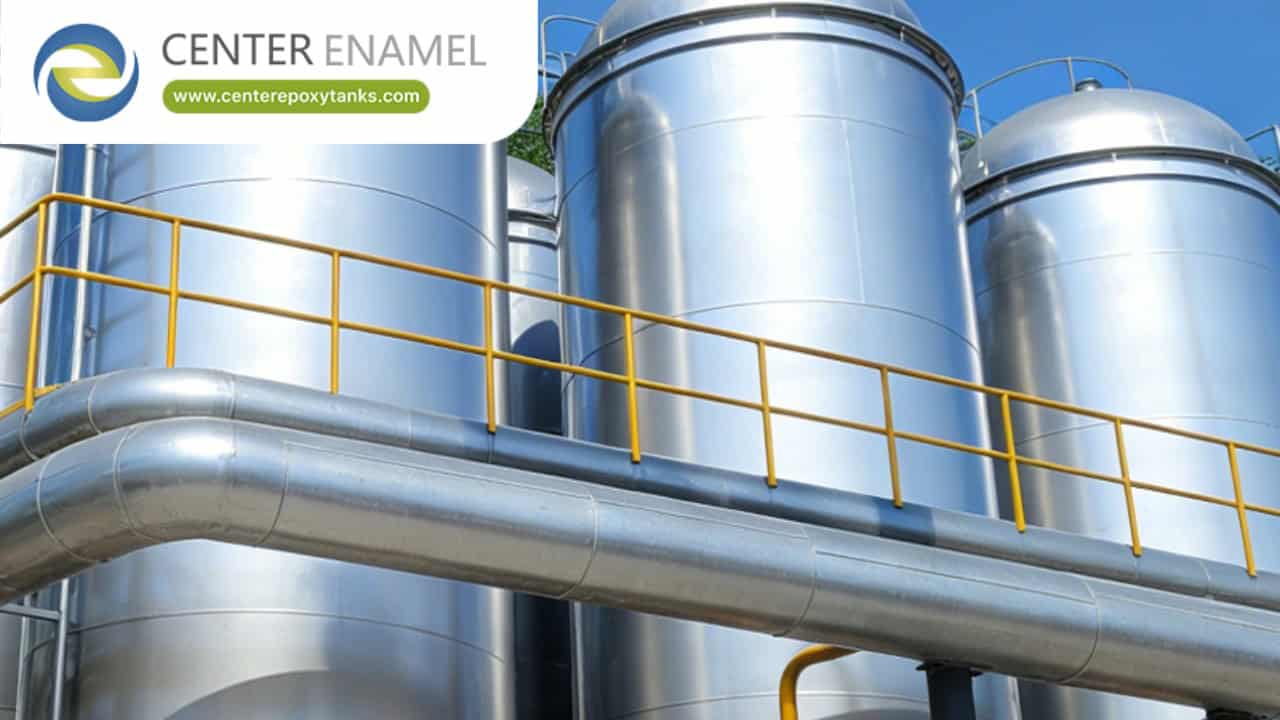
Welded Stainless Steel Tanks: Engineering, Fabrication, and Procurement Guide
For applications requiring high purity, extreme corrosion resistance, or strict hygienic compliance, welded stainless steel tanks are the industry standard. Unlike bolted or plastic alternatives, welded stainless construction provides a monolithic, crevice-free environment that prevents bacterial proliferation and cross-contamination. This guide provides the engineering and procurement framework necessary to specify and source high-quality stainless steel vessels for industrial use.
1. The Engineering Logic: Why Welded Stainless?
Stainless steel (specifically austenitic grades) relies on a passive chromium-oxide layer for corrosion resistance. A welded construction ensures this integrity is maintained across all joints, unlike mechanical fasteners which create potential leak paths and areas for debris accumulation.
Material Selection: 304L vs. 316L
● 304L (Low Carbon): The most versatile and widely used grade. Ideal for general-purpose food processing, beverage storage, and water treatment where chloride exposure is low.
● 316L (Low Carbon, Molybdenum-bearing): Significantly higher resistance to pitting and crevice corrosion, particularly in environments containing chlorides (e.g., coastal regions, saline process streams, or aggressive chemical storage).
Structural Integrity: The Hoop Stress Principle
Engineers size tank shell thickness ($t$) based on the maximum allowable stress and the hydrostatic pressure. The fundamental design equation is:
2. Fabrication & Quality Control
The quality of a stainless steel tank is defined by its fabrication process. Even the highest-grade 316L steel will fail if the welding and finishing are sub-par.
Critical Fabrication Milestones:
● Full-Penetration Welding: All structural seams must be full-penetration, typically using TIG (Tungsten Inert Gas) or Plasma welding, back-purged with inert gas (Argon) to prevent "sugaring" (oxidation) on the root side.
● Surface Passivation (ASTM A967): Post-welding, the tank must undergo chemical passivation (using nitric or citric acid) to remove free iron and restore the chromium-oxide protective layer.
● Surface Roughness (Ra): For hygienic/food-grade applications, specify internal surface roughness (Ra) values. A finish of Ra 0.8 u m is standard for dairy and pharmaceuticals to prevent bacterial attachment.
3. Comparative Performance Matrix
Attribute | Welded Stainless Steel | Bolted Stainless Steel | Carbon Steel (Lined) |
Corrosion Resistance | Superior | Moderate (Gasket failure risk) | Low (Liner dependent) |
Hygienic Rating | Excellent | Low (Crevice risks) | Moderate |
Maintenance | Minimal | High (Periodic torqueing) | High (Liner repairs) |
Leak Integrity | Monolithic | Potential leak paths | Moderate |
Lifecycle Cost | Low | Moderate | High |
4. Procurement Vetting Checklist
Sourcing stainless steel tanks requires a "technical first" approach. Ensure your procurement team audits manufacturers against the following:
● Weld Certification: Require the manufacturer to provide Weld Procedure Specifications (WPS) and Welder Performance Qualifications (WPQ).
● NDT Documentation: Demand 100% dye-penetrant (PT) testing on all welds, and random/spot radiography (RT) on vertical seams.
● Holiday Testing: If the tank has internal coatings (rare for stainless, but possible), verify they are free of pinholes using ASTM G62 standards.
● TPI (Third-Party Inspection): For high-value assets, engage an independent inspector to verify material traceability (Mill Test Reports - MTRs) before fabrication begins.
Frequently Asked Questions (FAQ)
Q: Why is "L" grade (304L/316L) preferred for tanks?
A: The "L" stands for low carbon content. This prevents "sensitization" (carbide precipitation) during welding, which can cause intergranular corrosion at the weld heat-affected zone.
Q: Can I use stainless steel for hydrochloric acid storage?
A: No. Hydrochloric acid will rapidly destroy standard 304/316 stainless steel. You need specialized materials (e.g., FRP or specific super-alloys) for such high-chloride environments. Always verify chemical compatibility matrices before ordering.
Q: Is it necessary to polish the external surface?
A: It depends. For indoor industrial use, a standard mill finish (2B) is sufficient. For architectural or extreme clean-room environments, a #4 brushed or #8 mirror polish is specified for aesthetics and ease of cleaning.
Are you currently in the site-planning phase for a new processing facility, or are you looking to retrofit existing infrastructure with high-purity stainless steel storage?


