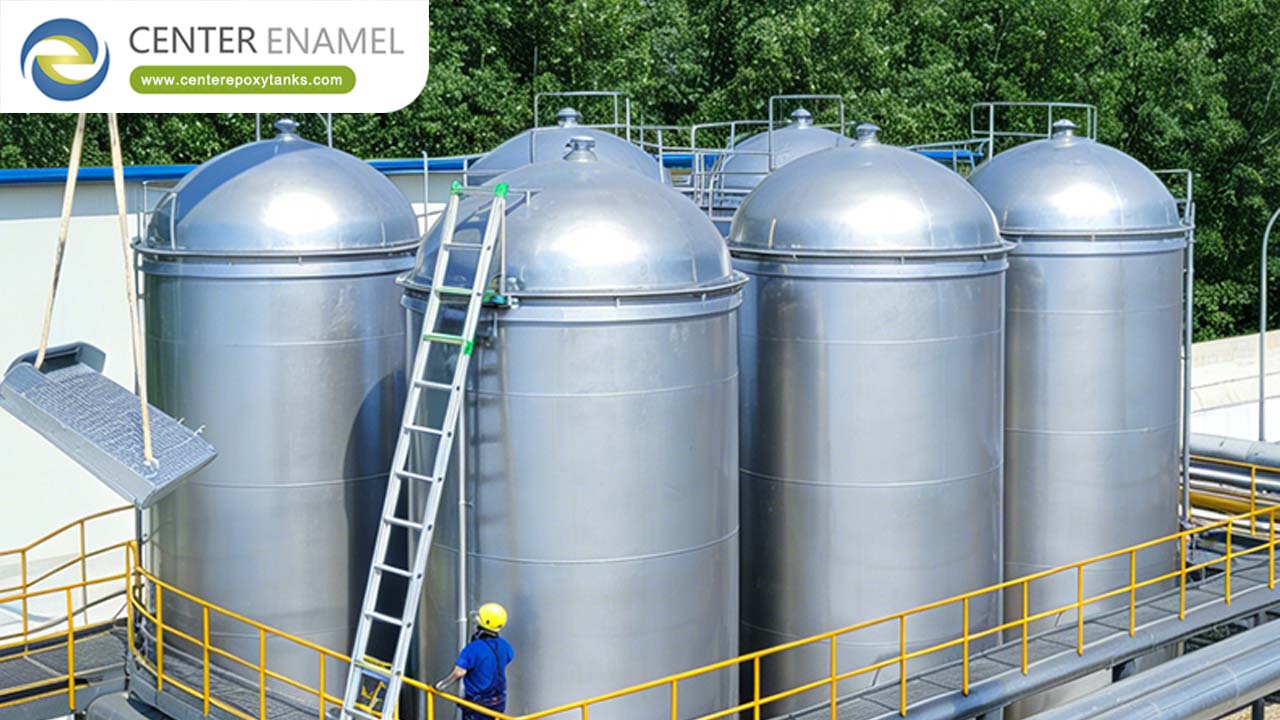
Reliable Welded Stainless Steel Tanks: The Ideal LPG Storage Tanks Solution
Welded stainless steel tanks represent the premium engineering solution for Liquefied Petroleum Gas (LPG) storage due to their exceptional high-pressure containment capabilities, low-temperature ductility, and intrinsic corrosion resistance. Fabricated from low-carbon structural alloys like 304L or 316L, these pressure vessels conform strictly to ASME Section VIII standards, providing a continuous, monolithic structure that eliminates the risk of joint leaks or seal degradation under cyclical loading. Unlike traditional carbon steel, stainless steel requires no protective internal linings, prevents product contamination, maintains its structural toughness at sub-zero temperatures, and vastly extends the service life of midstream and downstream oil and gas infrastructure.
The Engineering Realities of LPG Containment
Liquefied Petroleum Gas (mainly propane and butane) must be stored under substantial pressure to maintain its liquid state at ambient temperatures. This constant thermodynamic pressure, combined with environmental variables, demands a vessel that offers absolute mechanical reliability.
Welded stainless steel tanks address the core mechanical and chemical challenges of LPG storage:
Cryogenic & Low-Temperature Toughness: During rapid vaporization or in cold climates, LPG temperatures can drop significantly. Standard carbon steel can suffer from low-temperature embrittlement, increasing the risk of brittle fracture. Stainless steel (specifically austenitic grades) retains its high impact toughness and ductility even at extreme sub-zero temperatures.
Monolithic Leak Prevention: LPG is highly volatile and flammable. A factory-welded tank relies on continuous automated welding (such as Submerged Arc Welding) subjected to 100% radiographic inspection. This eliminates the joints, gaskets, and mechanical fasteners found in alternative tank designs, ensuring a permanently gas-tight envelope.
Zero-Maintenance Corrosion Protection: Industrial settings, coastal storage terminals, and chemical environments expose tanks to aggressive external factors. Stainless steel forms a self-healing chromium oxide passive layer, preventing the rust and pitting that plagues carbon steel. This eliminates the need for recurring external painting and internal lining checks, drastically slashing operational expenditure (OPEX).
Technical Comparison: LPG Storage Vessel Materials
When designing bulk LPG storage facilities, engineers weigh material properties against initial capital investment (CAPEX) and long-term reliability.
Technical Parameter | Welded Stainless Steel (304L/316L) | Lined Carbon Steel (e.g., SA516) | Composite / Alternative Vessels |
Pressure Rating | Ultra-High (ASME Class Compliant) | High (Requires greater thickness) | Moderate |
Low-Temp Performance | Superior (No brittle transition) | Risky below -29°C without testing | Variable |
Corrosion Resistance | Excellent (Inherent) | Dependent on coating integrity | Good |
Weld Joint Efficiency | 1.0 (Fully Radiographed) | 1.0 (Fully Radiographed) | N/A (Joint dependent) |
Lifespan | 50+ Years (Minimal maintenance) | 20–30 Years (Requires re-coating) | 15–20 Years |
Risk of Product Leak | Near Zero (Monolithic) | Low (Monolithic until corroded) | Moderate (Interface stress) |
Strict Compliance with Pressure Vessel Codes
Because LPG storage involves high pressures and hazardous materials, leading manufacturers build tanks in accordance with rigorous international codes:
ASME Boiler and Pressure Vessel Code (Section VIII, Div 1/2): This mandates precise calculations for shell thickness, head design (typically ellipsoidal or hemispherical for optimal pressure distribution), and nozzle reinforcement.
Post-Weld Heat Treatment (PWHT): While austenitic stainless steel often does not require PWHT to relieve stress, precision manufacturing involves specialized weld finishing and passivation to ensure the heat-affected zone (HAZ) retains its full corrosion resistance.
Non-Destructive Testing (NDT): Prior to commissioning, every reliable welded tank undergoes a series of strict verification protocols, including Radiographic Testing (RT) for weld interiors, Dye Penetrant Testing (PT) for surface seams, and a comprehensive Hydrostatic Pressure Test exceeding maximum allowable working pressures (MAWP).
Frequently Asked Questions (FAQ)
Q: Why choose 304L or 316L stainless steel over standard 304 or 316 for welded LPG tanks?
A: The "L" stands for low carbon ($le 0.03%$ carbon content). During the high-temperature welding process, standard stainless steel can suffer from chromium carbide precipitation, which weakens its corrosion resistance near the weld (intergranular corrosion). Low-carbon variants prevent this precipitation, ensuring the welded seams remain as strong and corrosion-resistant as the rest of the tank shell.
Q: Can welded stainless steel LPG tanks be installed underground?
A: Yes. Underground or mounded installations are highly effective for LPG safety because they insulate the tank from ambient fire hazards. Because stainless steel is highly resistant to soil-borne moisture and chemical attack, it is an exceptionally reliable choice for mounded or buried configurations, requiring fewer cathodic protection measures than carbon steel.
Q: How does the initial cost of stainless steel compare to carbon steel over time?
A: Stainless steel has a higher upfront material cost (CAPEX) compared to carbon steel. However, when factoring in the lifecycle costs—including the complete elimination of internal sandblasting, chemical lining applications, external rust maintenance, and extended operational downtime for inspections—stainless steel delivers a lower Total Cost of Ownership (TCO) and typically offsets its price premium within the first decade of service.
Securing Your Energy Infrastructure
The long-term safety and efficiency of an LPG distribution hub, industrial processing plant, or chemical facility hinges entirely on the structural integrity of its pressure vessels. Utilizing precision-welded stainless steel tanks provides the ultimate assurance against containment failure, regulatory non-compliance, and unexpected operational shutdowns.
Are you planning an LPG storage expansion or upgrading existing pressure vessels?
Contact our technical engineering team today to request an ASME-compliant structural calculation, review our NDT and welding certification records, or receive a comprehensive project proposal engineered for your exact capacity and environmental conditions.


