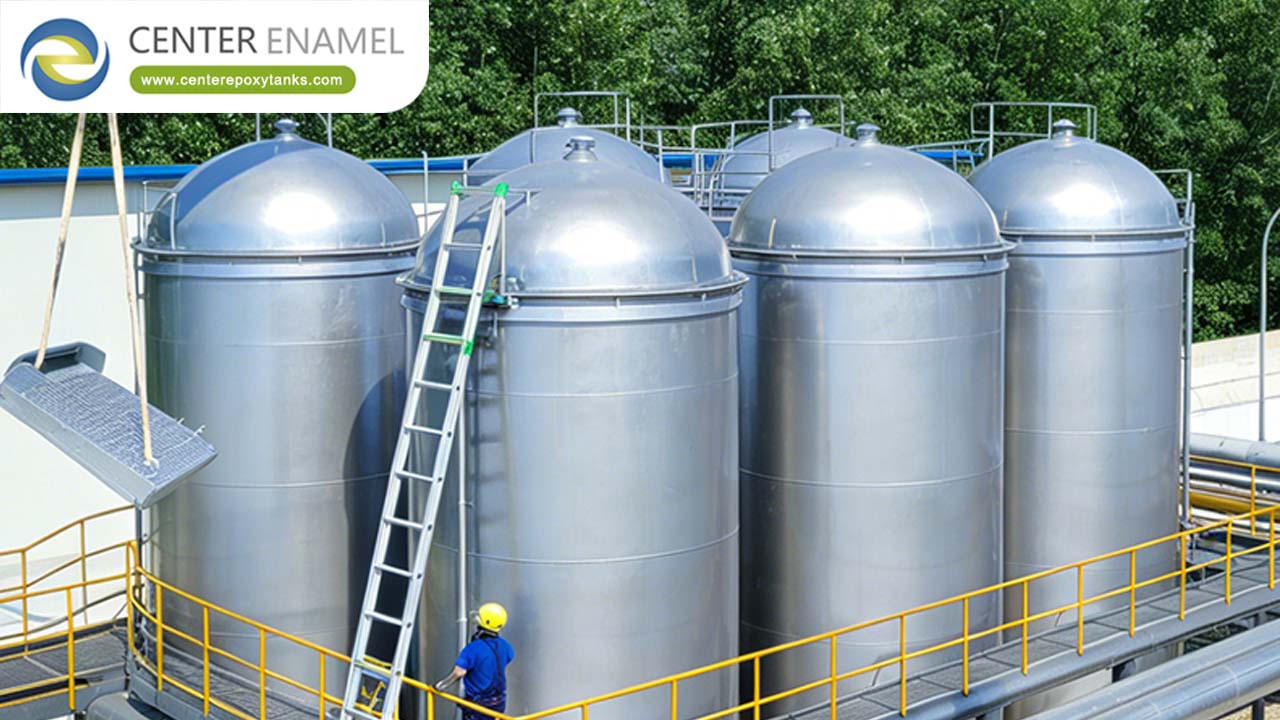
Welded Stainless Steel Tank Manufacturer: Engineering & Procurement Guide
In industries requiring high-purity containment—such as food and beverage, pharmaceuticals, and aggressive chemical processing—welded stainless steel tanks are the industry standard. Unlike carbon steel or plastic, stainless steel provides an inert, non-porous, and corrosion-resistant surface that ensures product integrity and minimizes long-term operational expenditures (OpEx). China has emerged as a global hub for high-precision, ASME-certified stainless steel fabrication, combining advanced automated welding technology with robust global logistics.
1. Material Selection: Matching Alloy to Application
Procurement decisions should begin with the required alloy grade, as the chemical profile of the stored substance dictates the longevity and safety of the tank.
Grade | Characteristics | Typical Applications |
304 / 304L | Versatile, cost-effective, excellent hygiene. | Potable water, food, beverage, light industrial. |
316 / 316L | Molybdenum-enhanced for superior chloride/acid resistance. | Chemical processing, pharmaceutical, marine. |
Duplex 2205 | High mechanical strength, excellent pitting resistance. | Brine, seawater, aggressive industrial acids. |
Super Duplex | Exceptional strength and extreme corrosion resistance. | Offshore, desalination, critical chemical infrastructure. |
2. Fabrication Standards & Quality Assurance
To ensure long-term structural integrity and compliance with international safety protocols, manufacturers must adhere to standardized design codes.
Critical Engineering Standards
● API 650: The global benchmark for welded, atmospheric storage tanks. Ideal for large-scale liquid storage.
● ASME Section VIII: Essential for pressure vessels where internal process pressure exceeds atmospheric levels.
● ISO 9001 / CE / NSF/ANSI 61: Mandatory certifications for quality management and hygiene (specifically for potable water or food-grade storage).
Welding Excellence
The reliability of a stainless steel tank is entirely dependent on the quality of its weld joints. Leading Chinese manufacturers utilize:
● Argon Arc Welding (TIG): Used for precise, high-purity root passes to ensure a smooth interior finish.
● Submerged Arc Welding (SAW): Employed for heavy structural seams to achieve deep penetration and high strength.
● Post-Weld Treatment: Essential for "passivation." After welding, the heat-affected zone must be treated to restore the chromium oxide layer, which provides stainless steel's signature corrosion resistance.
3. Why Procurement Agents Choose China-Based Fabricators
Industrial buyers increasingly source from China’s top-tier manufacturers due to three key factors:
1. Vertical Integration: Modern facilities (e.g., those producing ASME-certified pressure vessels) manage the entire lifecycle—from raw material spectral analysis to final hydro-testing.
2. Customization Capability: Unlike catalog-only suppliers, premier manufacturers offer bespoke fabrication, including integrated agitators, heating/cooling jackets, and specialized instrumentation nozzles.
3. Logistical Efficiency: Chinese fabricators have standardized the "flat-pack" or modular shipping of large-diameter panels and structural components, significantly reducing the landed cost of large-scale projects.
4. Maintenance & Lifecycle Optimization
Stainless steel tanks require significantly less maintenance than carbon steel or concrete, but professional care is required to ensure a 30+ year lifespan:
● Surface Hygiene: Use only non-abrasive, chlorine-free cleaners. Chlorine can attack the passive oxide layer of stainless steel and cause pitting.
● Inspection Frequency: Conduct annual visual inspections of interior welds. For mission-critical storage, utilize ultrasonic thickness testing every 3–5 years to monitor potential localized corrosion.
● Gasket & Seal Care: Regularly replace gaskets and sealants at nozzle connections, as these are often the first points of failure in an otherwise inert system.
Frequently Asked Questions (FAQ)
Q: How do I verify a manufacturer's welding quality?
A: Always request a copy of the Welding Procedure Specification (WPS) and the Procedure Qualification Record (PQR). Furthermore, look for third-party NDT (Non-Destructive Testing) reports such as radiographic (X-ray) or ultrasonic inspection results for critical seams.
Q: Are stainless steel tanks truly cost-effective?
A: While the initial capital expenditure (CapEx) is higher than carbon steel or plastic, the total cost of ownership (TCO) is lower. You save on recurring painting, lining repairs, and the potential costs associated with product contamination or structural failure.
Q: Can these tanks handle extreme temperatures?
A: Yes. Stainless steel maintains excellent mechanical properties in cryogenic conditions (down to -196°C) and can withstand high-temperature processing (>500°C), depending on the specific alloy and structural design.


