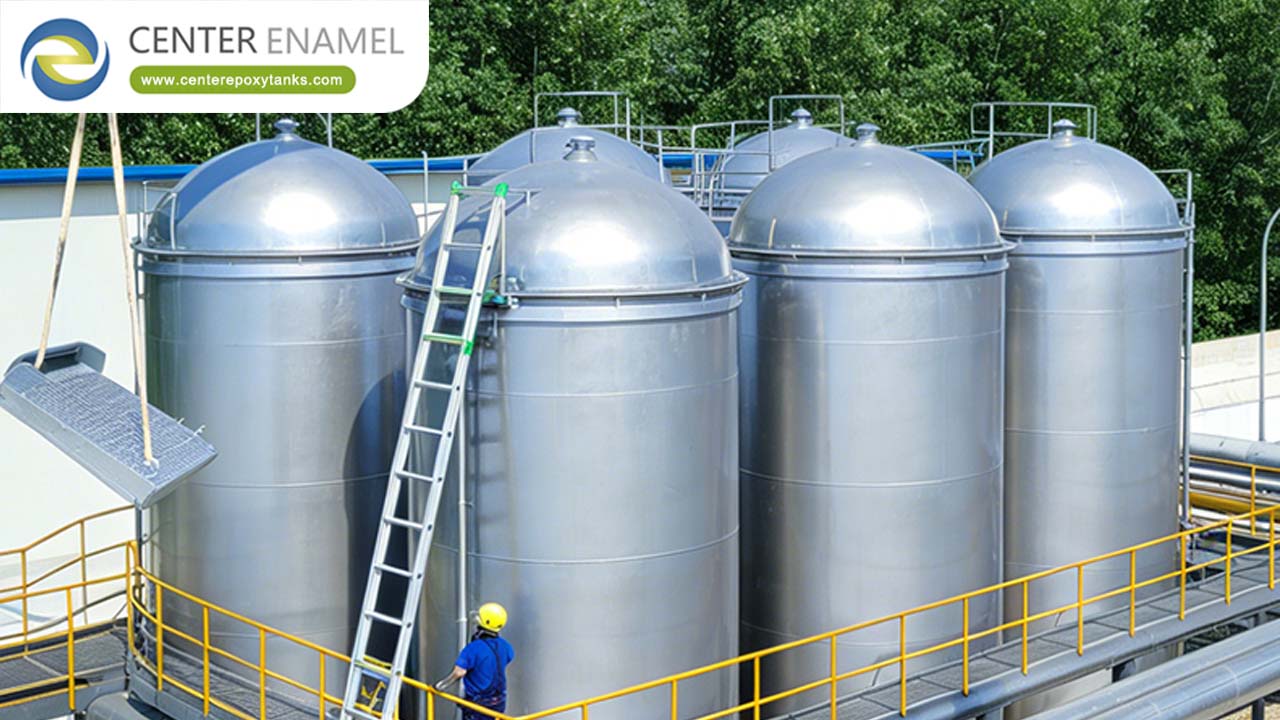
Trusted China Welded Stainless Steel Oil Storage Tanks Manufacturer: Procurement Guide
For critical infrastructure, oil and gas terminals, and chemical processing facilities, stainless steel is often the only acceptable material for long-term storage of high-purity or corrosive liquids. However, sourcing stainless steel tanks from China requires a high degree of technical due diligence. A "trusted" manufacturer must go beyond simple fabrication to provide full material traceability, certified welding procedures (ASME/API), and rigorous non-destructive testing (NDT). Shijiazhuang Zhengzhong Technology Co., Ltd (Center Enamel) is a leader in this sector, combining advanced metallurgical expertise with global regulatory compliance.
1. Why Stainless Steel? Technical Justification
When your project specifies stainless steel, you are prioritizing longevity and product purity. Unlike carbon steel, stainless steel provides:
● Corrosion Resistance: The chromium-rich passive layer prevents oxidation, even in high-moisture or aggressive chemical environments.
● Product Purity: For light fuel oils, aviation fuel, or specialized chemical products, stainless steel prevents "metal leaching" and biofilm formation, which is essential for meeting stringent industrial purity standards (e.g., JIG/EI requirements).
● Temperature Tolerance: Stainless steel retains its mechanical properties across a wider range of temperatures, making it safer for storage applications that experience thermal cycling.
2. Defining "Trust": The Manufacturer Verification Checklist
A trusted manufacturer is defined by their ability to provide transparency. If a supplier hesitates on any of the following, they are not meeting the standard of a high-tier partner:
A. Material Traceability (The "Birth Certificate")
Every tank must arrive with comprehensive Mill Test Certificates (MTCs). These documents prove the precise chemical composition (Nickel, Chromium, Molybdenum percentages) of the steel. Never accept material without an MTC that traces back to the primary steel mill.
B. Engineering & Weld Compliance
Stainless steel requires specialized welding techniques to prevent "sensitization" (loss of corrosion resistance near the weld). A trusted manufacturer utilizes:
● Qualified Welding Procedures (WPS): Adherence to ASME/API standards.
● Gas Shielding: Strict control over argon shielding to prevent weld contamination.
● NDT Validation: Radiographic (RT) or Ultrasonic (UT) testing to verify that internal weld integrity is as strong as the base metal.
C. Quality Management Systems (QMS)
Trust is measurable. Look for:
● ISO 9001/14001: Standardized quality and environmental management.
● Third-Party Inspection Rights: A reputable Chinese manufacturer will welcome, not block, inspections by firms like SGS, Bureau Veritas, or Intertek during the fabrication process.
3. Comparison Matrix: Procurement Strategy
Procurement Factor | Trusted Industrial Manufacturer | Generic Local Fabricator |
Material Verification | MTC provided for every plate | "Trust us" / Unverified origin |
Welding Standards | ASME/API Qualified | Unknown / Variable |
Fabrication Facility | Large-scale, clean-room standards | Open, contaminated shop floor |
Documentation | Comprehensive QA/QC Data Book | Limited or none |
Long-Term Risk | Low (Regulatory/Safety compliant) | High (Potential for leaks/fines) |
4. Frequently Asked Questions (FAQ)
Q: Should I choose 304 or 316L stainless steel for my oil tanks?
A: 304 is the industry standard for general, non-corrosive storage. However, 316L (Low Carbon) is recommended for storage tanks containing chemicals, acidic oils, or environments where chloride-induced pitting is a risk. We always advise clients based on their specific product safety data sheet (SDS).
Q: How do you prevent contamination during the welding process?
A: We utilize a dedicated stainless steel fabrication zone. By separating stainless work from carbon steel work, we prevent "cross-contamination" of iron particles, which can lead to rust spots (galvanic corrosion) on finished stainless tanks.
Q: Do you support retrofitting existing storage farms?
A: Yes. We specialize in custom-engineering stainless steel liners or new tank sections that fit within existing site footprints, ensuring your facility upgrades are performed with precision and code compliance.
Engineering Certainty for Your Assets
The integrity of your storage tank is the integrity of your entire operation. By selecting a manufacturer that prioritizes transparency, NDT verification, and international engineering standards, you eliminate the risks inherent in overseas procurement and secure a storage asset designed to last for decades.
Are you currently sourcing stainless steel storage solutions for an upcoming facility expansion, or do you need assistance drafting the technical specifications for an upcoming tender?


