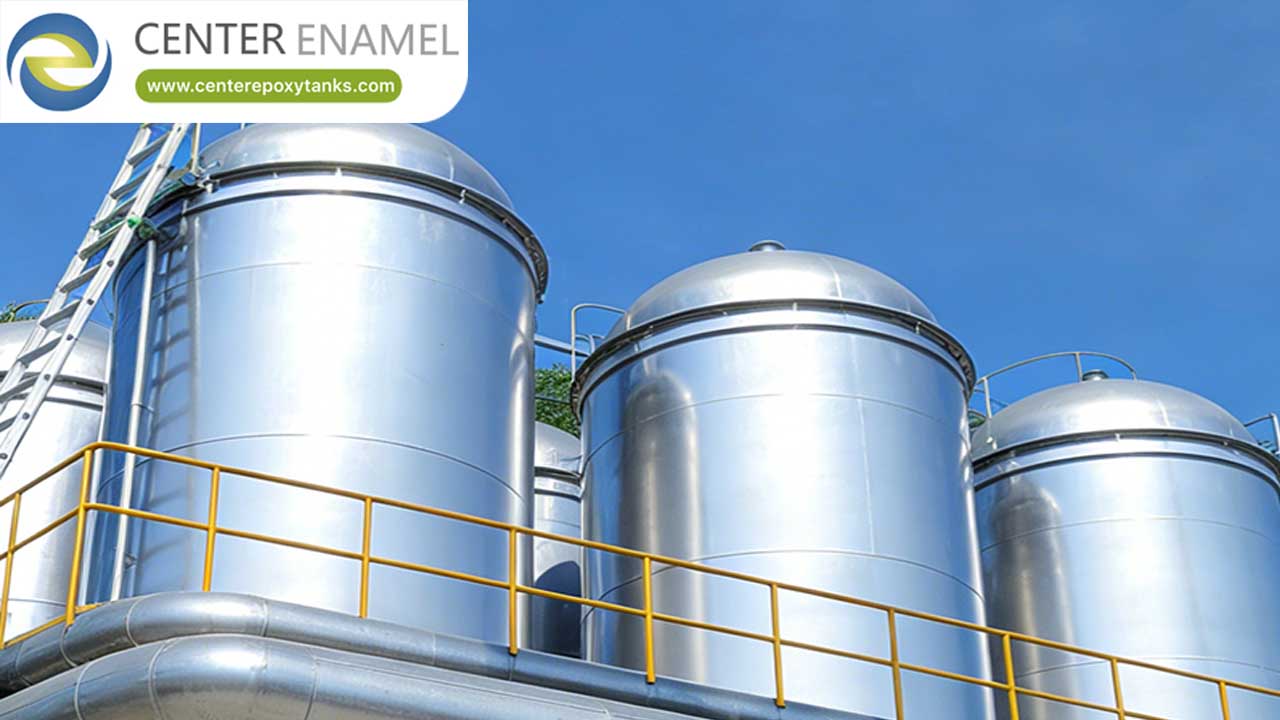
Welded Stainless Steel Slop Oil Tank: Design for Water and Solids Handling
Slop oil is storage's worst tenant: a variable cocktail of oil, free water, brine, solids, and often corrosive carryover that changes chemistry with every delivery. A tank built for it cannot assume anything about its contents — which is why material selection and separation design, not capacity, define a slop tank.
A welded stainless steel slop oil tank is a corrosion-resistant recovery vessel — typically 316L stainless — engineered with heating, decanting, and sludge-handling provisions to receive oily water and off-spec product, separate the phases, and return recoverable oil to the product stream while brine and solids leave for treatment.
1. Why Does Slop Service Punish Ordinary Tanks?
The contents are water, salt, and oil at the same time.
· Chloride brine layer: Decanted water in slop systems frequently carries chlorides that aggressively pit carbon steel and standard austenitics.
· Acidic carryover: Sour water and chemical slop streams depress pH, attacking unlined steel shells and heating surfaces.
· Solids abrasion: Sand, rust fines, and sludge accumulate and scour — mechanical wear compounds chemical attack at the floor.
· Thermal cycling: Heating for viscosity control cycles the walls through condensation and dry-out, accelerating corrosion kinetics.
2. What Design Features Define a Slop Tank?
Separation hardware is as important as the shell.
· 316L shell and internals: Molybdenum-bearing stainless for chloride and acidic duty; internals — heating coils, spreaders, decant lines — matched in grade.
· Heating provisions: Steam or thermal-oil coils or panels maintaining separation temperature for heavy, emulsified, or waxed slop.
· Decant and interface control: Water draw-off arranged by interface level, with sight or instrument verification of the oil-water boundary.
· Sludge capacity and access: Generous floor-to-outlet volumes plus manways and davits for entry, cleaning, and sludge removal campaigns.
· Vapor handling: Vents sized for filling and heating duty, with vapor control specified where emissions rules apply.
3. How Is Recoverable Oil Maximized?
Good tank design turns slop back into product.
· Gravity separation time: Residence volume sized so emulsions break and phases split before decanting.
· Temperature management: Holding slop at the right viscosity-temperature point accelerates separation and prevents wax deposition.
· Multiple compartments: Compartmented tanks let fresh slop settle while recovered oil is pumped out and brine is drawn off in parallel.
· Interface discipline: Automated or verified interface control keeps oil out of the water stream and water out of the recovered product.
Data Table: Slop Tank Duty vs Design Response
Slop Duty Challenge | Design Response |
Chloride brine layer | 316L shell and internals |
Acidic / sour carryover | Corrosion-resistant metallurgy, no lining to fail |
Heavy, emulsified oil | Heating coils for separation temperature |
Solids and sludge | Sludge capacity, manway access, sloped floor |
Phase recovery | Decant interface control and compartments |
Frequently Asked Questions (FAQ)
Q1: Why use stainless steel for slop oil tanks?
Because slop combines oil, chloride-bearing water, acids, and solids in one vessel — a mix that corrodes carbon steel from the floor up. 316L stainless resists the brine and acidic layers without a lining whose failure would contaminate the recovered product.
Q2: How does a slop oil tank recover oil?
By gravity separation: slop is held at temperature long enough for oil, water, and solids to split; recoverable oil is pumped from the top, brine is decanted at the interface, and sludge is removed through access manways during cleaning campaigns.
Q3: Does a slop tank need heating?
Usually yes — heavy, emulsified, or wax-bearing slop separates too slowly cold. Steam or thermal-oil heating holds the charge at separation temperature, breaking emulsions and keeping wax from depositing on the floor and coils.
Q4: What maintenance does a stainless slop tank require?
Periodic sludge removal, heating system checks, and interface instrument verification — plus external inspection per tank-code practice. The stainless shell removes the lining repairs and internal corrosion monitoring that dominate carbon steel slop tank upkeep.


