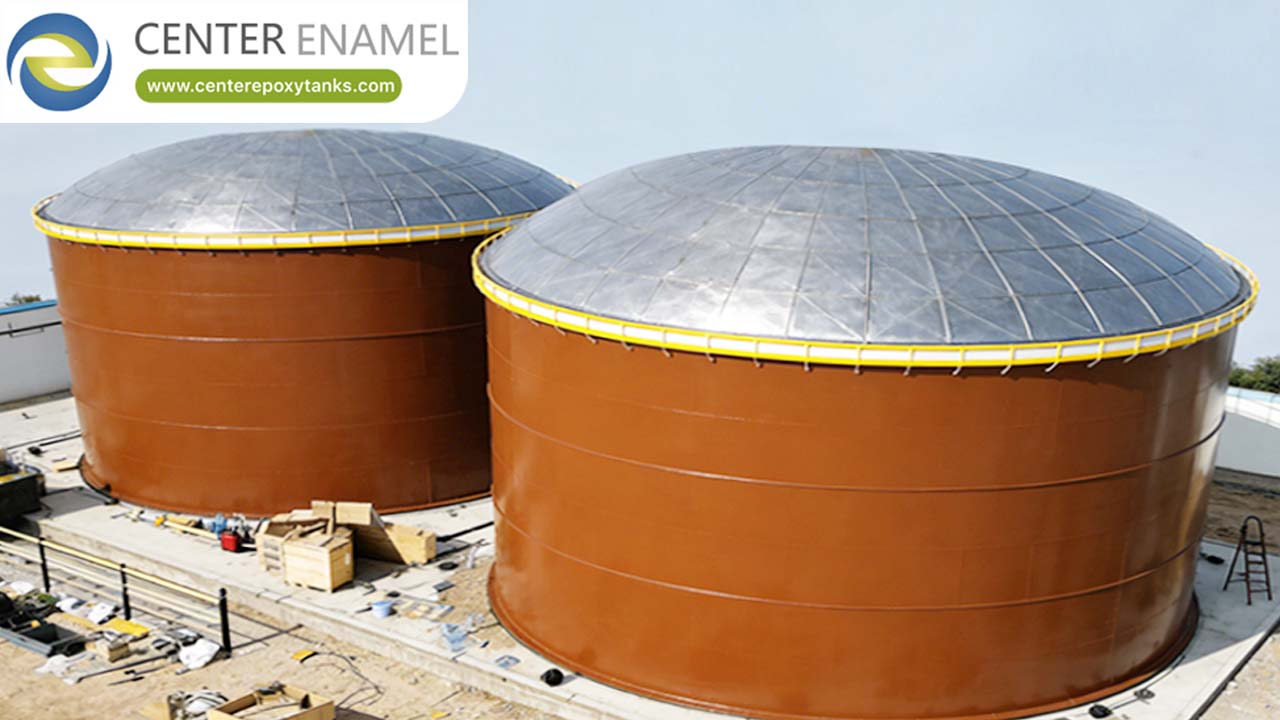
Welded Steel Blended Oil Tank: Design for Multi-Product Mixing and Homogeneity
A blended oil tank has two jobs that pull in opposite directions: hold product steady like any storage tank, and deliberately un-stratify it like a process vessel. Every design decision — shell, mixing system, heating, sampling — serves a single question: is the last liter out of the tank identical to the first?
A welded steel blended oil tank is a code-fabricated mixing vessel engineered with side-entry agitators or jet-blending nozzles, heating provisions, and verified sampling points — built to combine base oils, additives, and components into a homogeneous blend whose quality holds from first fill to final drain.
1. What Separates a Blending Tank from Plain Storage?
The tank is a process vessel that stores.
· Mixing architecture: Side-entry mixers, jet-blending nozzles on the fill line, or both — selected by viscosity, tank size, and blend cycle time.
· Heating provisions: Coils or panels holding blend temperature so heavy base stocks flow, additives dissolve, and emulsions form on purpose.
· Additive injection points: Sized connections for metered additive dosing directly into the mixing zone.
· Sampling at every level: Top, middle, and bottom sample taps proving homogeneity before release — the tank's acceptance test.
· Fast-drain geometry: Sloped floors and bottom outlets so the final blend fraction leaves on-spec, not stratified in the heel.
2. How Is Homogeneity Achieved and Proven?
Mixing energy plus verification discipline.
· Blend cycle design: Mixing time and energy matched to viscosity gap between components — light base oil plus heavy stock needs more than like-to-like blends.
· Circulation strategies: Jet nozzles convert pump-around flow into tank-wide circulation; mixers keep it moving during settling-prone periods.
· Stratification control: Fill sequencing and pre-mixing minimize density layers that resist merging without excessive agitation.
· Verification sampling: Multi-level samples tested for viscosity, density, and additive marker — released only when spread between samples falls within spec.
3. What Material and Lining Choices Apply?
Blend chemistry sets the shell specification.
· Carbon steel with lining: Standard for mineral base oils and finished lubricants — epoxy linings protect product color and keep iron pickup out of the blend.
· Stainless upgrades: 304/316L for additive packages, synthetic stocks, or any aggressive component chemistry in the blend slate.
· Heating surface compatibility: Coil metallurgy matched to the most aggressive component, not the average of the blend.
· Cleanout between slates: Lining integrity and cleanability govern changeover speed in multi-product blending farms.
Data Table: Blending Method Selection
Blending Method | Best Fit | Notes |
Side-entry mixer | Mid-large tanks, viscous blends | Continuous agitation |
Jet blending nozzles | Pump-around systems | Energy from fill pump |
Air sparging | Light stocks only | Oxidation risk on finished oil |
Combined mixer + jet | Difficult slate, fast cycles | Fastest homogeneity |
Frequently Asked Questions (FAQ)
Q1: How does a welded steel blended oil tank keep oil homogeneous?
Through engineered mixing — side-entry agitators or jet-blending nozzles circulate the full tank volume while heating holds blend temperature — and through verification: samples drawn at top, middle, and bottom must match on viscosity and density before the blend is released.
Q2: Do blending tanks need heating?
Most do: heavy base stocks and many additives need elevated temperature to flow and dissolve. Heating also stabilizes viscosity during mixing, which stabilizes mixing efficiency itself — cold blends stratify and under-mix.
Q3: How long must a blend be mixed?
Mixing time depends on the viscosity spread between components, tank geometry, and mixing power: like-viscosity base oils blend quickly, while light-into-heavy formulations need longer cycles. The release criterion is sample uniformity, not the clock.
Q4: What lining or material suits lubricant blending tanks?
Epoxy-lined carbon steel is the workhorse for conventional lubricant slates; 304 or 316L stainless is specified for additive systems, synthetics, and any aggressive component. The rule: the shell and coils must satisfy the most aggressive component in the slate, not the average blend.


