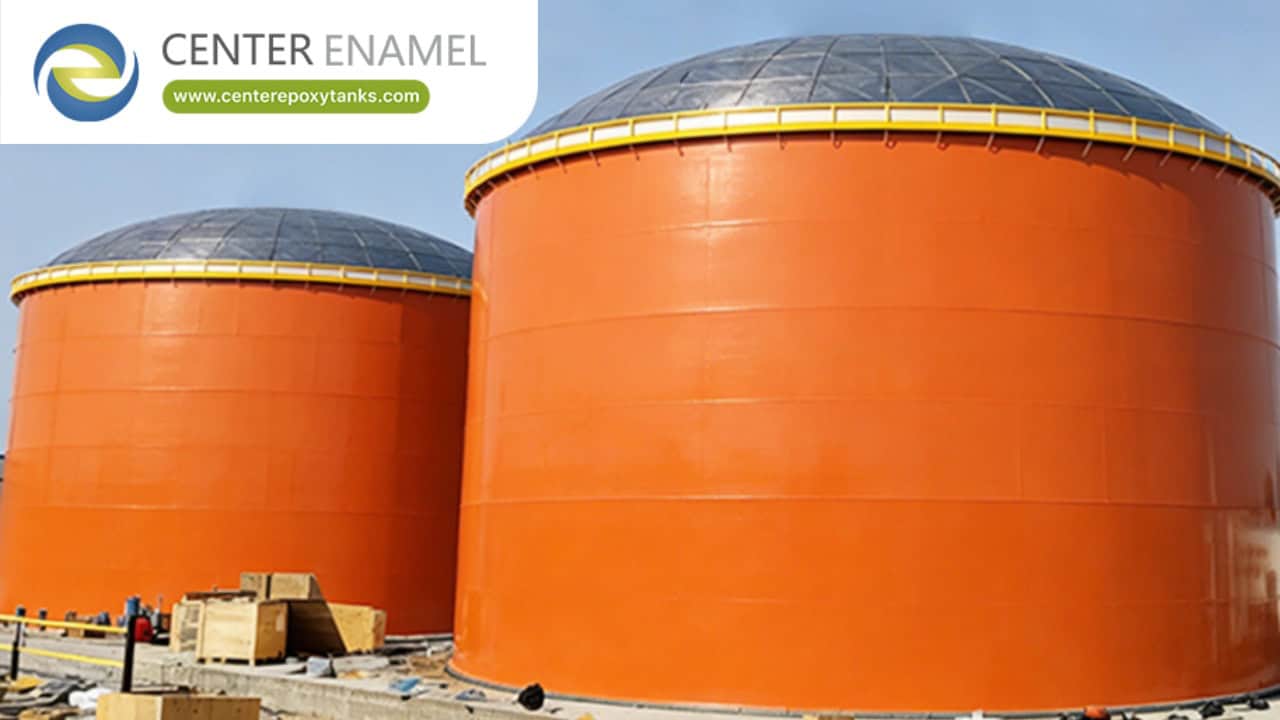
Ventilated Soybean and Oilseed Storage - Aeration That Protects Oil Quality
Oilseeds are stored for their oil, and oil quality starts degrading in the field of storage. Soybeans held even slightly too warm or too wet will heat, and heating drives free fatty acid formation, discolouration and, in the worst case, spontaneous combustion. Aeration is the control that keeps the mass at a uniform, safe temperature - and it is the single most valuable thing a storage silo can provide.
Engineered by Shijiazhuang Zhengzhong Technology Co., Ltd. (Center Enamel), ventilated oilseed silos are supplied with aeration floors, fans sized to the crop and the climate, and temperature monitoring that makes hot spots visible before they become losses.
1. Why Is Aeration Critical for Oilseeds?
Because a stored seed mass is alive. Respiration generates heat and moisture, and without aeration that heat and moisture stay in the mass, accelerating spoilage and raising free fatty acids.
· Respiration Heat: Seeds continue to respire, generating heat that must be removed.
· Temperature Uniformity: Aeration removes the temperature gradients that drive moisture migration.
· Free Fatty Acid Control: Cool, dry storage is what keeps free fatty acid formation slow.
· Insect and Mould Control: Cool storage suppresses both without chemical treatment.
· Safety: Removing heat prevents the self-heating that can lead to spontaneous combustion.
2. What Moisture Content Is Safe?
Soybeans are typically stored safely in the low teens of moisture content, with the exact limit depending on storage duration and climate. Above that, respiration and mould risk rise sharply.
· Safe Moisture Range: Soybeans are commonly held around twelve to thirteen per cent moisture for safe storage.
· Duration Effect: Longer storage demands lower moisture for the same safety margin.
· Climate Effect: Warm humid climates require a lower moisture content than cool dry ones.
· Incoming Testing: Moisture is measured at intake so out-of-specification material is identified.
· Blending Caution: Blending wet and dry lots does not average the risk; it concentrates it.
3. How Much Airflow Is Needed?
Enough to cool the mass within the available window, sized from the crop volume, the climate and the storage duration. Undersized fans are the most common aeration failure.
· Airflow Rate: Sized to the stored volume and to the cooling window the climate allows.
· Fan Sizing: Fans are selected against the pressure drop of the full floor and grain depth.
· Duct and Floor Design: An aeration floor distributes air evenly so no zone is left unventilated.
· Control Strategy: Fans run on temperature and humidity logic rather than on a fixed timetable.
· Monitoring: Temperature cables across the mass make hot spots visible early.
Evaluation Criterion | Aerated Oilseed Silo | Unaerated Storage |
Heat removal | Continuous, controlled | None - heat accumulates |
Moisture migration control | Temperature equalised | Gradients drive migration |
Free fatty acid formation | Slow | Accelerated |
Spontaneous heating risk | Managed | Present |
Storage duration possible | Months | Weeks to a few months |
Engineering Assurance and Project Support
Every welded oil tank delivered by Shijiazhuang Zhengzhong Technology Co., Ltd. (Center Enamel) is designed to API 650 with shell courses sized by the one-foot method and checked for wind, seismic and hydrostatic load cases, or to EN 14015 and the Eurocodes where the site is European. Shell plate is shot-blasted to Sa 2.5 and coated to a documented dry film thickness, longitudinal and annular plate welds are examined by radiography or ultrasonic testing to the acceptance level written into the purchase order, and every tank is hydrostatically tested and dimensionally surveyed before hand-over. Ventilated silos are supplied with aeration floors and fans sized to the crop and climate, temperature cables and monitoring, sealed construction for fumigation where required, and discharge designed for complete emptying.
"Aeration is not a comfort feature on an oilseed silo - it is the difference between storing a crop and watching it spoil."
Frequently Asked Questions (FAQ)
What moisture content should soybeans be stored at?
Commonly around twelve to thirteen per cent for safe storage, with the exact limit depending on how long the crop will be held and on the climate. Longer storage and warmer, more humid conditions both demand a lower moisture content for the same safety margin, so moisture is measured at intake rather than assumed.
How much aeration airflow does an oilseed silo need?
Enough to cool the stored mass within the window the climate allows, which means the rate is sized from the crop volume, the storage duration and the local conditions. The most common failure is an undersized fan selected without accounting for the pressure drop through the full grain depth and aeration floor.
How do you detect a hot spot before it spoils the crop?
With temperature cables distributed through the stored mass, read on a schedule and trended. A rising zone shows up in the temperature record long before it is detectable by smell or appearance, which is what makes intervention possible while it is still cheap.
Can the silo be customised for our crop?
Yes. Capacity and geometry, aeration floor and fan sizing, temperature cable layout, sealed construction for fumigation, coating selection, discharge and conveying interfaces, and instrumentation are all engineered to your crop, climate and storage duration.


