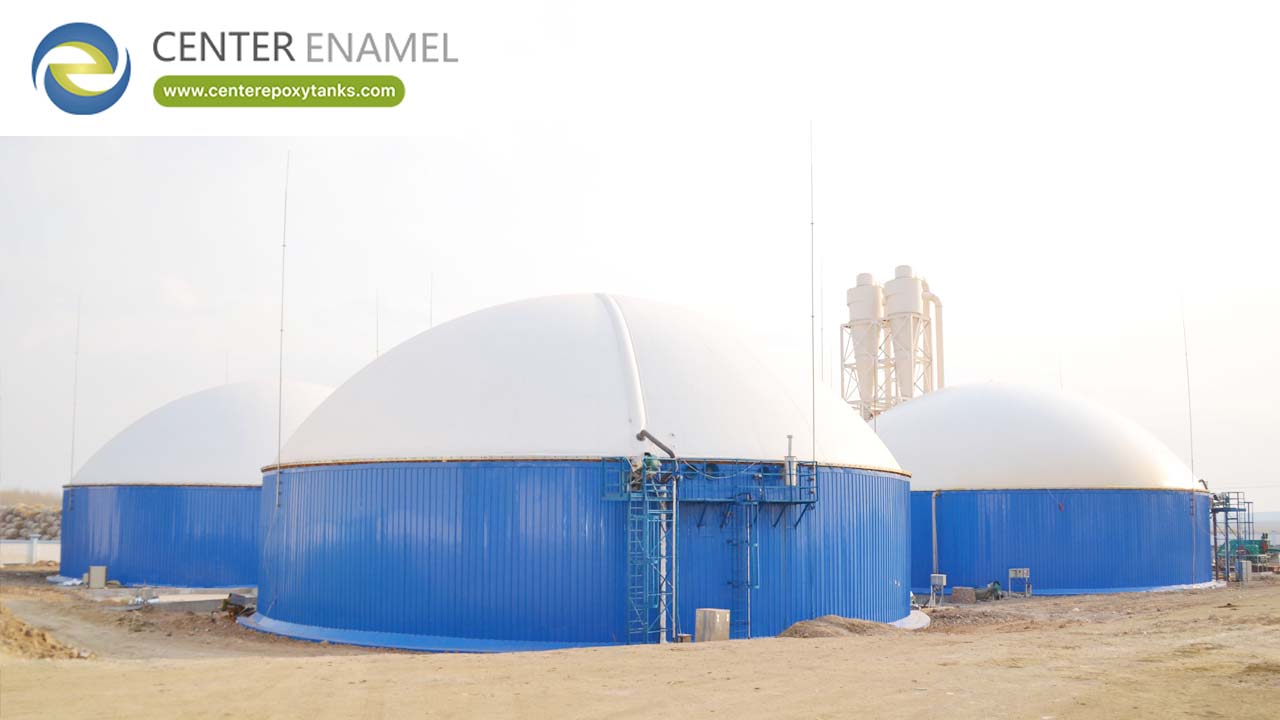
UV-Resistant Membrane Roof: Superior Protection for Storage Tanks
For industrial, municipal, and agricultural facilities, storage tanks are high-value assets that often operate in harsh, outdoor environments. Without proper protection, constant exposure to ultraviolet (UV) radiation can cause roofing materials to become brittle, crack, and fail prematurely. UV-Resistant Membrane Roofs are engineered specifically to provide a robust, long-lasting barrier that shields the tank’s contents and structural components from environmental degradation.
The Engineering Advantage of UV Resistance
Ultraviolet radiation causes photo-degradation in most polymers and coatings, breaking chemical bonds and leading to loss of flexibility. A UV-resistant membrane roof is manufactured with advanced, stabilized compounds that neutralize this effect.
1. Prevention of Material Degradation
Standard roofing materials often suffer from "chalking," cracking, and fading when exposed to intense sunlight. UV-resistant membranes maintain their chemical composition, flexibility, and mechanical strength over decades of exposure, ensuring the roof does not become a failure point for the tank system.
2. Environmental and Contamination Shield
For tanks containing water, chemicals, or agricultural products, keeping the interior environment isolated is critical. These membranes create a seamless, gas-tight, and watertight seal. By blocking UV-induced material breakdown, they prevent holes or micro-fissures from forming, which are often the entry points for rainwater, pests, or airborne contaminants.
3. Thermal Stability
Advanced UV-resistant membranes often incorporate reflective properties, which lower the surface temperature of the tank roof. By reflecting solar radiation rather than absorbing it, these roofs minimize thermal shock and expansion-contraction cycles, which significantly reduces the stress on the tank's structural joints.
Technical Comparison: Membrane vs. Traditional Roofing
Feature | UV-Resistant Membrane Roof | Traditional Steel/Concrete Roof |
UV Protection | High (Chemical Stability) | Low (Requires Coatings) |
Maintenance | Low | Moderate to High (Corrosion) |
Installation Speed | Fast (Prefabricated/Modular) | Slow (Site-Welded/Poured) |
Weight | Lightweight | Heavy |
Lifecycle Cost | Low (Extended Longevity) | Moderate (Replacement/Repair) |
Why Industries Prioritize Membrane Protection
Industrial operators choose UV-resistant membrane roofs to safeguard their bottom line and operational uptime.
Longevity: By resisting the "accelerated aging" caused by the sun, these systems often last for 20–30 years, delaying the need for expensive structural replacements.
Gas-Tight Integrity: For biogas or volatile substance storage, membrane roofs offer a superior barrier against vapor loss, helping facilities meet tightening environmental emission regulations.
Versatility: Membrane roofs are highly adaptable. They can often be retrofitted onto existing steel or concrete tanks, making them an excellent solution for upgrading aging infrastructure without requiring a complete teardown.
Frequently Asked Questions (FAQ)
Q: How long can I expect a UV-resistant membrane roof to last?
A: With proper installation and periodic maintenance, high-quality UV-resistant membrane roofs are designed to remain effective for 20 to 30 years, significantly outperforming standard roofing materials in sunny or extreme climates.
Q: Can these membranes be installed on existing tanks?
A: Yes. One of the primary advantages of membrane roofing systems is their ability to be retrofitted onto existing steel or concrete storage tanks, providing an effective, cost-efficient way to modernize older storage assets.
Q: Does a membrane roof require special cleaning?
A: Generally, no. Most of these membranes are designed to be self-cleaning during rainfall. However, an annual visual inspection is recommended to ensure that no debris has accumulated and that seals remain intact.
Q: Are these roofs gas-tight?
A: Many industrial-grade UV-resistant membranes are specifically engineered to be vapor-diffusion tight, making them excellent choices for biogas storage, wastewater applications, and the containment of volatile organic compounds (VOCs).
Q: How do they handle extreme wind or snow loads?
A: Modern membrane roofs are engineered with high tensile strength and are typically tensioned or supported by the tank structure to handle significant environmental loads. They are widely used in regions with diverse weather conditions, from heavy snowfall to high-wind coastal areas.


