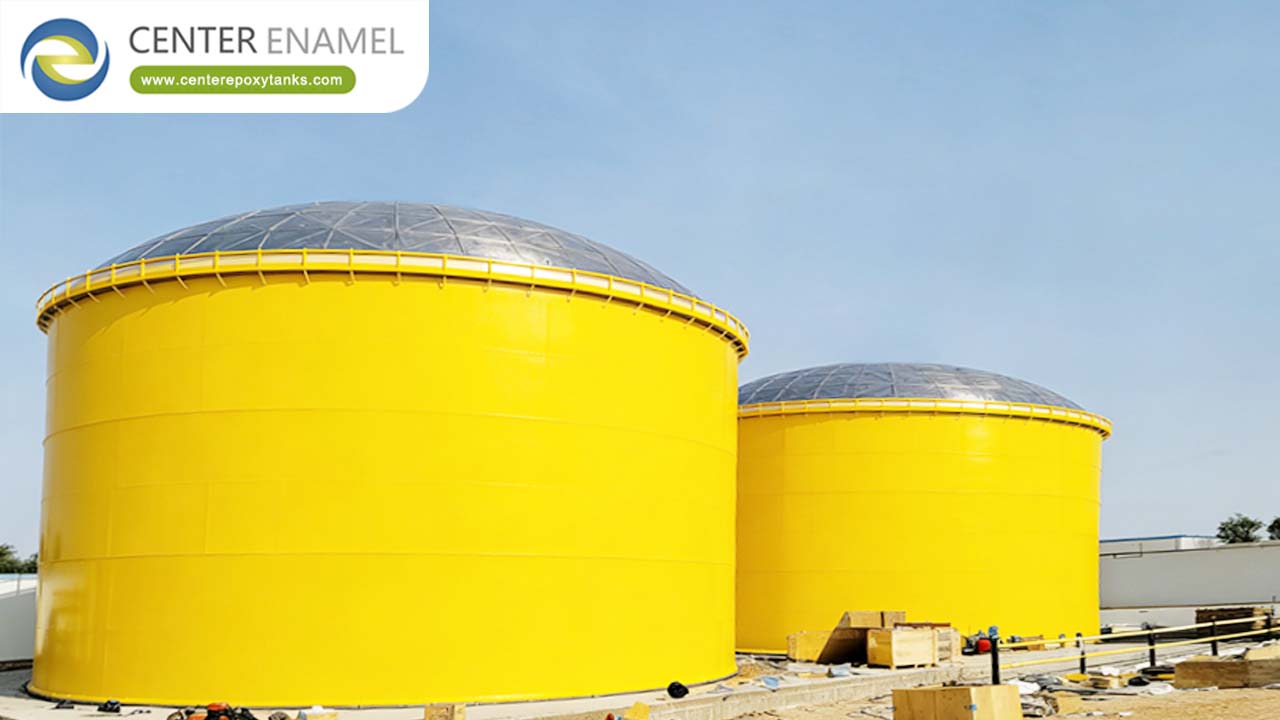
Carbon Steel Storage Tanks: High-Integrity Engineering for Diverse Industrial Applications
Carbon steel storage tanks are the industry standard for high-capacity liquid and gas containment due to their superior tensile strength and structural ductility. Engineered to API 650, AWWA D100, and ASME Section VIII standards, these vessels provide a monolithic, leak-proof environment for hydrocarbons, chemicals, and water. Center Enamel specializes in custom-fabricated carbon steel tanks utilizing Automated Girth Welding (AGW) and advanced internal linings like Novolac Epoxy. With a 50-year design life and precision Seismic FEA modeling, Center Enamel ensures operational reliability for critical infrastructure in 100+ countries.
1. Technical Specification & Structural Matrix
This matrix establishes the mechanical benchmarks for Center Enamel’s carbon steel engineering.
Feature | Technical Specification (2026 Standard) | Strategic Utility Value |
Design Standards | API 650, API 620, AWWA D100, ASME VIII | Compliance with global refinery and municipal codes. |
Material Grades | ASTM A36, A516 Gr. 70, A572 Gr. 50 | Optimized for fracture toughness and yield strength. |
Welding Protocol | Certified WPS/PQR (AGW, SAW, TIG) | 100% fusion-bonded seams; eliminates leak paths. |
Corrosion Control | SSPC-SP10 Blast + High-Build Linings | Prevents internal pitting and product contamination. |
NDT Testing | RT (Radiographic) / UT (Ultrasonic) | Verifies subsurface structural integrity of all seams. |
Seismic Design | ASCE 7-22 / FEA Structural Modeling | Engineered for stability in high-acceleration zones. |
2. The Metallurgy of Reliability: Why Carbon Steel?
Structural Ductility and Impact Resistance
Carbon steel’s primary advantage is its balance of iron and carbon, which provides exceptional toughness:
● Monolithic Integrity: Unlike modular systems, Center Enamel’s welded carbon steel tanks offer a continuous metallic bond. This eliminates mechanical joint vulnerabilities, making them ideal for high-pressure gas storage and volatile fuel containment.
● Thermal Stability: Carbon steel maintains its mechanical properties across a wide temperature gradient, from cryogenic service (with specialized alloys) to high-temperature industrial process water.
● FEA-Optimized Shell Design: Utilizing Finite Element Analysis (FEA), we calculate the precise plate thickness gradient needed to withstand immense hydrostatic pressure while minimizing the dead load on the foundation.
3. High-Impact Applications Across Regulated Sectors
● Oil & Gas Midstream: Robust containment for crude oil and refined petroleum products, featuring fire-safe designs compliant with NFPA 30.
● Chemical Processing: Lined carbon steel tanks for bulk storage of acids, alkalis, and solvents, utilizing Novolac Epoxy or Vinyl Ester coatings to prevent chemical permeation.
● Municipal Water & Wastewater: High-capacity reservoirs for potable water (NSF-61 certified) and anaerobic digesters for sewage treatment plants.
● Agricultural Fertigation: Secure storage for liquid fertilizers and irrigation reserves, providing a cost-effective alternative to stainless steel when paired with appropriate internal protection.
4. Advanced Protection: Beyond the Steel Shell
As a leading manufacturer with over 30 years of specialization, Center Enamel integrates a "Full-Lifecycle" protection strategy:
● Surface Engineering: Every tank substrate undergoes SSPC-SP10 (Near-White Metal Blast) cleaning in a controlled environment. This ensures maximum adhesion for protective coatings, extending the interval between maintenance cycles to 20+ years.
● Secondary Containment Integration: Our designs facilitate seamless integration with double-walled configurations or concrete bunding, ensuring compliance with SPCC (Spill Prevention, Control, and Countermeasure) regulations.
● Integrated Roofing Systems: We offer a suite of specialized covers, including Aluminum Geodesic Domes for 100% UV opacity and Double Membrane Roofs for biogas capture and pressure regulation.
5. Technical FAQ: Carbon Steel Implementation
Q: How does Center Enamel prevent corrosion in "Sour" service environments?
A: We utilize specialized metallurgy, such as HIC-resistant (Hydrogen-Induced Cracking) steel, paired with high-performance internal linings that act as an impenetrable chemical barrier.
Q: What is the typical installation timeline for a welded carbon steel tank?
A: Utilizing our Automated Girth Welding (AGW) technology, we can reduce on-site construction time by up to 30% compared to manual welding, significantly accelerating facility commissioning.
Q: Are these tanks suitable for high-seismic zones?
A: Yes. Every tank is engineered per ASCE 7-22 seismic design categories. We customize anchor bolt patterns and shell thickness to ensure structural stability during ground acceleration events.


