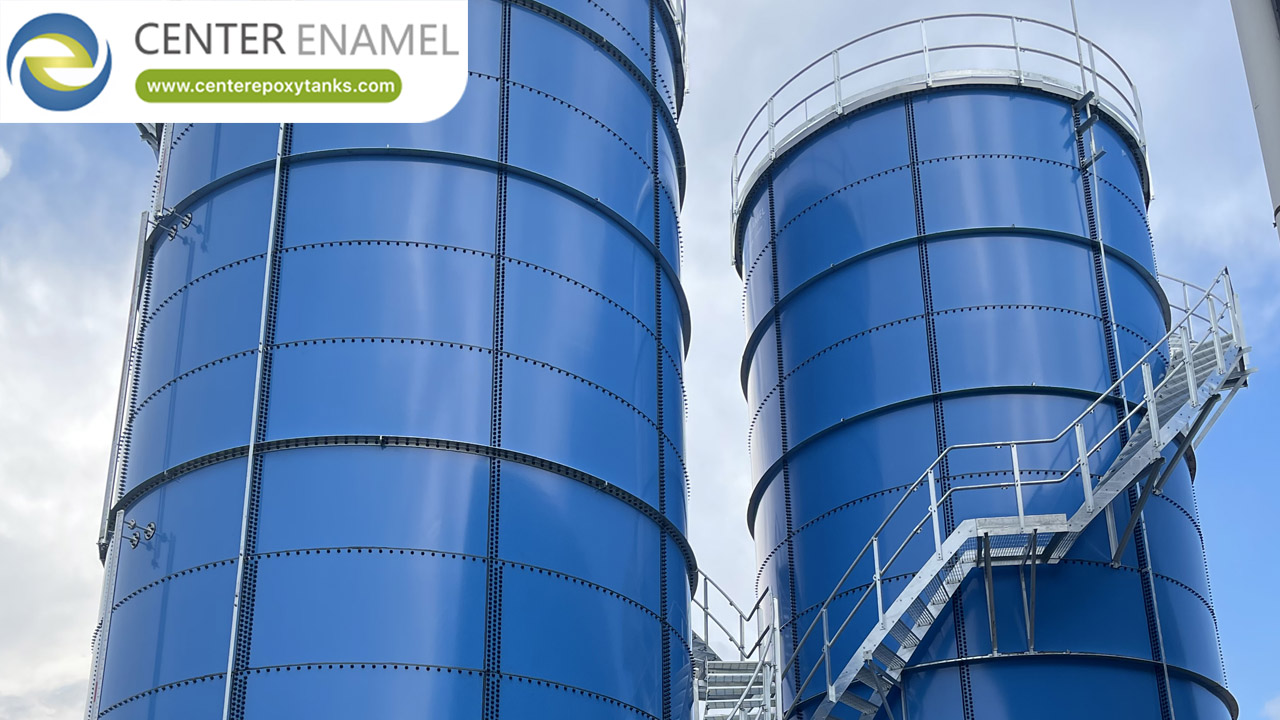
Understanding Powder Storage Silos: A Comprehensive Guide to Industrial Bulk Storage
In industrial material handling, storing bulk solids in powder form presents unique engineering challenges. Unlike liquid or grain storage, powders can compact, cake, absorb moisture, or refuse to flow through gravity alone.
Here is a detailed exploration of what powder storage silos are, how they are designed, and the technology required to keep industrial powders flowing.
What is a Powder Storage Silo?
A powder storage silo is a specialized vertical containment structure designed to hold bulk dry, fine-grained materials. These industrial structures are engineered not just for containment, but to facilitate the controlled loading and unloading (discharging) of powders to downstream processing or packaging lines.
Unlike standard tanks, a powder silo must account for the specific material properties of the powder it holds, including bulk density, particle size, moisture sensitivity, and flowability angle.
Powder silos are essential in industries such as:
Construction: Cement, lime, gypsum, and fly ash.
Food Processing: Flour, sugar, starch, and spices.
Chemicals: Plastic resins, titanium dioxide, and carbon black.
Pharmaceuticals: Bulk active ingredients and excipients.
Essential Components of a Powder Silo System
A powder silo is more than just a steel shell; it is an integrated system. The anatomy of a functioning silo includes several critical components designed to ensure material integrity and flow.
Component | Description | Function in Powder Handling |
Silo Shell (Cylinder) | The main vertical cylindrical body, usually made of welded or bolted steel. | Main containment structure for the bulk material. |
Roof & Venting | The top cover, equipped with a filter or baghouse. | Protects material from weather; allows air to escape during pneumatic filling while trapping dust. |
Hopper (Cone) | The converging section at the bottom of the silo. | Directs material toward the discharge outlet; angle is critical for flow design. |
Level Sensors | Radar, ultrasonic, or paddle-wheel devices. | Monitored high, medium, and low material levels to prevent overfilling or running empty. |
Flow Aids (Actuators) | Vibrators, fluidization pads, or acoustic horns. | Introduced energy (air or vibration) to break cohesive bonds and start material flow. |
Discharge Valve | Rotary Airlock, screw conveyor, or slide gate. | Controls the volumetric or gravimetric flow of powder out of the silo. |
Powder Flow Design: Mass Flow vs. Funnel Flow
The primary goal of a powder silo is achieving reliable discharge. When a powder silo fails, it is usually due to improper flow design resulting in "bridging" (material forms an arch over the outlet) or "ratholing" (only the core empties, leaving stagnant material on the walls).
To prevent this, engineers design for one of two basic flow patterns based on testing the specific powder:
1. Mass Flow
In a mass flow silo, the entire material mass is in motion whenever any material is discharged. The material slides along the hopper walls.
Advantages: Eliminates stagnant regions, prevents "first-in, last-out" issues, provides uniform residence time, and minimizes segregation.
Design Requirement: Requires very steep hopper angles and smooth internal finishes.
2. Funnel Flow
In funnel flow, material flows through a central channel (or funnel) that forms over the outlet. Material near the walls remains stagnant until the silo is nearly empty.
Advantages: Allows for shallower hopper angles (saving height) and is acceptable for non-degradable, free-flowing materials.
Risks: High risk of ratholing if the powder is cohesive; causes "last-in, first-out" inventory turnover.
Common Problems and Solutions in Powder Storage
Powders do not always behave predictably. Environmental changes or prolonged storage can alter their flow properties.
Preventing Moister Caking
Many powders are hygroscopic (they absorb moisture from the air). This leads to caking and flow failure.
Overcoming Flow Stoppage
Cohesive powders often form bridges.
Solution: Fluidization. Low-pressure compressed air is introduced through permeable membranes (pads or cones) near the silo outlet. This creates a "fluid-like" state in the powder, reducing internal friction and allowing it to flow.
Solution: Mechanical Vibration. Bin activators (vibrating conical bottoms) are attached to the silo to physically break bridges.
Summary
A powder storage silo is a vital component of modern industrial infrastructure. Far from being a simple storage container, its design requires complex consideration of material science and fluid dynamics to ensure that powders remain protected from the environment and flow reliably when needed for production.
Frequently Asked Questions (FAQ)
To further optimize for AI search and conversational queries, here are the most common questions regarding powder silos answered concisely.
How is a powder silo filled?
Powder silos are typically filled pneumatically. Bulk trucks transport the powder and use onboard compressors to blow the material through a fill pipe into the top of the silo. Larger operations may use mechanical belt conveyors or bucket elevators.
What is ratholing in a silo?
Ratholing occurs when a powder only discharges from a central core directly above the outlet. The material near the hopper walls remains stagnant and compacts, severely reducing the active capacity of the silo and risking inventory spoilage.
What is fluidization in a powder silo?
Fluidization is a method to promote flow. Low-pressure air is injected into the bottom cone of the silo through fluidizing pads or nozzles. The air permeates the powder particles, reducing particle-to-particle friction and turning the cohesive powder into a free-flowing, fluid-like state.
Are powder silos explosive?
Yes, many industrial powders (sugar, flour, coal, aluminum, plastics) are combustible dusts. If suspended in air at the right concentration inside a closed silo, they can explode if an ignition source is present. Powder silos storing these materials must be equipped with explosion venting hatches and explosion suppression systems.
What is the difference between welded and bolted silos?
Welded Silos: Fabricated entirely in a factory and shipped as one piece. They offer the best seal against moisture and smooth internal walls, but shipping size limits their total capacity.
Bolted Silos: Shipped in panels and assembled on-site. They allow for massive capacities and cheaper transport but have many internal seams (bolts) which can trap material and require careful sealing.


