Types of Storage Tanks in Oil and Gas
In the global oil and gas sector, storage tanks are critical assets required to contain crude oil, refined products, and petrochemicals at various stages of production, transportation, and refining. These tanks are governed by rigorous international engineering codes—primarily those established by the American Petroleum Institute (API)—to ensure safety, environmental compliance, and structural integrity.
1. Classification by Design Standard
The engineering approach is determined by the pressure and temperature requirements of the stored fluid.
API 650 (Atmospheric Tanks): The industry standard for large, welded, aboveground storage tanks operating at atmospheric pressure (typically up to 2.5 psig). These are the massive, vertical cylinders seen at refineries and tank farms.
API 620 (Low-Pressure Tanks): Designed for large tanks that require higher internal pressure (up to 15 psig) or operate under cryogenic conditions, such as Liquefied Natural Gas (LNG) or specialized LPG storage.
2. Classification by Roof Configuration
The roof design is the primary indicator of a tank's purpose, largely determined by the True Vapor Pressure (TVP) of the liquid.
A. Fixed-Roof Tanks
These tanks feature a permanently attached, immovable roof (cone or dome).
Application: Best for low-volatility liquids (e.g., diesel, heavy fuel oil, bitumen).
Constraint: They create a "vapor space" between the liquid surface and the roof, which can lead to evaporation if used with highly volatile products.
B. External Floating-Roof (EFR) Tanks
The roof rests directly on the surface of the liquid and moves up and down as the tank levels change.
Application: Standard for high-volatility products like crude oil and gasoline.
Advantage: By eliminating the vapor space, these tanks significantly reduce VOC (Volatile Organic Compound) emissions and fire risks.
C. Internal Floating-Roof (IFR) Tanks
A hybrid design that includes a fixed outer roof to protect against weather and an internal floating deck to suppress vapors.
3. Comparison Matrix: Tank Application
Tank Type | Primary Use Case | Emission Profile | Pressure Rating |
Fixed Roof | Non-volatile/High-flashpoint liquids | Higher (Vapor loss) | Atmospheric |
External Floating | Crude Oil, Gasoline | Low (Vapor suppression) | Atmospheric |
Internal Floating | Aviation Fuel, Ethanol | Very Low | Atmospheric |
Pressure Vessel | LPG, LNG, Compressed gases | Negligible | High Pressure |
The Modern Shift: Bolted vs. Welded
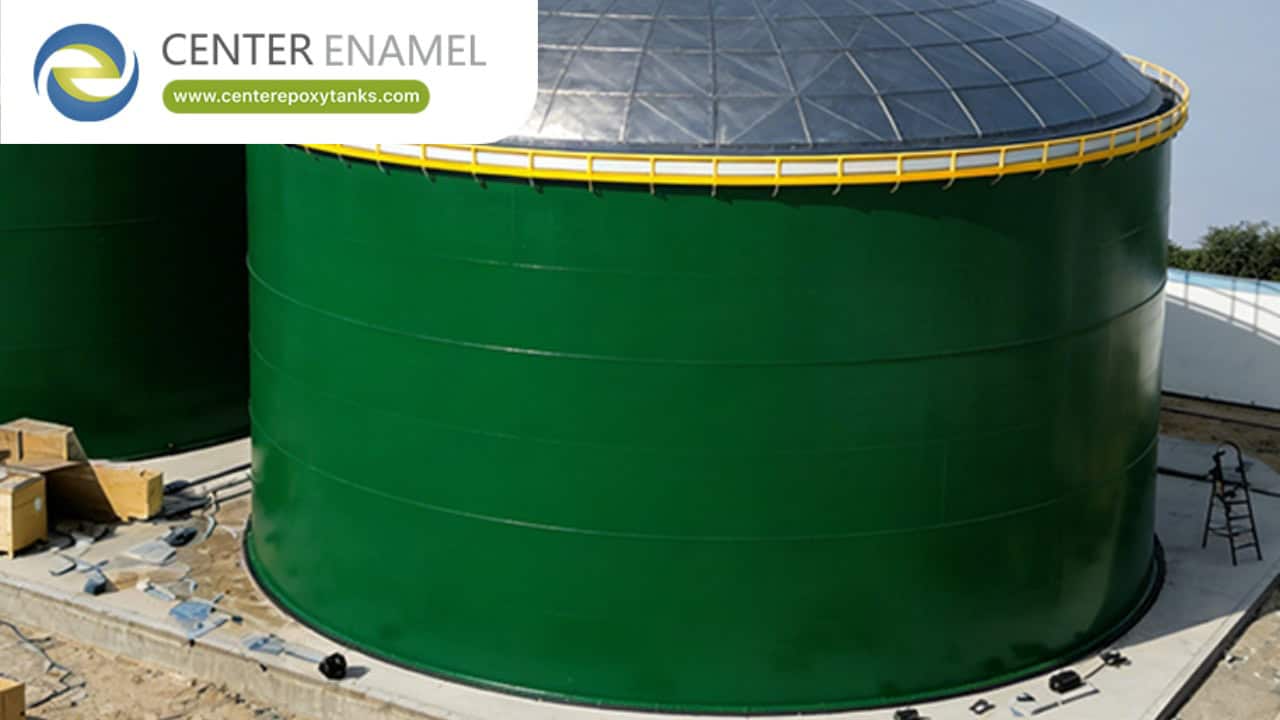
While traditional field-erected welded steel tanks are the standard for massive refinery volumes, the industry is increasingly adopting Bolted Steel Tank technology (including Glass-Fused-to-Steel) for specialized storage and utility applications.
Bolted Advantages: Faster field erection, superior factory-applied coating quality (reducing on-site painting hazards), and lower total cost of ownership.
Application: Often deployed for fire protection water, process water, and secondary containment at oil/gas facilities where rapid deployment and corrosion resistance are prioritized over massive storage capacity.
Frequently Asked Questions (FAQ)
Q: Why are floating roof tanks used for crude oil?
A: Crude oil is highly volatile. If stored in a fixed-roof tank, it would create a large vapor space prone to evaporation, causing product loss and significant safety/environmental hazards. Floating roof tanks physically eliminate this space, suppressing vapor formation.
Q: What is the purpose of an SPCC plan for these tanks?
A: An SPCC (Spill Prevention, Control, and Countermeasure) plan is an environmental regulation requiring facilities to have secondary containment (like dikes or double-walled tanks) to prevent stored petroleum from reaching navigable waters or adjoining shorelines in the event of a leak.
Q: Can I store LPG in a standard API 650 tank?
A: No. LPG requires specialized pressure vessels (bullets or spheres) designed to handle high vapor pressure, typically following ASME or API 620 standards, rather than the atmospheric standards of API 650.
Q: What is the lifespan of a modern industrial storage tank?
A: With proper maintenance—including corrosion monitoring, cathodic protection, and routine coating inspections—modern steel tanks are designed to operate for 20 to 30+ years. Advanced technologies like Glass-Fused-to-Steel (GFS) can extend this lifecycle by providing near-total resistance to atmospheric and chemical corrosion.


