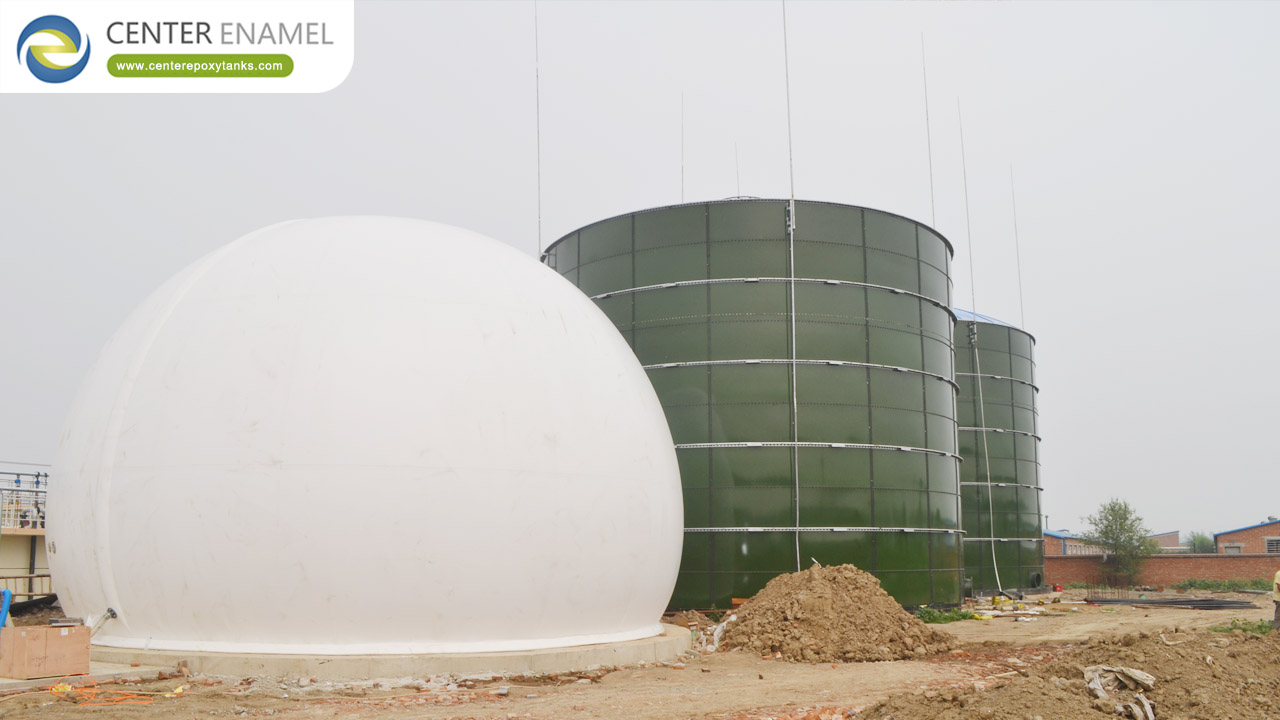
China Biogas Balloon Manufacturer: A Strategic Procurement Guide for Industrial Biogas Storage
For industrial biogas facilities, Bio-CNG plants, and wastewater treatment infrastructure, the biogas balloon—or double-membrane gas holder—is a mission-critical asset. As production capabilities in China have evolved, the market has shifted from basic storage solutions to high-precision, engineered membrane systems. Choosing the right manufacturer requires looking beyond price to assess technical competencies in material science, welding precision, and safety integration.
1. Technical Architecture: What Defines Quality?
Modern biogas balloons are sophisticated pneumatic vessels. When evaluating manufacturers, identify systems that utilize a double-membrane structure designed to manage gas volatility and environmental stress.
Component | Engineering Function | Material Standard |
Outer Membrane | Structural protection & pressure regulation | UV-stabilized, high-tensile PVC-coated polyester |
Inner Membrane | Primary gas containment (flexible) | High-strength, gas-tight, anti-static coating |
Bottom Membrane | Foundation sealing & gas isolation | Heavy-duty, chemical-resistant PVC/PU |
Air System | Maintains dome shape & pressure | Explosion-proof centrifugal blowers |
●
2. Manufacturer Vetting: The "Zero-Defect" Checklist
When sourcing from China, the distinction between a "trading company" and an "engineered manufacturer" is critical. Use this checklist to verify supplier capabilities:
1. Manufacturing Technology: Does the facility use CNC laser cutting and automated high-frequency welding? Manual hand-welding is a significant risk point for long-term gas leakage.
2. Safety & Compliance: Are the systems equipped with hydraulic overpressure relief valves (stainless steel construction) and continuous laser/ultrasonic level sensors?
3. Certification: Verify adherence to international quality management systems (ISO 9001) and specific regional safety standards.
4. Traceability: Can the manufacturer provide Mill Test Reports (MTRs) for membrane fabrics and weld procedure specifications (WPS)?
3. Comparative Advantage: Balloon vs. Rigid Storage
Feature | Biogas Balloon (Membrane) | Rigid Steel Tank |
Deployment Speed | Rapid (Days/Weeks) | Slow (Months) |
Capital Cost | Low to Moderate | High |
Corrosion Risk | Minimal (Engineered Polymers) | Moderate (Requires frequent maintenance) |
Flexibility | High (Expands/Contracts) | None |
Maintenance | Low (Pneumatic checks) | High (Mechanical inspections) |
4. Frequently Asked Questions (FAQ)
Q: Why is "Double Membrane" preferred over a single layer?
A: The double-membrane design creates an air-gap (pressurized by an air blower) that maintains the outer shell's shape and provides insulation. This protects the inner gas-containing membrane from environmental elements like UV radiation and extreme weather, extending the system's service life significantly.
Q: How do you prevent methane leakage?
A: Quality manufacturers employ high-frequency welding to create seamless, airtight joints. Every unit should undergo rigorous leak testing (e.g., pressure-decay tests) before shipping. Additionally, using membranes with low gas permeability is the first line of defense.
Q: Can these balloons be customized for different project footprints?
A: Yes. Leading manufacturers utilize CAD optimization to fit specific site dimensions. Whether you need a standard spherical dome or a rectangular design for a hybrid digester configuration, flexible membrane systems are highly adaptable.
Procuring biogas balloons is an investment in the long-term uptime of your energy project. By prioritizing manufacturers that demonstrate advanced material science, rigorous automated production, and a thorough understanding of biogas chemistry, you ensure that your storage solution remains a reliable, compliant, and cost-effective component of your operation.
Are you currently tendering a biogas project and would you like to review the structural load requirements for your planned storage volume or receive a technical datasheet for our high-tensile membrane fabrics?
Complete Biogas Balloon Guide | Fabric, Design, Accessories, Installation & Warranty Explained
This video provides a comprehensive breakdown of fabric selection, installation, and design considerations that are essential for any project manager or engineer involved in biogas infrastructure.


