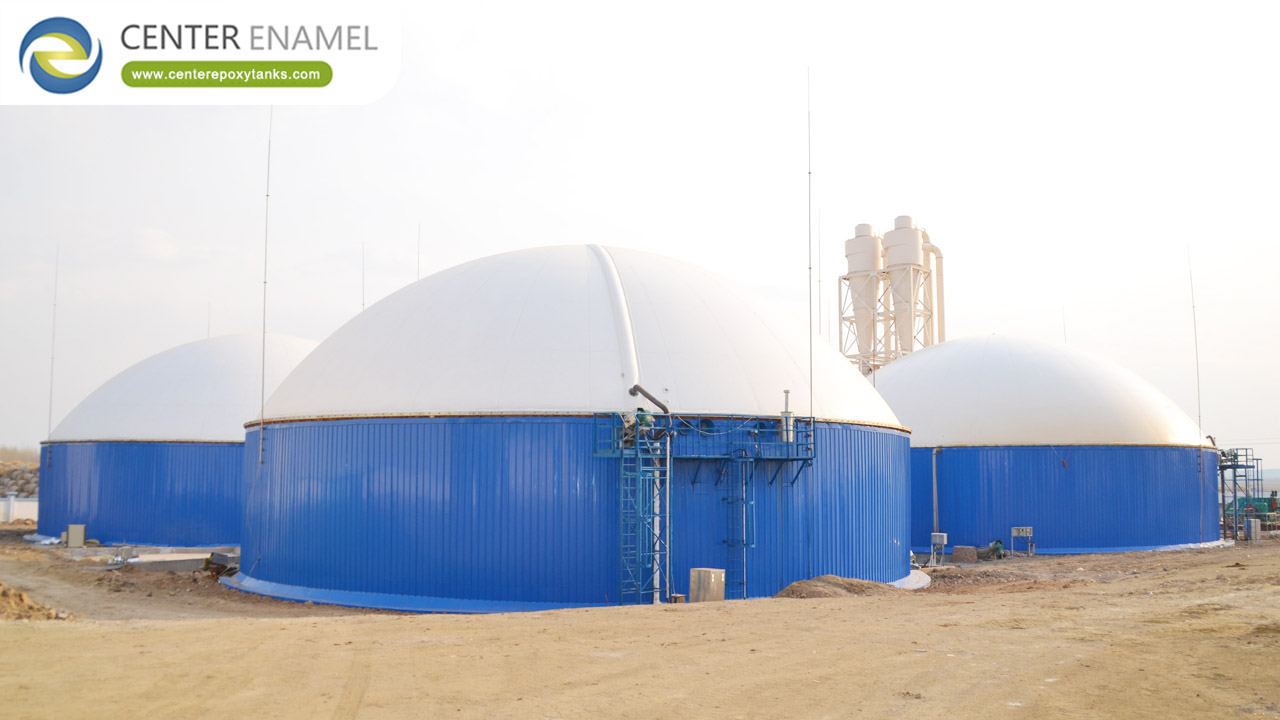
Bolted Steel Tanks for Food Waste Biogas Fermentation: Engineering & Optimization Guide
The global push for circular economy initiatives has positioned food waste biogas fermentation—driven by Anaerobic Digestion (AD)—as a premier waste-to-energy solution. Food waste is highly volatile and acidic during decomposition, demanding specialized containment infrastructure. Bolted steel tanks, specifically Glass-Fused-to-Steel (GFS) variants, have emerged as the industry standard for Continuous Stirred-Tank Reactors (CSTR). They offer unparalleled corrosion resistance, rapid deployment, and structural integrity, ensuring maximum methane yield and operational safety.
1. The Biochemical Challenge of Food Waste
Food waste differs significantly from agricultural manure or municipal sludge. It possesses a high biological oxygen demand (BOD) and rapidly degrades into volatile fatty acids (VFAs) during the hydrolysis and acidogenesis phases of anaerobic digestion.
This biochemical profile creates an extremely aggressive internal environment:
● High Acidity: pH levels can drop significantly, accelerating the corrosion of unprotected concrete or standard welded steel.
● Hydrogen Sulfide (H₂S): The fermentation process generates corrosive H₂S gas, which attacks the tank infrastructure at the liquid-gas interface.
● High Dry Matter Content: Requires robust, continuous mixing to prevent stratification, demanding tanks that can withstand dynamic internal loads.
2. Why Bolted Steel Tanks Dominate Food Waste AD
Bolted tank technology, utilizing factory-fabricated panels assembled on-site, provides critical engineering advantages over traditional concrete or welded steel digesters.
Glass-Fused-to-Steel (GFS) Coating
The premier material for food waste fermentation is GFS. In a high-temperature furnace (850-940°C), a specialized enamel layer is permanently fused to the steel plates.
● Inert Barrier: The non-porous glass layer is highly resistant to the acidic byproducts and H₂S inherent in food waste digestion.
● Enhanced Mixing: The ultra-smooth glass surface minimizes friction and waste adhesion, preventing dead zones and improving the efficiency of internal mixers.
● Longevity: A properly maintained GFS bolted tank offers an operational lifespan exceeding 30 years without the need for periodic recoating.
Rapid Construction and Modularity
Bolted steel tanks are installed utilizing a sequential jacking system or scaffolding, eliminating the need for extensive on-site hot work (welding) or prolonged concrete curing times. Furthermore, the modular design allows facilities to expand the tank vertically if plant capacity needs to increase in the future.
3. Digester Containment Comparison Matrix
To optimize capital expenditure (CAPEX) and operational expenditure (OPEX), project engineers must evaluate the containment material against the specific demands of food waste.
Feature | Glass-Fused-to-Steel (Bolted) | Welded Carbon Steel | Poured Concrete |
Corrosion Resistance | Exceptional (Inert glass) | Low (Requires heavy internal coatings) | Moderate (Vulnerable to acid attack) |
Installation Speed | Fast (Weeks) | Slow (Months) | Very Slow (Months) |
Maintenance Need | Low | High (Routine recoating required) | High (Crack and joint sealing) |
Expansion Capability | Yes (Modular panels) | No | No |
Biogas Yield Efficiency | High (Smooth walls aid mixing) | Moderate | Low (Rough surface promotes adhesion) |
4. Key Appurtenances for CSTR Biogas Tanks
To function as an efficient Continuous Stirred-Tank Reactor (CSTR) for food waste, a bolted steel tank must be integrated with specialized components:
● Agitation Systems: Side-entry or top-mounted submersible mixers are critical to maintain a homogenous temperature and ensure microorganisms constantly interact with the feedstock.
● Heating Systems: External heat exchangers or internal heating coils to maintain mesophilic (35°C) or thermophilic (55°C) temperatures, which are essential for optimal methanogenesis.
● Double Membrane Gas Holder: Often integrated directly onto the top ring of the bolted tank, this flexible roof system stores the generated biogas while regulating pressure.
● Insulation and Cladding: Polyurethane or mineral wool insulation, protected by a profiled aluminum or steel cladding, prevents heat loss during the fermentation process.
5. Frequently Asked Questions (FAQ)
Q: Can bolted steel tanks handle the internal pressure of biogas fermentation?
A: Yes. GFS bolted tanks are engineered with specialized industrial sealants (such as polyurethane or silicone-based mastics) and high-tensile galvanized bolts. They are designed to meet strict international standards (like AWWA D103 and ISO 28765) for gas-tightness and structural stability under pressure.
Q: Are GFS bolted tanks suitable for thermophilic digestion?
A: Absolutely. Thermophilic digestion (operating around 50–60°C) accelerates biogas production from food waste but creates a more corrosive environment. The glass-fused coating is perfectly suited to withstand these elevated temperatures and the corresponding chemical aggressiveness.
Q: How does the tank design address potential foaming from food waste?
A: Food waste is prone to foaming due to high lipid and protein content. Bolted tanks are designed with adequate freeboard (ullage) and can be fitted with mechanical foam breakers or chemical dosing ports to manage foaming events before they impact the gas handling system.
Maximizing Waste-to-Energy Return on Investment
Selecting the right digester infrastructure is the most critical decision in a food waste biogas project. By deploying Glass-Fused-to-Steel bolted tanks, facility operators secure a rapidly deployable, highly corrosion-resistant asset that maximizes continuous biogas yield while drastically reducing long-term maintenance liabilities.


