Thermal Energy Storage Tanks for Data Centers: A Portfolio-Scale Deployment View
For operators running multiple data centers, thermal energy storage tanks stop being one-off projects and become a portfolio strategy. Standardizing specs, phasing capacity with load, and aggregating the PUE and demand-charge benefits change the economics. This article takes the fleet-level view.
At portfolio scale, thermal energy storage tanks for data centers should be standardized by design family (diameter modules, material, diffuser type) so each site repeats a proven package. Capacity is phased with IT load, and the combined demand-charge and PUE gains are tracked fleet-wide. Standardization cuts engineering cost per site and speeds delivery across the build program.
Standardize the Tank Family
Define a small set of tank 'building blocks' - preferred diameters, heights, materials, and diffuser designs - and reuse them across sites. This turns each TES tank from a custom job into a repeatable, documented package.
Standardization also simplifies QA, spares, and operator training across the portfolio.
Phase Capacity With Load
TES and buffer capacity should grow with each campus's IT load rather than being built all at once. Modular bolted tanks let later phases add shells without re-engineering the early ones.
Phasing protects capital and matches storage to the actual cooling profile as it emerges.
Fleet-Level Benefits
Aggregated across sites, TES smooths total grid demand, improves reported fleet PUE, and creates negotiating leverage on energy tariffs. The sum of many small shifts is a measurable corporate efficiency gain.
Technical Specifications
Parameter | Specification |
Strategy | Standardized family |
Building blocks | Dia/height/material |
Phasing | With IT load |
Fleet benefit | PUE + demand |
QA | Repeatable package |
Spares | Common parts |
Shell | Bolted modular |
Material | GFS / stainless |
Standard | AWWA D103 |
QA | ISO 9001 |
Verified Tank Engineering Reference
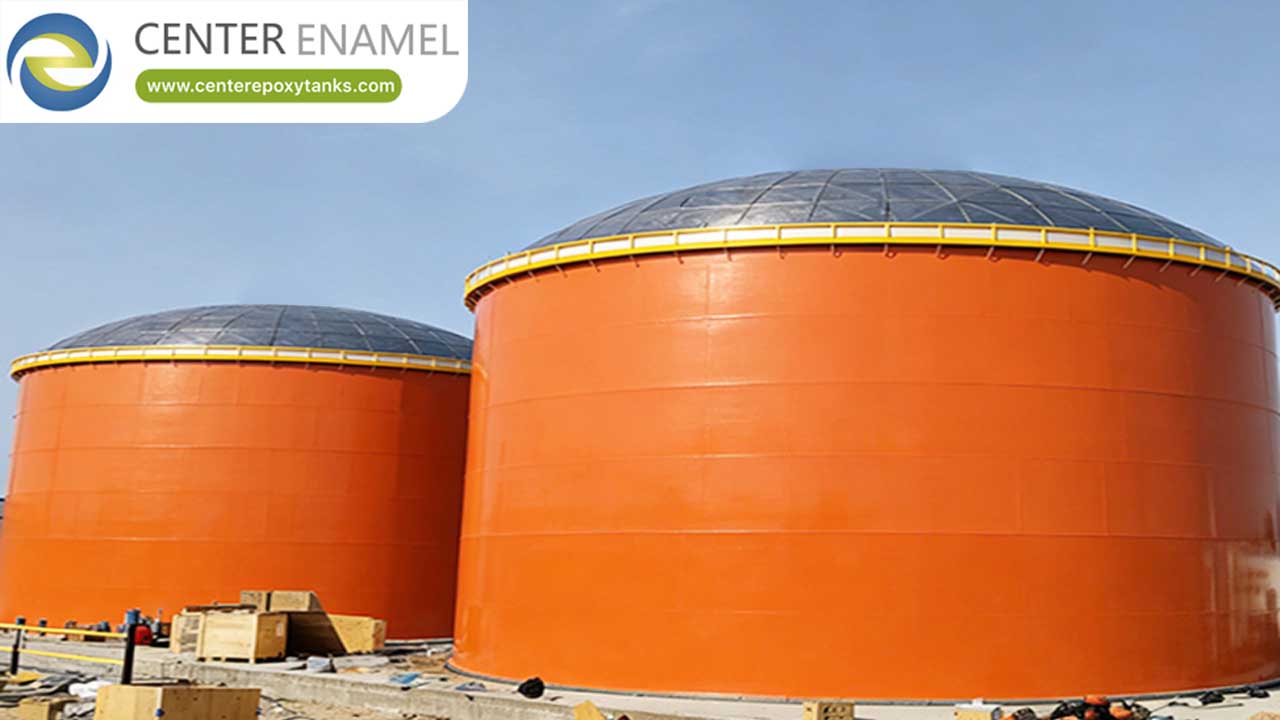
Center Enamel's multi-tank farm deliveries - such as a 2023 Saudi Arabian project of five GFS tanks at 24.06 m diameter and 11,020 m3 - reflect the standardized, multi-shell delivery model a data-center portfolio needs for phased TES rollout. Capability evidence only, not a DC project.
Project location | Saudi Arabia |
Application | Municipal wastewater |
Tank type | GFS (Glass-Fused-to-Steel) bolted tank |
Scale | 5 unit(s), φ24.06*4.85m(H) |
Total volume | 11,020 m3 |
Year | 2023-12 |
Note | Cited as manufacturing-capability evidence, not a data-center project. |
Center Enamel Capability
Center Enamel's bolted-tank system is built for repetition: standardized panels and documented assemblies let a portfolio roll out consistent TES, buffer, and fire-water tanks across sites under one ISO 9001 quality system, with AWWA D103 / ISO 28765 construction and available NSF/ANSI 61 / WRAS certification.
ASME Section VIII vessels are available from the same system for pressurized duties, keeping the whole water-tank family under one supplier relationship.
Frequently Asked Questions
Q: Why standardize TES tanks across a portfolio?
A: It turns each tank into a repeatable package, cutting engineering cost and speeding delivery while simplifying QA and spares.
Q: How should capacity be phased?
A: With IT load, using modular bolted tanks so later phases add shells without re-engineering early ones.
Q: What fleet-level benefits appear?
A: Aggregated demand-charge reduction, improved fleet PUE, and better energy-tariff leverage.
Q: Does standardization limit site fit?
A: No - a small set of building blocks covers most sites; geometry is chosen per footprint.
Q: What material for a standard family?
A: GFS and stainless bolted tanks suit most chilled-water duties; FBE for economy.
Q: Can one supplier serve the portfolio?
A: Yes - Center Enamel delivers the full tank family and ASME vessels under one system.
At portfolio scale, TES tanks are a repeatable standard, not a custom project. Standardize the family, phase with load, and the fleet-level PUE and demand benefits compound across every site you build.
Suggested Next Step
Share your multi-site roadmap - we will define a standardized TES/buffer tank family and a phased delivery plan for the portfolio.


