TES Tanks Explained: Thermal Energy Storage for Industrial and Mission-Critical Cooling
TES tanks - thermal energy storage tanks - are deceptively simple vessels that quietly underpin efficient cooling in industry and mission-critical facilities. This article explains what they are, the main types, and where they pay off, setting context for the data-center-specific articles in this series.
TES tanks store heating or cooling energy for later use. The two main types are sensible (temperature difference in a fluid, e.g., stratified chilled water) and latent (phase change, e.g., ice). They deliver value by shifting energy production away from peak demand, improving equipment efficiency, and adding resilience. In mission-critical cooling, stratified chilled-water TES is the dominant form.
Sensible vs Latent TES
Sensible TES stores energy as a temperature difference in water or another medium - simple, robust, and efficient for large volumes. Latent TES stores it in a phase change, denser but more complex and lower-efficiency to charge.
For most cooling, sensible chilled-water TES wins on simplicity and chiller efficiency.
What the Tank Actually Is
A TES tank is fundamentally a well-built, often insulated vessel with inlet/outlet diffusers that preserve stratification. The 'intelligence' is in the hydraulics and controls, not exotic materials.
Scale ranges from a few cubic meters to tens of thousands - the largest are stratified water tanks at campuses and district-cooling plants.
Where TES Pays Off
Anywhere load and supply are mismatched in time: peak-shaving cooling, renewable alignment, process buffering, and resilience. Mission-critical sites value the buffer; industrial sites value the cost shift.
Technical Specifications
Parameter | Specification |
Type 1 | Sensible (stratified) |
Type 2 | Latent (ice) |
Medium | Water (chilled) |
Value | Peak shift, efficiency |
Scale | m3 to 10,000s m3 |
Key part | Diffusers |
Efficiency | 85-95% usable |
Shell | Atmospheric |
Material | GFS / stainless |
Codes | AWWA D103 / ASME |
Verified Tank Engineering Reference
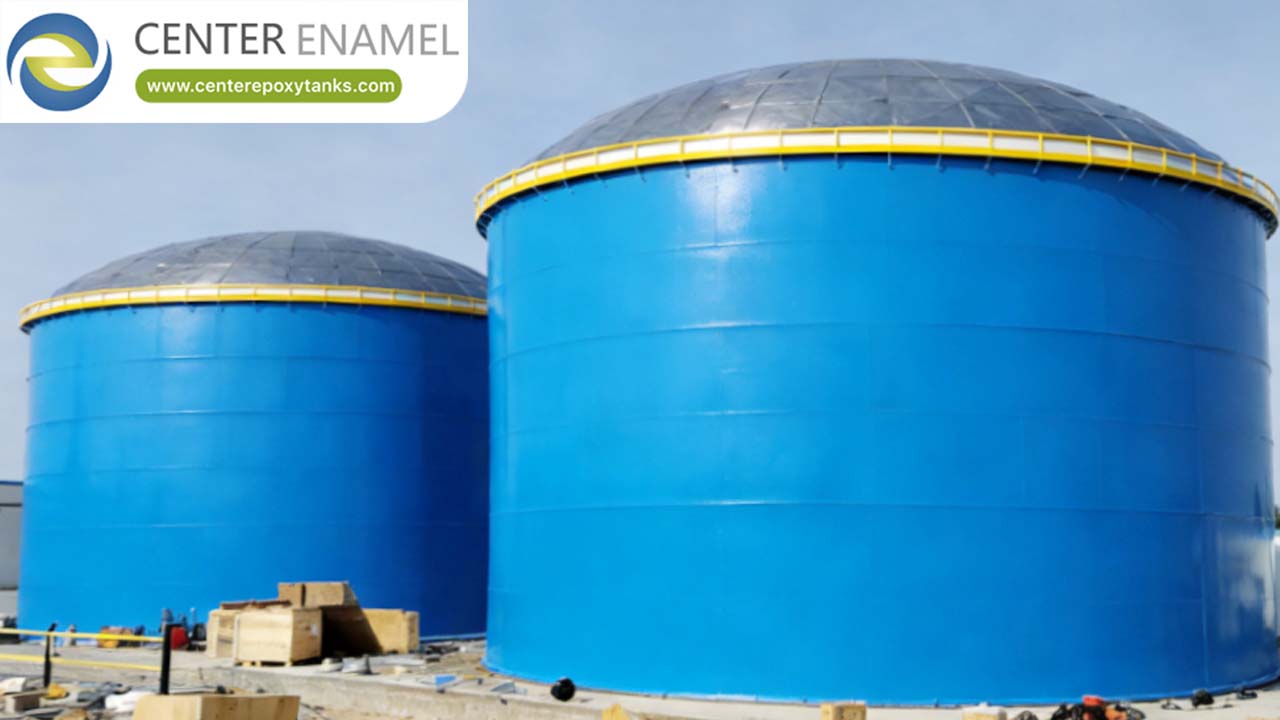
Center Enamel's large bolted-shell capability - such as a 2025 Indonesian tank at 42.04 m diameter and 21,099 m3 - reflects the vessel-manufacturing scale that sensible TES tanks require across industrial and mission-critical applications. Capability evidence only.
Project location | Indonesia |
Application | Drinking water |
Tank type | GFS (Glass-Fused-to-Steel) bolted tank |
Scale | 1 unit(s), φ42.04*15.2m(H) |
Total volume | 21,099 m3 |
Year | 2025-06 |
Note | Cited as manufacturing-capability evidence, not a data-center project. |
Center Enamel Capability
Center Enamel manufactures the tanks and vessels at the heart of TES systems: large bolted GFS and welded atmospheric shells for sensible storage, plus ASME pressure vessels for pressurized duties. Quality is under ISO 9001, with AWWA D103 / ISO 28765 construction and available NSF/ANSI 61 and WRAS certification.
The engineering team supports specification across industrial and mission-critical cooling, matching tank type and material to the duty.
Frequently Asked Questions
Q: What is a TES tank?
A: A vessel that stores heating or cooling energy - sensible (temperature difference) or latent (phase change) - for later use.
Q: Which TES type is most common for cooling?
A: Sensible stratified chilled water, for its simplicity and chiller efficiency.
Q: How big are TES tanks?
A: From a few cubic meters to tens of thousands; the largest serve campuses and district cooling.
Q: What makes a TES tank work?
A: Diffusers and controls that preserve stratification - the hydraulics, not exotic materials.
Q: Where does TES add value?
A: Peak shaving, renewable alignment, process buffering, and resilience.
Q: What does Center Enamel make for TES?
A: Large bolted atmospheric shells and ASME pressure vessels for the relevant duties.
TES tanks are straightforward vessels enabled by smart hydraulics, storing energy to bridge the gap between when cooling is made and when it is needed. Sensible stratified water storage is the workhorse, especially for mission-critical cooling.
Suggested Next Step
Tell us your cooling load profile - we will recommend a TES tank type, material, and size for your facility.


